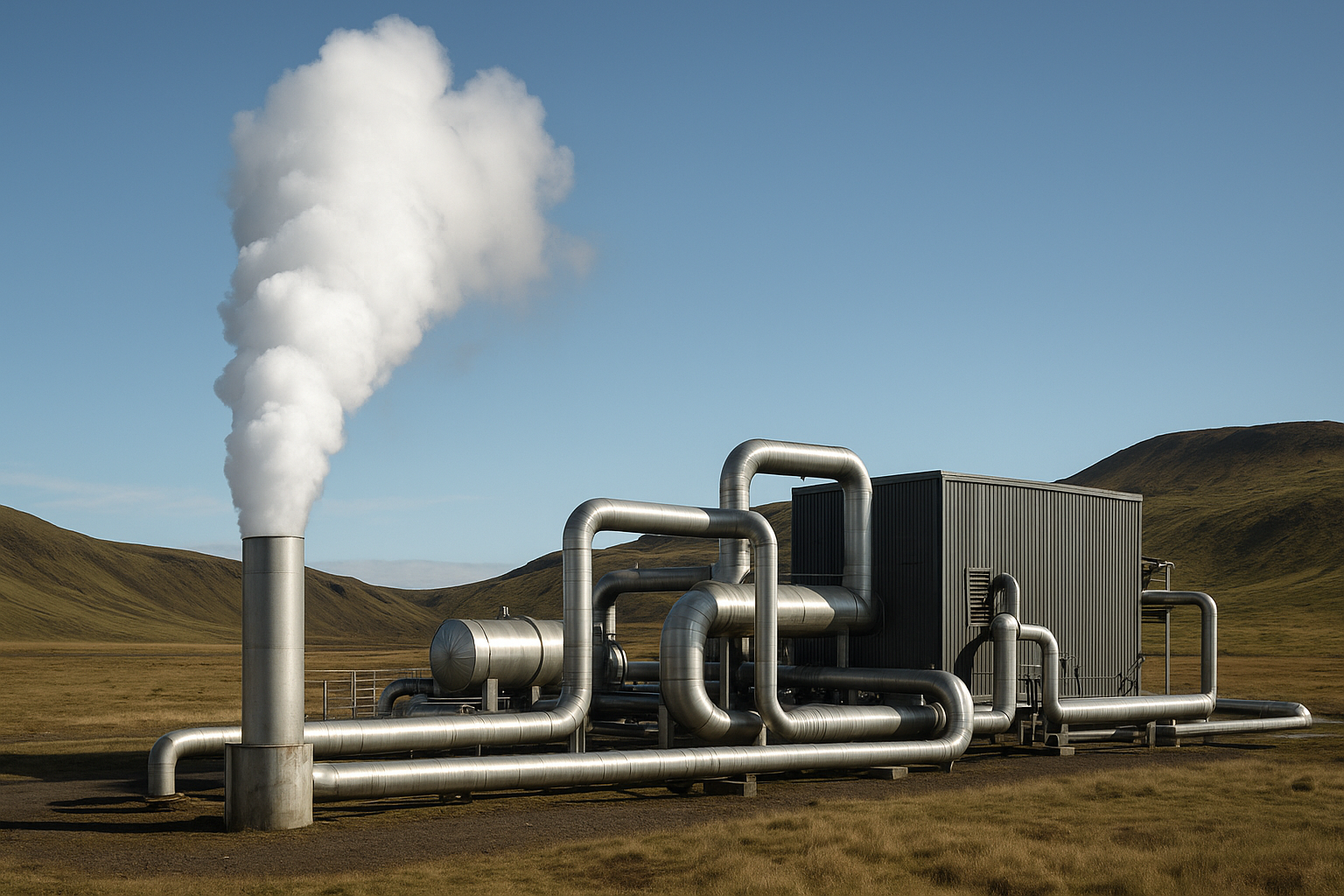
Geothermal energy taps heat from beneath the Earth’s surface for electricity generation and direct heating applications. It is a low-carbon resource with diverse technological approaches, from shallow ground-source heat pumps to deep geothermal wells.
Overview
Geothermal systems use temperature gradients in the ground to produce useful heat and power. Shallow systems typically serve buildings through heat pumps, while deeper resources can drive turbines or supply high-temperature steam to industrial processes.
Technology pathways include conventional hydrothermal plants, enhanced geothermal systems (EGS) that stimulate hot rock, and low-temperature solutions for district heating and agricultural uses. Each approach has distinct drilling, reservoir and surface-equipment requirements.
Why This News Matters
Interest in geothermal energy has grown as policymakers and industry look for reliable, low-emission sources of heat and baseload power. Unlike some renewables, geothermal can provide continuous output, helping to stabilise electricity grids and reduce reliance on fossil fuels for heating.
Scaling geothermal deployment could support decarbonisation of hard-to-abate sectors where electrification is challenging. Wider adoption also raises questions around permitting, subsurface risk management and financing for high upfront costs.
Industry Perspective
Practitioners emphasise the importance of subsurface characterisation, horizontal integration with heat networks, and modular development to reduce risk. Developers often focus on pairing geothermal with direct-use projects to improve project economics and community benefits.
Barriers cited by industry include permitting timelines, site-specific geology, and the need for skilled drillers and geothermal engineers. Companies and research institutions are advancing drilling techniques and reservoir modelling to improve success rates and reduce costs.
Future Outlook
Future growth is likely to come from a mix of improved exploration tools, policy support and demonstration of new technologies such as EGS and hybrid systems. Integration with district heating and industrial heat networks offers an immediate route to scale in many regions.
Market evolution will depend on financing mechanisms that address early-stage exploration risk and on regulatory frameworks that streamline approvals while protecting communities and environments. Advances in drilling and subsurface imaging could expand viable resource areas over time.
Key Highlights
- Geothermal provides reliable, low-carbon baseload power and heat with multiple technology pathways.
- Direct-use applications include district heating, agriculture, and industrial process heat.
- Enhanced geothermal and deeper wells aim to unlock wider resource potential beyond conventional reservoirs.
- Key challenges are upfront costs, exploration risk, permitting and skilled workforce needs.
- Policy support, financing innovations and technology improvements are critical for scaling deployment.
Frequently Asked Questions
What is the difference between shallow and deep geothermal systems?
Shallow systems use near-surface ground temperatures for heat pumps in buildings, while deep systems access high-temperature reservoirs or hot rock for electricity generation or industrial heat.
Can geothermal provide baseload power?
Yes. Geothermal plants can deliver continuous output independent of weather, making them a candidate for baseload or flexible grid support when managed appropriately.
What are the main risks of geothermal projects?
Primary risks include geological uncertainty, the potential for induced seismicity in some methods, high initial capital expenditure and complex permitting for subsurface activities.
How is geothermal used beyond electricity?
Geothermal heat is used directly for district heating, greenhouse agriculture, aquaculture, and various industrial processes where hot water or steam can replace fossil fuels.
What developments could lower costs and accelerate deployment?
Improved subsurface imaging, more efficient drilling technology, demonstration of enhanced geothermal systems, and financial instruments that mitigate exploration risk can lower barriers and costs.
Where is geothermal most practical?
Geothermal is practical where geothermal gradients are favourable or where heat networks can utilise moderate-temperature resources; advances in technology may broaden suitability to more regions over time.