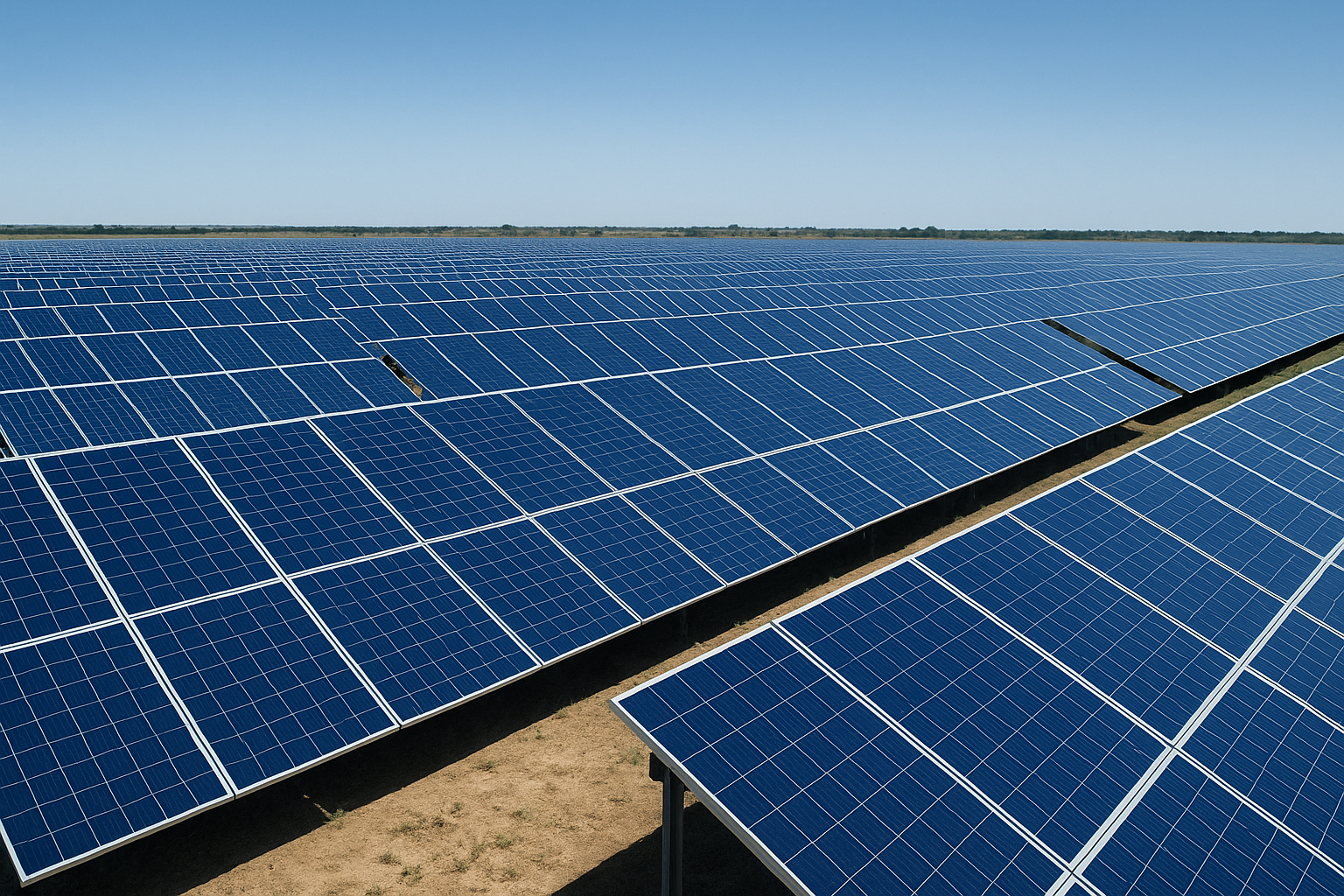
Avaada Group has closed $1.3 billion in financing for a 2.15 gigawatt portfolio of renewable energy assets, according to published reporting. The transaction marks a significant capital raise for a sizeable generation portfolio and reflects persistent investor interest in utility-scale clean energy.
Overview
The financing covers a renewable energy portfolio with a combined capacity of 2.15 GW and a total funding amount of $1.3 billion. Public coverage of the deal provides the headline figures but does not detail the breakdown of lenders, instrument types or the schedule for deployment.
Such financings typically support development, construction or refinancing of operational projects, and can combine debt, equity and other credit instruments. Large-ticket closings like this are often structured to match long-term revenue profiles of renewable assets.
Why This News Matters
A deal of this scale mobilises substantial capital into the renewable sector and can accelerate project delivery timelines. It also signals that large institutional and commercial sources of finance continue to see renewables as bankable assets.
For developers and investors, secured financing reduces execution risk and can improve access to follow-on funding for additional capacity. For broader markets, these transactions help establish pricing benchmarks and contractual precedents for future deals.
Industry Perspective
Project financings for multi-gigawatt portfolios are central to scaling renewable capacity at pace. They demonstrate how developers can aggregate assets to attract larger pools of capital and achieve economies of scale in procurement and operations.
Market participants say such transactions can sharpen focus on due diligence, counterparties’ credit quality, and revenue contracts such as power purchase agreements and merchant exposure. They also underline the role of non-bank capital in complementing traditional project lenders.
Future Outlook
While specific deployment timelines and technology mix for this portfolio were not published alongside the financing announcement, the closing should enable further project activity tied to the portfolio. Developers commonly use secured financing to move from planning to construction phases.
Looking ahead, similar transactions are likely as investors seek yield and diversification in low-carbon infrastructure. Continued standardisation of documentation and clarity on offtake frameworks will help speed future deals and lower financing costs over time.
Key Highlights
- $1.3 billion in financing closed for the portfolio.
- Portfolio capacity totals 2.15 gigawatts of renewable assets.
- Funding is intended to support a developer-held renewable energy portfolio.
- The transaction underscores ongoing investor appetite for large-scale clean energy projects.
- Public reports did not include a full breakdown of lenders, instruments or detailed timelines.
Frequently Asked Questions
What did Avaada Group announce?
The company announced the closing of $1.3 billion in financing for a renewable energy portfolio with a combined capacity of 2.15 GW.
What technologies are included in the 2.15 GW portfolio?
The announcement describes the assets as a renewable energy portfolio but does not specify the technology mix. Renewable portfolios commonly include solar and wind assets, among other technologies.
Who provided the financing?
Public reporting of the deal did not provide a detailed list of financing parties. Large portfolio financings are typically provided by a mix of commercial banks, institutional investors and specialised infrastructure lenders.
How will the funds likely be used?
Financing of this nature is usually applied to project development, construction costs, refinancing of existing assets, or working capital related to the portfolio. Exact uses were not disclosed in the initial report.
What does a financing closing mean for projects?
A closing indicates that funding agreements are executed and capital is committed, reducing execution risk and allowing project owners to proceed with construction or other planned activities tied to the financed assets.
What broader impact could this deal have on the market?
Deals of this size help mobilise more capital into the renewable sector, set commercial and pricing benchmarks, and can encourage further aggregation of assets to attract institutional investment into clean energy infrastructure.