
News at Glance
- Dual-use solar pairs PV with agriculture or habitat to generate electricity while maintaining or enhancing other land uses.
- It can raise land productivity by delivering both energy and crop or conservation outcomes from the same footprint.
- Realising benefits depends on design and policy, including panel layout, crop selection, permitting and revenue models.
Farmers and developers weigh yield and revenue trade-offs
Dual-use solar — often called agrivoltaics when combined with crops — is attracting attention as a way to address competing demands for land. Proponents argue the approach can produce electricity while allowing continued agricultural production or habitat restoration beneath and between panels.
Technical variations include elevated racking, wider row spacing and semi-transparent modules; those design choices influence sunlight, irrigation needs and maintenance routines. Site-specific assessments are essential because crop responses vary by species, climate and soil conditions.
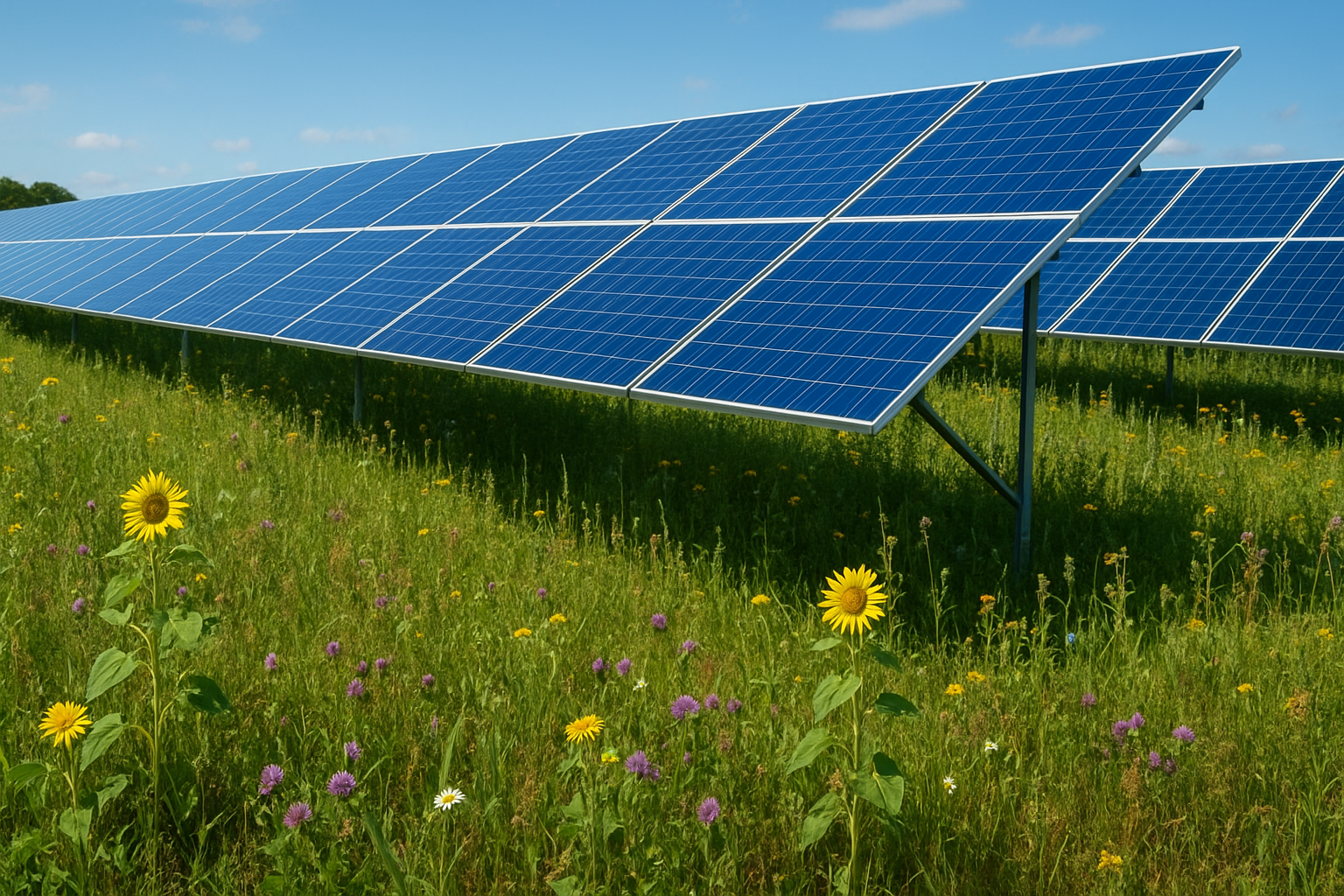
Beyond agronomy, dual-use projects can support biodiversity goals by creating pollinator-friendly habitats or native-plant buffers around arrays. Such co-benefits are cited by conservation groups and some developers as an argument for integrated planning, though outcomes depend on implementation details.
Economic considerations are central. Shared land can diversify income for landowners but may require different contracts, insurance arrangements and cost-sharing for installation and upkeep. Clear business models are emerging slowly as stakeholders test combinations of crops, grazing and energy revenues.
Regulatory frameworks and permitting can either enable or hinder dual-use deployment. Local zoning, agricultural supports and utility interconnection rules shape project feasibility, and coordinated policies can reduce friction for multi-use sites.
Researchers and practitioners call for more empirical studies and demonstration projects to refine best practices for design, crop selection and ecosystem management. Long-term monitoring is needed to quantify trade-offs and inform scalable approaches.
FAQs
What is dual-use solar?
Dual-use solar integrates photovoltaic arrays with another land use, commonly agriculture or habitat restoration, to produce electricity alongside other outputs.
How does agrivoltaics affect crops?
Impacts vary by crop and design; shading can reduce heat stress for some plants but may lower yields for shade-intolerant species, so selection and layout matter.
Can dual-use solar support biodiversity?
Yes; with appropriate planting and management, arrays can provide habitat for pollinators and native species, though benefits depend on site practices.
Are there economic benefits for landowners?
Dual-use arrangements can diversify income through electricity sales and continued agricultural production, but they require tailored contracts and cost-sharing mechanisms.
What are the main barriers to wider adoption?
Barriers include permitting complexity, unclear revenue models, technical challenges for certain crops and the need for more demonstration data.
What research is still needed?
Long-term studies on crop yields, ecosystem outcomes and economic performance across climates are needed to establish robust best practices.