
ChargePoint Shares Rally Sharply After Earnings Beat Amid US EV Sales Drop
-2.png&w=3840&q=75)
CleanTech Journal Desk
Published •Updated •7 min read
News at Glance
- 74% stock surge: ChargePoint shares rose sharply after the company reported revenue above expectations.
- 27% US EV sales decline: Electric vehicle sales in the United States fell materially, weighing on sector sentiment.
- Investor focus shifts: The market reaction highlighted investor interest in charging infrastructure despite weaker vehicle sales.
Revenue surprise shifts focus to charging infrastructure resilience
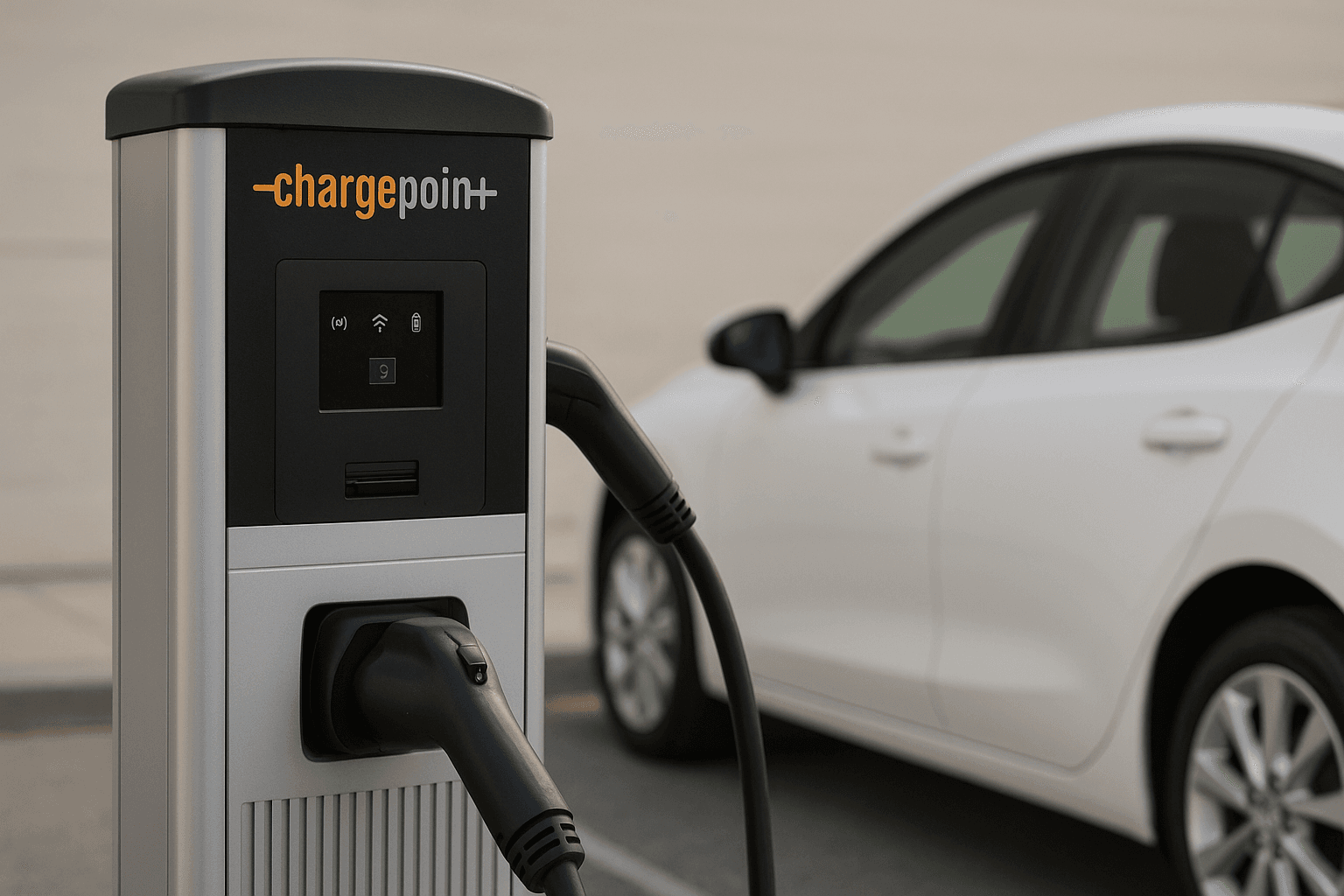
ChargePoint’s stock jump followed an earnings report in which the company beat revenue expectations, even as broader EV demand indicators showed a 27% decline in US electric vehicle sales.
The contrast between a company-level revenue beat and weakening vehicle sales underscores a divergence in investor priorities. Market participants appeared to reward ChargePoint for delivering results that suggested near-term commercial momentum in charging services.
Analysts and investors often weigh earnings performance against macro trends when valuing growth companies. A revenue beat can prompt a rapid re-rating of shares, particularly for firms tied to long-term technology adoption such as EV charging networks.
Charging networks derive revenue from hardware sales, station installations and recurring software or subscription services, meaning their income streams can partially decouple from immediate vehicle sales volumes. That dynamic may explain why investors responded positively to ChargePoint’s update.
Nonetheless, a sustained decline in vehicle sales presents an industry-wide headwind. Lower EV purchases can slow the pace of new charger deployment and affect utilisation rates, which investors will monitor in coming quarters.
Looking ahead, the charging sector’s outlook will hinge on vehicle adoption trends, policy support, and how firms convert one-off revenue gains into durable profitability. Investors and industry observers will likely focus on subsequent financial reports and broader EV market indicators for clarity.
FAQs
Why did ChargePoint’s stock surge recently?
The stock rose after the company reported revenue that exceeded analysts’ expectations, prompting investors to re-evaluate near-term growth prospects despite a wider decline in US EV sales.
What does a 27% decline in US EV sales indicate for the market?
A 27% drop in US EV sales signals a slowdown in vehicle purchases over the measured period, which can affect demand for new charging installations and utilisation but does not by itself determine long-term adoption trends.
How can an earnings beat affect a company’s share price?
An earnings beat can boost investor confidence and trigger a rapid share-price increase as markets update expectations for revenue growth and profitability.
What services do EV charging companies typically provide?
EV charging companies generally offer hardware (chargers), installation services and software or subscription-based network management to enable charging access and billing.
Will weaker EV sales immediately reduce demand for charging infrastructure?
Not necessarily; short-term sales declines can slow deployment, but demand for public and private chargers also depends on vehicle fleet size, utilisation patterns and policy incentives.
Where can I find official financial information on ChargePoint?
Official financial disclosures are available in a company’s regulatory filings and investor relations materials, which provide detailed reports of revenue, guidance and other financial metrics.