News at Glance
- 800 MW capacity being tendered for standalone battery energy storage systems in India.
- 3.2 GWh total energy across the procurement, equivalent to four hours at full output.
- Targeted outcomes include improved grid flexibility and stronger integration of variable renewable generation.
Four-hour storage profile underpins system flexibility
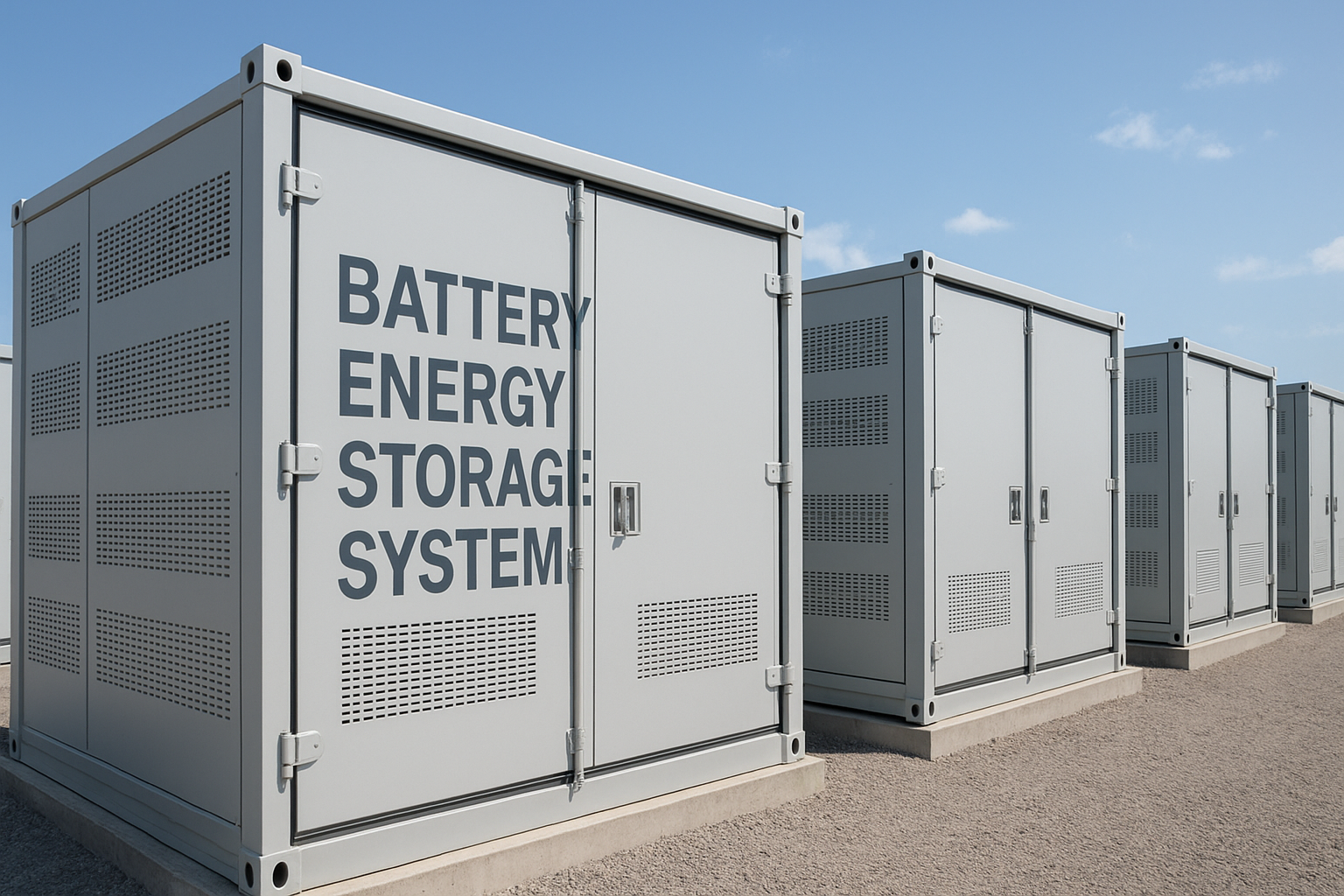
India has launched a tender for 800 MW of standalone battery energy storage systems (BESS) with a combined energy capacity of 3.2 GWh.
The scale of the procurement implies a four-hour duration when discharged at the full 800 MW capacity, a configuration widely used to provide daily shifting of renewable output, peak shaving and ancillary services.
Standalone BESS projects are increasingly chosen by system operators and investors to manage variability from solar and wind plants and to provide fast-response frequency and voltage support. Four-hour systems have become a market standard for balancing evening ramps in solar-dominant grids.
Tenders of this size can attract a mix of domestic and international battery manufacturers, system integrators and independent power producers, who typically bid across delivery, performance and warranty parameters. Procurement processes generally specify technical and commercial terms such as round-trip efficiency, degradation, and grid interconnection requirements.
Beyond operational benefits, large BESS tenders can influence supply chain dynamics and project finance by creating predictable demand for cells, inverters and balance-of-system components. They also offer pathways for additional revenue streams through capacity markets, frequency response and energy arbitrage under prevailing market rules.
FAQs
What is a standalone battery energy storage system (BESS)?
A standalone BESS is a grid-connected battery installation that stores electricity independently of a specific generation asset, delivering power and ancillary services as needed to support grid operations.
How does 3.2 GWh across 800 MW translate to operational duration?
Dividing 3.2 GWh by 800 MW gives four hours, meaning the system can discharge at 800 MW continuously for approximately four hours at full capacity.
Why are four-hour BESS systems commonly procured?
Four-hour systems balance cost and utility by covering evening demand ramps from solar generation, providing peak capacity and enabling energy shifting for daily cycles.
Who typically bids in large BESS tenders?
Bidders often include battery manufacturers, system integrators, independent power producers and consortia combining technology and finance partners, depending on tender conditions.
What grid services can BESS provide?
BESS can supply energy arbitrage, frequency regulation, spinning reserve, ramp management and voltage support, improving reliability and renewable integration.
How do large BESS tenders affect supply chains and finance?
Significant tenders can create predictable demand that supports scale-up in manufacturing, reduces unit costs over time, and attracts project financing by demonstrating market confidence.