
India is rapidly expanding its renewable energy capacity to meet rising electricity demand, but coal will continue to play a major role in the country’s energy mix for the foreseeable future, industry officials and analysts say.
Coal currently provides roughly three-quarters of India’s electricity, while renewable sources supply the remaining share. However, the balance is expected to shift significantly over the coming decades as the country accelerates solar, wind, and energy storage deployment.
India, the world’s most populous country with 1.4 billion people, has one of the fastest-growing electricity markets. The economy is expanding at about 7.5% annually, driving rising energy consumption across industries, households, and digital infrastructure.
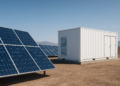
Solar energy has become the fastest-growing segment of the country’s power sector, with installed capacity increasing from 4 gigawatts to about 140 gigawatts over the past decade.
The government is also seeking to expand energy storage capacity to support renewable integration. Storage capacity is expected to increase from around 7 gigawatts to 72 gigawatts over the next decade, according to official targets.
Green hydrogen is also expected to play a role in India’s energy transition as the country seeks to decarbonize heavy industries such as steel, cement, and textiles.
Industry leaders say coal will remain necessary to maintain grid stability as renewable capacity grows.
“We must satisfy our people, industry, and the climate,” said Faruk Patel, chairman of KP Group, a renewable energy developer based in Surat. He said India plans to add 100 gigawatts of coal capacity and about 250 gigawatts of renewable energy over the next five years.
India has set a national net-zero emissions target for 2070, though some industry leaders believe the transition could occur sooner if investment accelerates.
According to the International Energy Agency, India will need to invest about $160 billion annually through 2030 to stay on track with its clean energy transition goals.
The government is pursuing a dual strategy to finance this expansion, seeking to mobilize more domestic capital while attracting larger volumes of foreign investment into renewable infrastructure.
However, challenges remain. India’s electricity grid is under increasing pressure due to rising demand from factories, air conditioning, electric vehicles, and data centers. Transmission bottlenecks, land constraints, and financial challenges at local power utilities continue to slow renewable integration.
Despite these constraints, analysts say India could reach 500 gigawatts of non-fossil power capacity by 2030, positioning the country as a central player in the global energy transition.
Coal consumption is expected to peak within the next few years before gradually declining as renewable capacity and grid infrastructure expand.