News at Glance
- 2 MW solar installation at Pusalapadu substation has been synchronized to the grid.
- Location: Pusalapadu substation, Hyderabad, Telangana, adding local renewable generation capacity.
- Operational significance: Grid sync enables immediate export of solar power and supports local supply stability.
Pusalapadu Substation Begins Exporting Solar Power to Hyderabad Grid
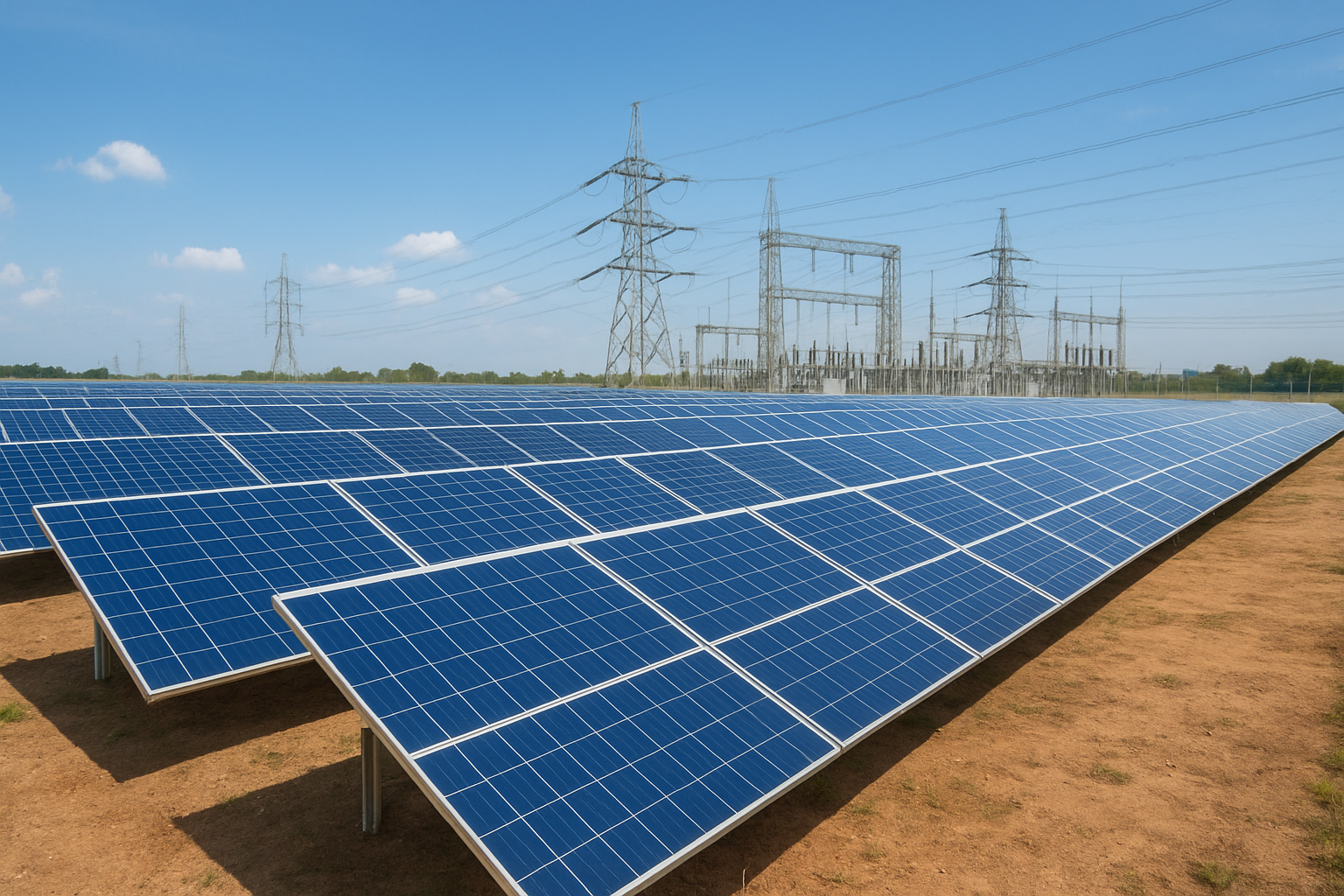
A solar plant with 2 MW capacity located at the Pusalapadu substation in Hyderabad has been synchronized to the electricity grid, according to local reports. The commissioning allows the facility to start exporting renewable energy into the local distribution network.
Substation-based solar projects like this are increasingly used to deliver generation close to load centres, which can reduce transmission losses and ease pressure on distribution infrastructure. While the project size is modest, it contributes to incremental renewable capacity in the Hyderabad area.
Grid synchronization is a technical milestone that confirms the plant’s inverters and protection systems can operate in step with grid frequency and voltage. Following sync, operators typically enter a monitoring phase to track generation, inverter performance and protective relay operation.
This deployment reflects broader trends in India and state-level efforts to expand solar through both utility-scale and distributed projects. Installing panels at or near substations can simplify land-use challenges and speed up connection processes compared with distant solar farms.
Further details on ownership, financing and long-term output were not specified in initial coverage. In the absence of those specifics, standard post-commissioning steps usually include performance testing, generation metering and integration with local dispatch protocols.
FAQs
What does it mean when a solar plant is synchronized to the grid?
Grid synchronization means the solar plant’s electrical output is aligned in frequency and phase with the grid so it can safely and reliably export power; it indicates successful commissioning of inverters and protection systems.
How significant is a 2 MW solar installation for a city like Hyderabad?
A 2 MW plant is a small to medium-sized installation that supplies clean energy locally, reduces reliance on distant generation, and can help meet daytime demand and lower distribution losses.
Why are substations used as sites for solar installations?
Substations are attractive for solar siting because they are close to load centres, have existing grid connection points, and can reduce the need for new transmission infrastructure and land acquisition.
What technical systems ensure a solar plant can safely connect to the grid?
Essential systems include grid-following inverters, anti-islanding protection, synchronising equipment, relays, and metering to ensure safety, reliability and accurate accounting of generated energy.
Can substation solar installations improve local grid stability?
Yes; by providing generation near demand centres, these installations can relieve local network stress, reduce voltage drops and contribute to more resilient daytime supply, especially during peak solar hours.
What monitoring is done after a solar plant is synchronized?
Post-synchronization monitoring typically covers generation output, inverter performance, fault logging, protection coordination and adherence to grid codes to ensure long-term reliable operation.