
News at Glance
- 400 MW of photovoltaic modules secured by Vikram Solar for an agrivoltaic portfolio in India.
- Deal targets agrivoltaic installations, combining solar power generation with agricultural land use.
- Signifies rising commercial interest in dual-use solar as developers explore farm-integrated projects.
400 MW module supply set to support farm-integrated solar projects
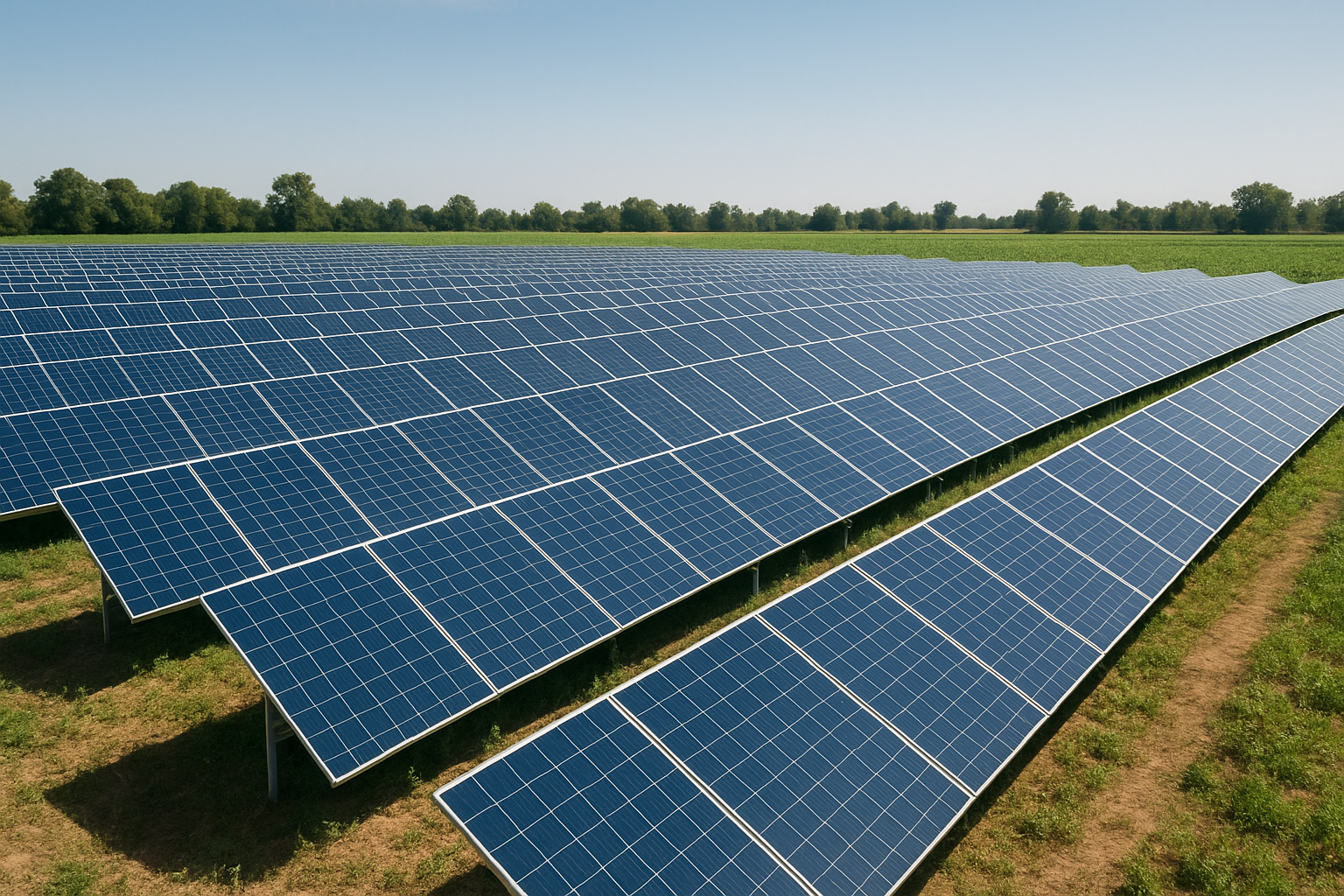
Indian module manufacturer Vikram Solar has secured a contract to supply 400 megawatts of photovoltaic modules for an agrivoltaic portfolio in India. The company confirmed the deal as part of ongoing commercial activity in domestic solar supply chains.
Agrivoltaics pair photovoltaic arrays with agricultural production on the same land, allowing for simultaneous crop cultivation and electricity generation. Proponents say the approach can optimize land use, provide shade-sensitive microclimates for certain crops, and generate additional income streams for farmers.
The module order underscores growing developer interest in projects that blend energy and farming objectives. Developers pursuing agrivoltaic systems typically consider panel height, row spacing and crop selection to balance energy yield and agricultural productivity.
For module manufacturers, agrivoltaic contracts can diversify demand beyond large ground-mounted and rooftop markets. Supply agreements for these portfolios often require tailored logistics and installation practices to accommodate on-farm operations and access needs.
Operational considerations for agrivoltaics include irrigation, maintenance access, and potential impacts on crop yields and farm management. Researchers and pilot projects globally continue to study best practices for different crop types and climates.
As interest in dual-use solar grows, commercial deals such as this 400 MW supply highlight a market pathway for integrating renewable power with rural economies. Broader deployment will depend on project financing, local policy support, and demonstration of long-term agronomic outcomes.
FAQs
What are agrivoltaics and how do they work?
Agrivoltaics are systems that combine photovoltaic panels with agricultural production on the same land. They work by arranging solar arrays to provide partial shade and space for crops or livestock, allowing simultaneous generation of electricity and agricultural output.
Who is Vikram Solar?
Vikram Solar is a photovoltaic module manufacturer that operates in India and supplies solar modules for utility, commercial and other projects. The company engages in module production and commercial supply agreements.
Why would a developer choose agrivoltaic systems over conventional solar farms?
Developers may choose agrivoltaics to optimize land use, generate additional revenue streams for farmers, meet land-use constraints, and access niche financing or sustainability credentials tied to food-energy co-benefits.
What technical factors influence agrivoltaic design?
Key factors include panel height and tilt, row spacing, mounting configuration, crop type and shading tolerance, access for farm machinery, and irrigation management to balance energy yield with crop productivity.
Can agrivoltaics improve farmer incomes?
Agrivoltaics can provide lease payments, direct energy supply or revenue from electricity sales, which may supplement farm income. The extent of financial benefit depends on contract terms, project economics and local market conditions.
What are the main challenges for scaling agrivoltaic projects?
Challenges include demonstrating consistent crop performance under partial shading, aligning project financing, addressing land and water-use regulations, ensuring farmer engagement, and adapting installation practices to agricultural operations.