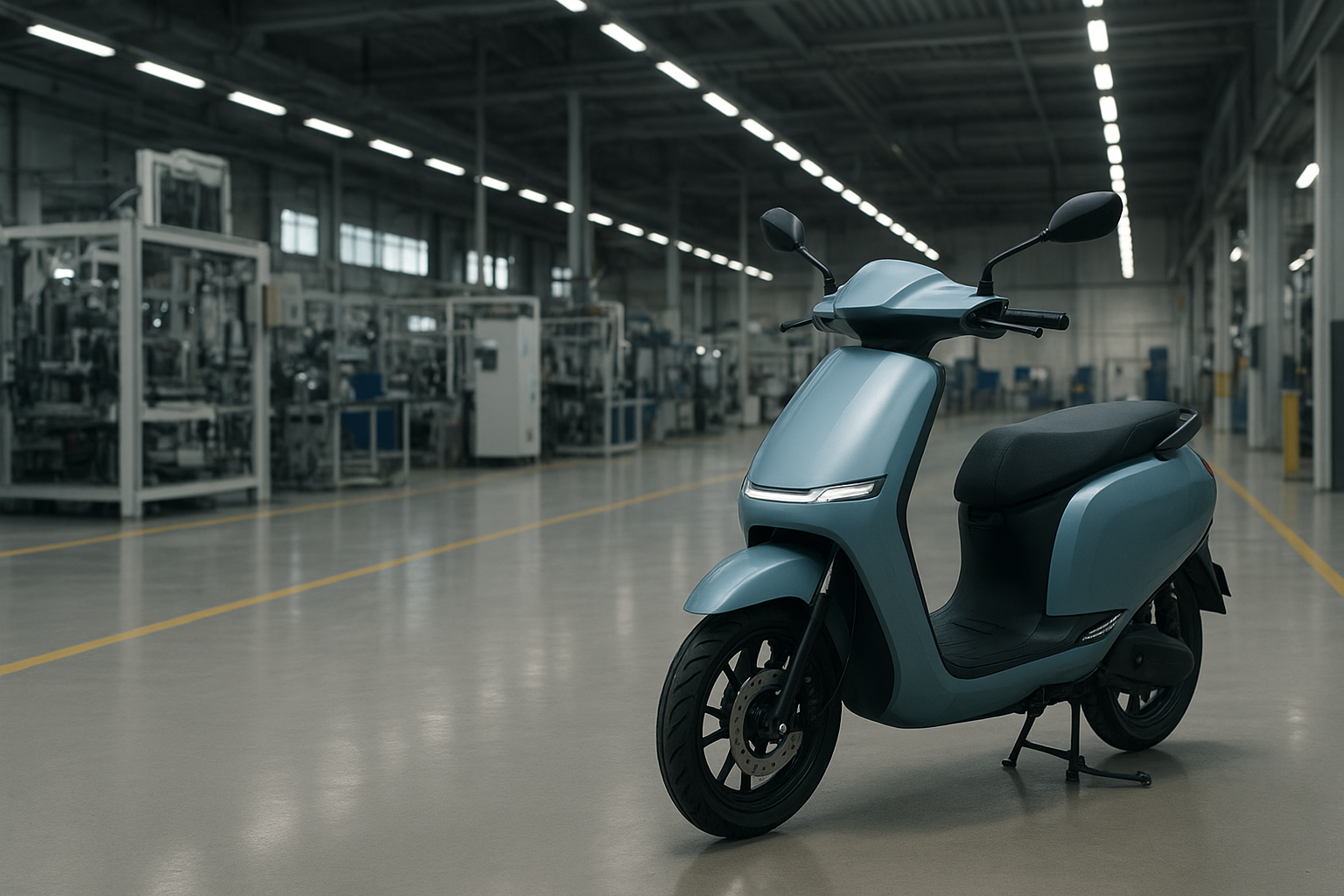
River, an Indian electric two-wheeler company, has raised $120 million in a Series C financing aimed at scaling production and expanding its product range beyond the single model that delivered its early growth. The raise marks a significant step in the company’s push from a one-model play toward a broader lineup as India’s EV market continues to evolve.
Overview
The capital infusion is earmarked for increasing manufacturing throughput and accelerating development of additional models. River has already scaled operations around one vehicle and is now positioning itself to broaden offerings and reach a wider set of customers across urban and peri-urban markets.
Details on participating investors and precise allocation across manufacturing, product development and go-to-market activities were not fully disclosed in the reporting available. River’s move reflects a common growth trajectory for EV startups shifting from validation to volume production.
Why This News Matters
River’s Series C is notable because it signals investor confidence in the commercial viability of electric two-wheelers beyond pilot phases. Success in scaling can influence ride patterns, ownership economics and supply-chain decisions across the segment.
For consumers, broader model availability could mean more choices on range, performance and price. For the industry, it introduces another contender that may push incumbents and new entrants to accelerate product development and distribution investments.
Industry Perspective
The Indian two-wheeler market remains a strategically important segment for electrification due to high volumes and dense urban usage patterns. Companies that can convert early product-market fit into reliable production and service networks stand to capture meaningful share.
Key industry challenges include securing battery supply, managing cost pressures as prices fall, and scaling aftersales networks. River’s funding round addresses the capital intensity of those tasks, but execution risks remain in manufacturing ramp-up and market penetration.
Future Outlook
River’s next phase will likely center on increasing production capacity, shortening time-to-market for new models and expanding sales and service footprints. The broader ambition is to move from a niche product to a family of vehicles that address multiple consumer needs.
Market outcomes will depend on how quickly the company can localize components, control costs and build distribution. Regulatory developments, battery commodity prices and consumer adoption trends will also shape the startup’s trajectory.
Key Highlights
- Funding amount: $120 million raised in a Series C round.
- Main objective: Scale production capacity to meet higher demand.
- Product strategy: Expand beyond its initial single model with additional variants.
- Operational focus: Strengthen manufacturing, product development and market reach.
- Market impact: Potential to intensify competition and broaden consumer choices in India’s electric two-wheeler segment.
What is River?
River is an Indian electric two-wheeler company that scaled its initial growth around a single model and is now seeking to broaden its product portfolio and manufacturing capacity.
How much did the company raise?
The company raised $120 million in a Series C financing round to support expansion activities and product development.
What will the funds be used for?
The reported focus for the proceeds is on scaling production and launching additional models, along with supporting related development and market expansion efforts.
Who invested in the round?
Specific investor names and the full list of participants were not disclosed in the available reporting. Companies at this stage often include strategic and financial investors, but details were not provided.
When will new models be available?
The company has not provided a detailed public timeline for new model launches. New product introductions typically follow stages of design, testing and ramping of production capacity.
What does this mean for consumers and competitors?
The raise could yield more model choices and potentially sharper pricing dynamics as startups and incumbents respond. Consumers may benefit from a broader set of features, while competitors may accelerate their own product and distribution plans.