News at Glance
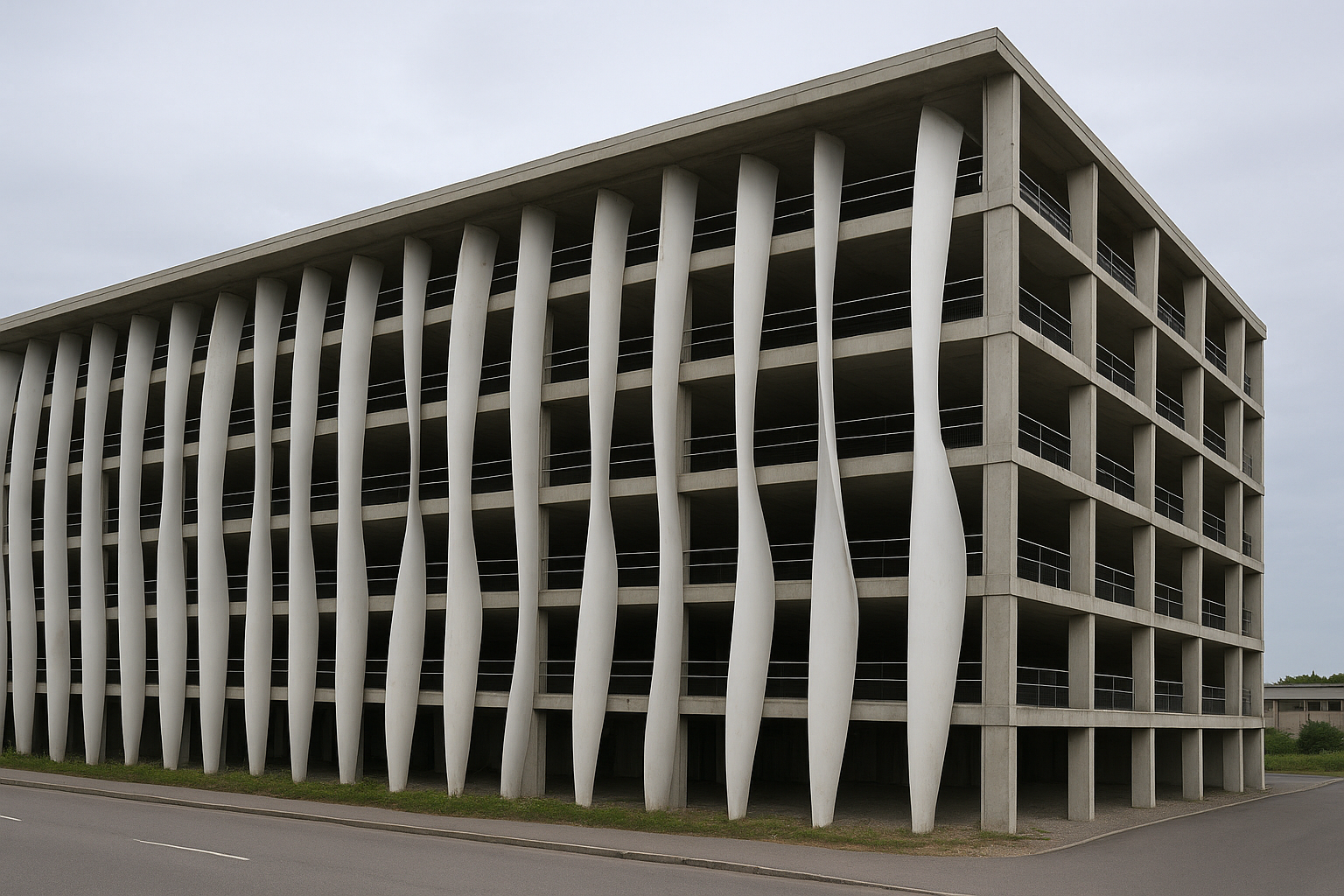
- *57 retired wind-turbine blades* were integrated into the structure of a five-storey car park in Sweden in 2025.
- *The facility provides 365 parking spaces* and uses blades as exterior walls rather than disposing of them.
- *The project exemplifies adaptive reuse* of composite wind-turbine components amid broader recycling challenges.
57 Blades Repurposed as Exterior Walls of Urban Parking Facility
In 2025, a five-storey car park in Sweden was completed using 57 retired wind-turbine blades as part of its exterior walling. The structure encloses 365 parking spaces and reuses large composite components that are otherwise difficult to process at end of life.
Reports describe the project as an example of adaptive reuse rather than mechanical recycling. By incorporating intact blades into building fabric, the scheme diverts bulky composite materials from landfill or incineration and extends the functional life of the material.
Wind-turbine blades are commonly made from fibre-reinforced composites such as glass or carbon fibres bound with thermoset resins. Those material properties make traditional recycling routes challenging, prompting designers and engineers to explore reuse, cutting, and repurposing alternatives.
Specific details about the developer, engineering approach and the mounting or cutting techniques used in this Swedish project were not disclosed in available reports. That said, using whole blades as cladding or structural screening has emerged in recent years as a pragmatic option where they can be safely integrated.
Industry observers say such projects can inform policy and commercial strategies for blade end-of-life management. Adaptive reuse reduces waste volumes and can demonstrate design approaches that preserve embodied energy without relying on new recycling technologies.
While not a universal solution, converting decommissioned blades into architecture or infrastructure elements provides a visible example of circular thinking. Wider adoption will depend on standards for safety, transport logistics and economic viability.
FAQs
Where did the blades used in the car park come from?
Reports state the blades were retired wind-turbine components in Sweden; the available coverage does not identify the original turbines’ operators.
What materials are wind-turbine blades made of?
Blades are typically constructed from fibre-reinforced composites—commonly glass or carbon fibres and thermoset resins—which give strength and low weight but complicate recycling.
Why are reused blades significant for waste management?
Reusing blades can keep large volumes of composite material out of landfill and avoid energy-intensive disposal routes, offering a practical near-term option while recycling technologies mature.
How are blades adapted for building use?
Adaptation methods vary; they can be cut, mounted whole as cladding or formed into structural screens. Specific methods used in this project were not detailed in reports.
Can turbine blades be recycled?
Recycling options exist—mechanical processing, pyrolysis and cement co-processing among them—but they are complex and not yet widely deployed at scale for all blade types.
Does this project solve the blade disposal challenge?
While it offers a meaningful local solution and a visible reuse case, it does not eliminate the broader need for scalable recycling, improved design for disassembly and systemic end-of-life strategies.