2 GW Dutch North Sea Wind Farms Can Generate 7,441 GWh A Year
Two planned offshore wind farms at IJmuiden Ver Gamma-A and Gamma-B can produce up to 7,441 GWh of renewable electricity a year from 2 GW of capacity.

CTJ Desk
Published •9 min read
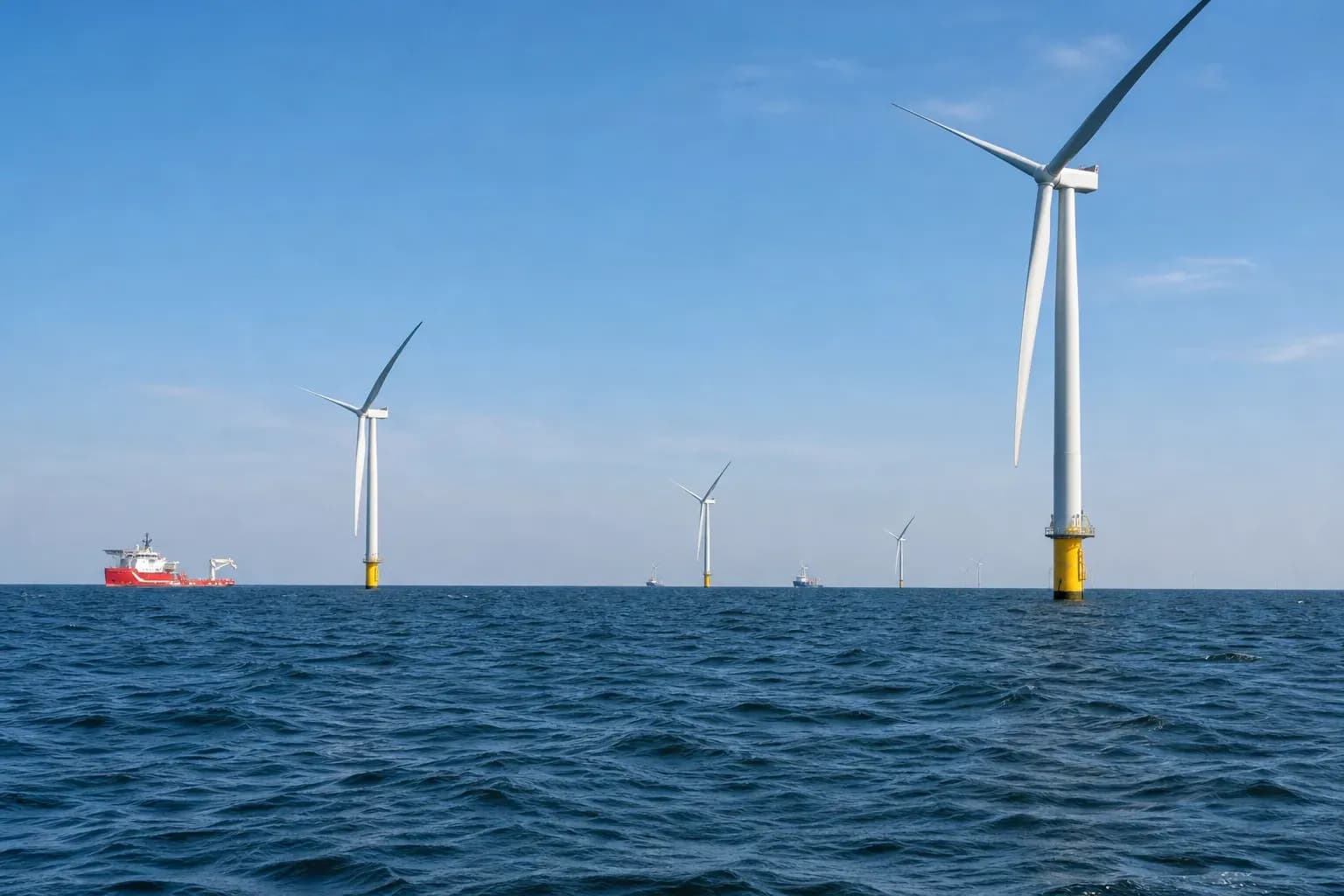
Two Dutch offshore wind sites in the North Sea are expected to deliver up to 7,441 GWh of renewable electricity a year from a combined 2 GW of capacity, according to the European Commission, which has approved state aid backing for the projects. The same two projects are estimated to avoid around 147 million tonnes of CO2 equivalent over their lifetime under a Dutch support scheme with a maximum budget of €9.45 billion.
IJmuiden Ver Gamma-A And Gamma-B Combine 2 GW Of Capacity And 7,441 GWh Of Annual Output
The approval covers a Dutch support mechanism for two offshore wind farms: IJmuiden Ver Gamma-A and IJmuiden Ver Gamma-B. Together, the two sites have planned generating capacity of 2 GW.
The projects are expected to produce up to 7,441 GWh of renewable electricity each year once operating. That output figure is attached to the combined capacity of the two sites rather than to each project individually.
The Dutch government estimates the projects will avoid around 147 million tonnes of CO2 equivalent over their lifetime. The measure is designed to support renewable electricity production in the North Sea and forms part of the Netherlands' offshore wind deployment plan.
The approved scheme has a maximum budget of €9.45 billion. Support would apply only if needed, with aid available for 15 years from the start of operations. Operations are expected to begin in 2032.
Further details of the approval are set out in the European Commission's decision on Dutch state aid for offshore wind energy.
Two Tenders Must Be Held Before July 2027, With One Winner For Each Site
The mechanism covers two offshore wind tenders that must be organized before July 2027. There will be one winner for each tendered site, meaning one selected developer for IJmuiden Ver Gamma-A and one for IJmuiden Ver Gamma-B.
The tender design allows bidders to take two different approaches. A bidder can offer to develop a site without aid by making a concession payment to the Dutch state. A bidder can also request support through an aid premium in order to develop the project.
The process gives priority to bids that do not require support. Only if there are no bids offering a concession payment will the Dutch government move on to bids requesting an aid premium.
If the tender reaches that second stage, bidders will compete on the basis of the lowest bid price for a variable aid premium added to the market price. The competitive process is described as transparent and non-discriminatory.
The tenders will also include prequalification criteria drawn from the Net Zero Industry Act. These require diversification of wind turbine and main specific component supply chains to reduce dependence on imports from outside Europe.
Support Works As A Variable Premium When Power Prices Are Too Low
The approved aid takes the form of a variable premium paid on top of market revenues when electricity prices are too low to cover the cost of electricity production. In practice, that means support is linked to market conditions rather than being paid as a fixed amount regardless of power prices.
The structure also includes measures intended to limit overcompensation. One safeguard is a bid cap. Another is a claw-back mechanism under which part of the aid must be repaid if market prices rise above the beneficiary's contracted strike price.
Because support is available only if a subsidy-free offer is not successful, the mechanism first tests whether a project can proceed through a concession payment model before public funding is used. If support is needed, the competitive tender is then used to determine the level of aid.
The support period can run for 15 years from the start of operations, which the Dutch plan expects in 2032. That places the possible support window after construction and commissioning, during the operating phase when electricity is being supplied to the market.
Approval Was Assessed Under EU State Aid And Energy Rules
The measure was assessed under Article 107(3)(c) of the Treaty on the Functioning of the European Union, which allows aid to facilitate the development of certain economic activities under specified conditions. The assessment also used the 2022 Guidelines on State aid for climate, environmental protection and energy.
Under that review, the aid was found necessary and appropriate to support offshore wind development in light of market and investment risks affecting such projects. The assessment also found that the aid has an incentive effect because it supports investments that would not proceed to the same extent without public support.
The review further found the measure proportionate because the aid level will be set through a competitive bidding procedure and support is granted only if a subsidy-free bid is not successful. The bid cap and claw-back mechanism were also part of that assessment.
The Scheme Fits EU Rules On Renewable Support Mechanisms Through July 2027
The background to the approval includes the EU Electricity Regulation, which allows member states to design renewable support mechanisms as feed-in premiums instead of two-way contracts for difference until July 2027. The Dutch measure uses that option through the variable premium structure.
The approval also sits alongside the revised Renewable Energy Directive adopted in 2023, which set an EU-wide binding target of at least 42.5% renewable energy in the energy mix, with an aim of reaching 45% by 2030.
From here, the next operational steps named for the Dutch scheme are the organization of the two offshore wind tenders before July 2027, the selection of one winner for each site, and project development ahead of expected operations in 2032. If a concession-payment bid is not available for a site, the aid-premium route can then be used under the approved terms for the 15-year support period.
SOURCES
- European Commission: Commission approves €9.5 billion Dutch State aid to support offshore wind energy