How Can AI-Powered Solar Cleaning Robots Improve the Performance of Solar Power Plants?

October 11, 2026•10 min read
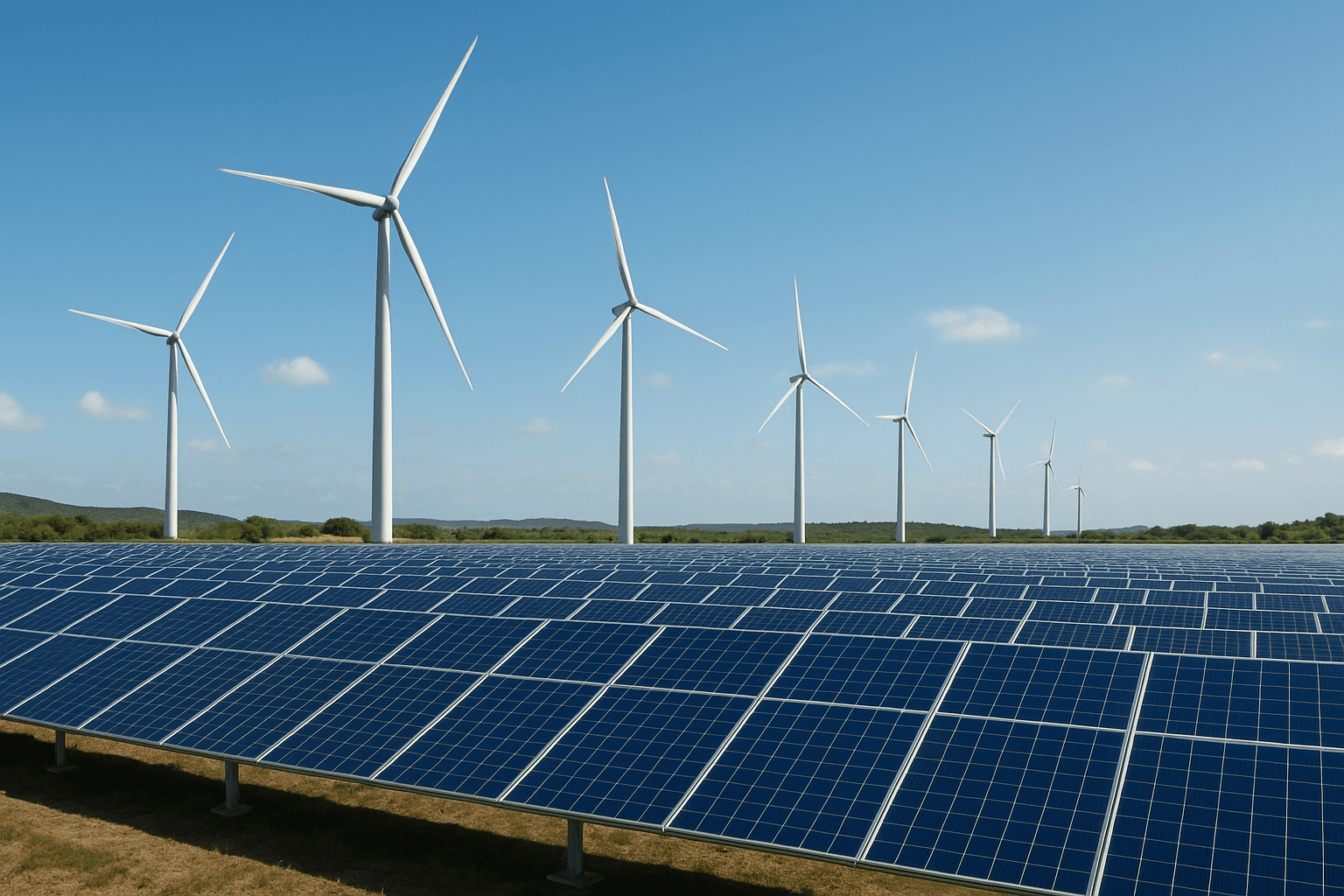
How Can AI-Powered Solar Cleaning Robots Improve the Performance of Solar Power Plants?
As India's solar energy capacity continues to expand, maintaining consistent power generation has become an important priority for solar plant operators. While solar modules are designed to operate for decades, their performance can be affected by dust accumulation, environmental conditions and maintenance challenges.
One of the most persistent issues is soiling—the accumulation of dust and other contaminants on solar panel surfaces. When left unaddressed, soiling can reduce the sunlight reaching photovoltaic cells, affecting energy generation and the financial performance of a solar installation.
AI-powered robotic cleaning systems offer a technology-driven approach to addressing this challenge by combining automated cleaning, intelligent scheduling and remote monitoring.
Why Is Solar Panel Cleaning Critical for Plant Performance?
Solar panels operate in diverse environmental conditions. Dust storms, agricultural activity, industrial pollution and irregular rainfall can influence the rate at which contaminants accumulate on module surfaces.
The severity of soiling losses depends on the location, climate, dust composition and cleaning frequency. In high-soiling regions, frequent cleaning may be necessary to maintain energy generation.
However, conventional cleaning methods can involve significant labour, water consumption and logistical coordination. For large utility-scale installations, maintaining consistent cleaning schedules across thousands of modules can become an operational challenge.
An effective cleaning strategy must therefore balance energy generation, maintenance expenditure and resource consumption.
How Do AI-Powered Solar Cleaning Robots Work?
AI-powered solar cleaning robots automate routine maintenance activities and help operators manage cleaning schedules more efficiently.
TAYPRO's robotic cleaning systems use a patented Dual-Pass Cleaning mechanism that combines airflow with microfiber-based contact cleaning. The airflow helps dislodge dust, while the microfiber mechanism removes remaining contaminants from the module surface without routine water-based washing.
Depending on the model, the robots can operate autonomously or in semi-automatic configurations. Remote monitoring capabilities enable operators to track cleaning activities and review equipment status.
This approach can help standardise cleaning operations while reducing dependence on repeated manual intervention.
What Role Does Artificial Intelligence Play?
Artificial intelligence can improve cleaning operations by helping plant operators make more informed maintenance decisions.
Weather-based scheduling: Cleaning requirements can change with rainfall, humidity, wind conditions and dust accumulation. AI-driven scheduling uses weather information and historical patterns to help identify suitable cleaning windows.
Adaptive operation: Changes in terrain and operating conditions can influence robot performance. Adaptive control capabilities can help adjust operating parameters, such as speed and torque, according to system conditions.
Predictive maintenance: Monitoring equipment parameters can help identify abnormal operating conditions and potential faults, allowing maintenance teams to investigate issues before they cause prolonged downtime.
Remote monitoring: Cloud-connected monitoring systems provide visibility into cleaning cycles, robot health and operational alerts, supporting maintenance planning across large installations.
These capabilities can help move solar panel cleaning from a predominantly routine activity towards a more data-informed maintenance process.
Can Robotic Cleaning Deliver Measurable Results?
The value of robotic cleaning should be assessed through actual operating data, including energy generation, cleaning-related downtime, labour requirements, water consumption and maintenance expenditure.
TAYPRO's published case studies provide examples of the results reported at specific solar installations.
At Tata Power's 50 MW Prayagraj solar plant, the reported outcomes included an 8–12% increase in energy output, a 60–70% reduction in cleaning-related downtime and annual water savings of approximately 1.8–2 million litres. The case study reports a return on investment within 14–16 months.
At Avaada's 70 MW Banda solar plant, the reported results included a 6–8% increase in energy generation, a reduction of more than 70% in cleaning-related downtime and annual O&M savings of ₹12–15 lakh.
These figures reflect the conditions of the respective projects and should not be treated as universal performance guarantees. Actual results depend on baseline soiling losses, site conditions, electricity tariffs, cleaning frequency and implementation costs.
What Should Operators Consider Before Adopting Robotic Cleaning?
Selecting a robotic cleaning solution requires an assessment of the plant's specific operational requirements.
Operators should evaluate module configuration, mounting structures, local weather patterns, dust accumulation, cleaning frequency and the availability of technical support. Compatibility with the installation and the reliability of the cleaning system are also important considerations.
A financial assessment should compare the initial investment and recurring maintenance costs against potential benefits from improved energy generation, reduced labour requirements, lower water consumption and reduced cleaning-related downtime.
Establishing baseline performance measurements before deployment helps operators evaluate the actual impact of the solution after implementation.
Conclusion
AI-powered solar cleaning robots offer an approach to improving the consistency and efficiency of solar panel maintenance. By combining waterless cleaning mechanisms with intelligent scheduling and remote monitoring, these systems can help plant operators address soiling losses while managing operational resources.
However, technology alone does not guarantee improved performance. The results depend on selecting the appropriate system, understanding site-specific conditions and consistently measuring operational outcomes.
As solar installations become larger and maintenance requirements more complex, integrating automation and data-driven decision-making into solar O&M can help operators work towards more reliable energy generation and efficient plant operations.