News at Glance
- Modules were placed 10 metres below the sea surface as part of a controlled field test to evaluate underwater photovoltaic performance.
- Tests focused on power generation and durability under real seawater conditions, including light attenuation and biofouling exposure.
- Researchers highlighted both opportunities and technical hurdles for using submerged PV for coastal, aquaculture and sensor-network power needs.
Solar modules placed 10 metres below sea surface for field evaluation
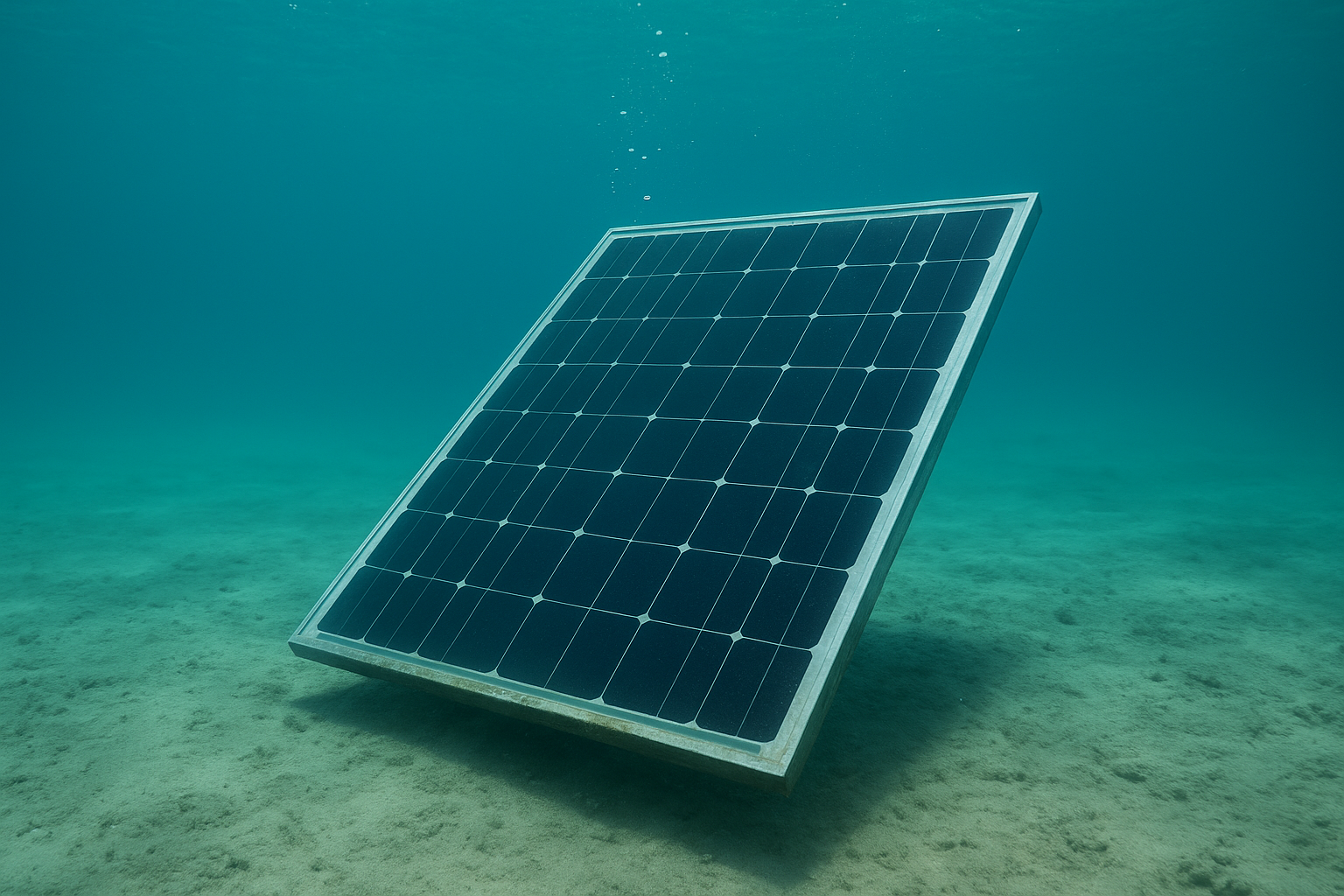
Scientists have carried out sea trials that positioned photovoltaic panels at a depth of 10 metres to assess whether solar power can be harvested effectively underwater. The work aims to test electrical output and the physical endurance of standard PV technology when submerged in seawater.
The experiment monitored how much sunlight penetrates to that depth and how it affects electricity generation, while exposing modules to marine challenges such as saltwater corrosion and biological growth. Results from such trials help researchers understand real-world constraints that cannot be replicated fully in laboratories.
Underwater PV is distinct from floating solar: submerged systems face far lower irradiance, wavelength shifts through water, and faster surface degradation from marine organisms. These factors typically reduce energy yield compared with land-based panels and require specialised materials or coatings to maintain performance.
Potential use cases for submerged solar include powering seabed sensors, remote monitoring stations, aquaculture installations and other offshore equipment where running cables from shore is costly. Proponents highlight the appeal of freeing up land and improving resilience against surface weather events.
However, practical deployment faces hurdles: maintaining arrays, preventing biofouling, ensuring electrical safety underwater and transmitting electricity to shore all add cost and complexity. Economic viability will depend on advances in materials, mounting systems and installation practices.
Researchers stress these early tests are exploratory. Further trials across seasons and locations are needed to quantify long-term performance and lifecycle costs before submerged solar can be considered for commercial-scale applications.
FAQs
How does underwater solar power generate electricity?
Underwater solar systems use photovoltaic cells that convert the limited sunlight reaching below the sea surface into electricity; efficiency depends on light intensity, water clarity and the spectral composition of sunlight at depth.
How does the efficiency of submerged solar compare with land-based panels?
Submerged panels generally produce less power than land-based systems because water absorbs and scatters sunlight, reducing available irradiance and shifting wavelengths away from the peak sensitivity of standard solar cells.
What are the main technical challenges for underwater photovoltaics?
Key challenges include light attenuation with depth, biofouling, corrosion from saltwater, electrical insulation and the cost of maintenance and power transmission to shore.
At what depths are underwater solar panels practical?
Practical depths are limited by light penetration; shallow coastal waters may allow operation within a few metres to perhaps around 10 metres depending on water clarity, but deeper placements yield rapidly diminishing returns.
What applications might benefit from submerged solar panels?
Submerged PV could power seabed sensors, aquaculture cages, underwater communications equipment and isolated offshore infrastructure where connecting to a grid is impractical or expensive.
Can submerged solar arrays be maintained and serviced reliably?
Maintenance is more complex than for land or floating systems due to accessibility, diving requirements and biofouling control; long-term reliability will depend on design choices that minimise maintenance needs.