
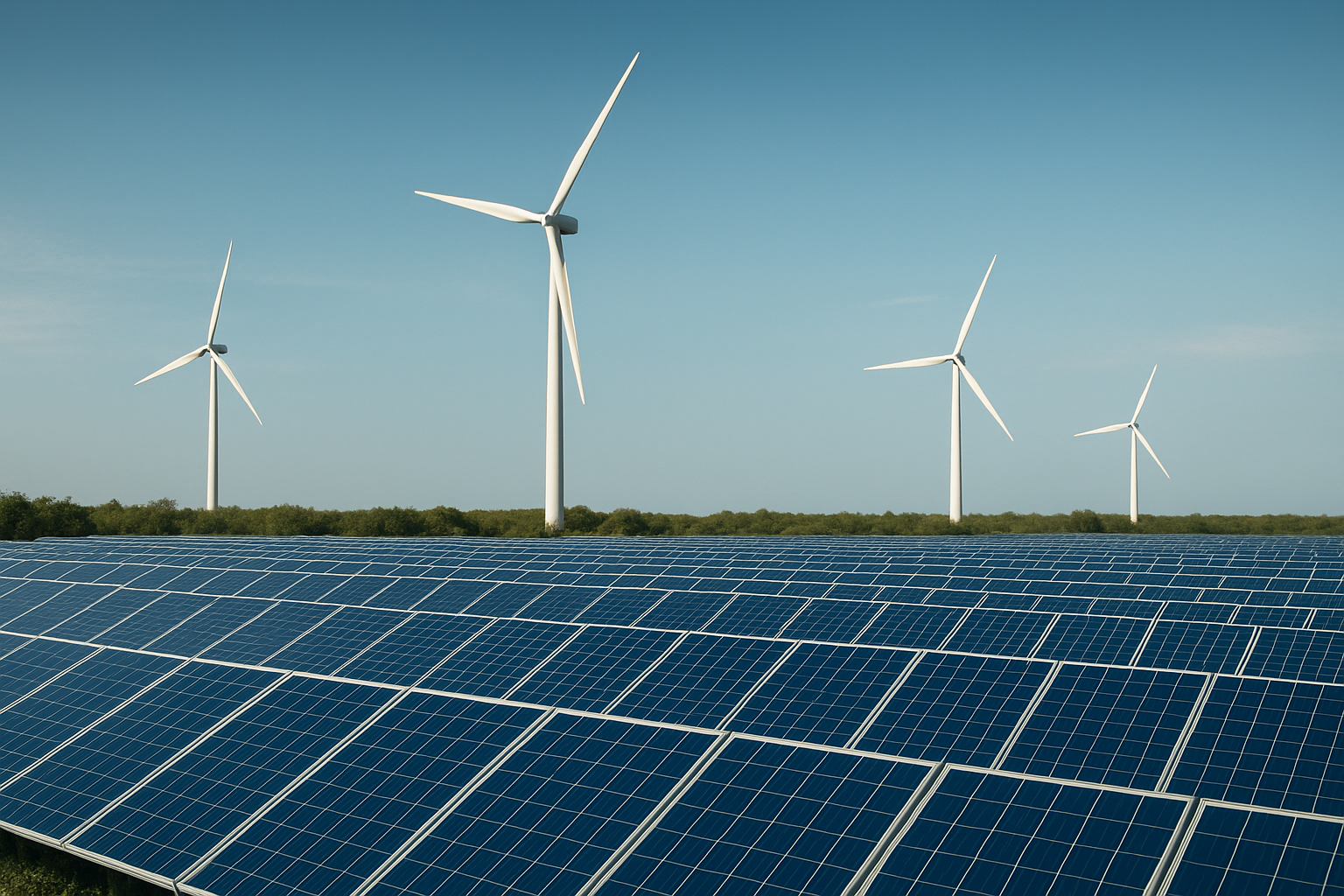
India has reached a milestone of 300 gigawatts of installed renewable energy capacity, equal to 60% of its 500 GW target for 2030. The achievement reflects rapid deployment across technologies and sustained policy support, even as challenges remain in scaling the next phase of growth.
Overview
The 300 GW figure encompasses utility-scale and distributed renewable installations across technologies commonly classified as renewables. This milestone marks substantial progress toward the government’s decade-long ambition to expand clean energy supply.
Growth has been driven by large-scale solar and wind projects, as well as smaller rooftop and distributed systems. Public procurement mechanisms, auctions and state-level programs have been central to capacity additions.
Why This News Matters
Reaching 60% of the 2030 target sends market signals to investors, equipment manufacturers and grid operators. It indicates that policy frameworks and developer activity can deliver substantial capacity within compressed timelines.
However, capacity additions alone do not resolve issues around system reliability, seasonal variability and the need for firming resources. Translating capacity into dependable, affordable power requires parallel advances in transmission, storage and market design.
Industry Perspective
For developers and utilities, the milestone validates years of deployment and cost reductions that have made renewables increasingly competitive. It also exposes operational stresses as higher renewable shares interact with conventional generation and demand patterns.
Manufacturers and project financiers are likely to view the progress as a signal to deepen investments in local supply chains and in technologies such as battery storage, hybrid systems and grid management software. At the same time, states will need to coordinate auctions and curtailment management to maintain investor confidence.
Future Outlook
Moving from 300 GW to the 500 GW target requires sustained additions and faster rollout of enabling infrastructure. Key enablers include expanded transmission corridors, enhanced storage capacity and market reforms to value flexibility and firm power.
Policy choices will shape the pathway: continued use of competitive auctions, incentives for domestic manufacturing, and clearer rules for hybrid and storage projects can accelerate deployment. Equally important are measures that reduce land and permitting bottlenecks.
Key Highlights
- India has achieved 300 GW of renewable energy capacity, representing 60% of its 500 GW by 2030 target.
- Growth has been supported by large-scale solar and wind projects alongside distributed installations.
- Investment signals are strengthening but grid integration and storage needs are rising.
- Policy stability, transmission expansion and market reforms are critical for the remaining target.
- Reaching the full target will require coordinated action across central and state authorities and private stakeholders.
Frequently Asked Questions
What does the 300 GW milestone include?
The milestone refers to installed renewable energy capacity across technologies typically classified as renewables, including utility-scale and distributed systems. It reflects cumulative capacity additions up to the reported total.
How close is India to its 2030 renewable target?
At 300 GW, India has achieved 60% of a 500 GW target set for 2030. Substantial capacity still needs to be added to meet the target within the remaining timeframe.
What are the main challenges after reaching 300 GW?
Key challenges include integrating variable generation into the grid, expanding transmission and distribution networks, scaling energy storage, and addressing land and permitting constraints.
What role does storage play in meeting the 500 GW goal?
Storage is essential to firm intermittent renewables, provide grid stability and enable higher shares of variable generation. Deployment of batteries and other storage technologies complements generation capacity.
Will this milestone affect investor confidence?
Reaching 300 GW can strengthen investor confidence by demonstrating delivery capability, but sustained investor interest will depend on transparent procurement, predictable policy and solutions to integration challenges.
What policy measures can accelerate the remaining progress?
Measures include streamlined permitting, targeted incentives for storage and domestic manufacturing, transmission expansion, and market reforms that properly value flexibility and long-duration firm power.