News at Glance
- Geomagnetic storms can induce currents in long transmission lines, creating risk for high-voltage transformers.
- Bulk-power equipment is vulnerable because damaged large transformers have long lead times for replacement and repair.
- Grid operators can reduce risk through operational steps, monitoring and targeted hardware upgrades.
Bulk-power transformers face long replacement lead times after severe solar storms
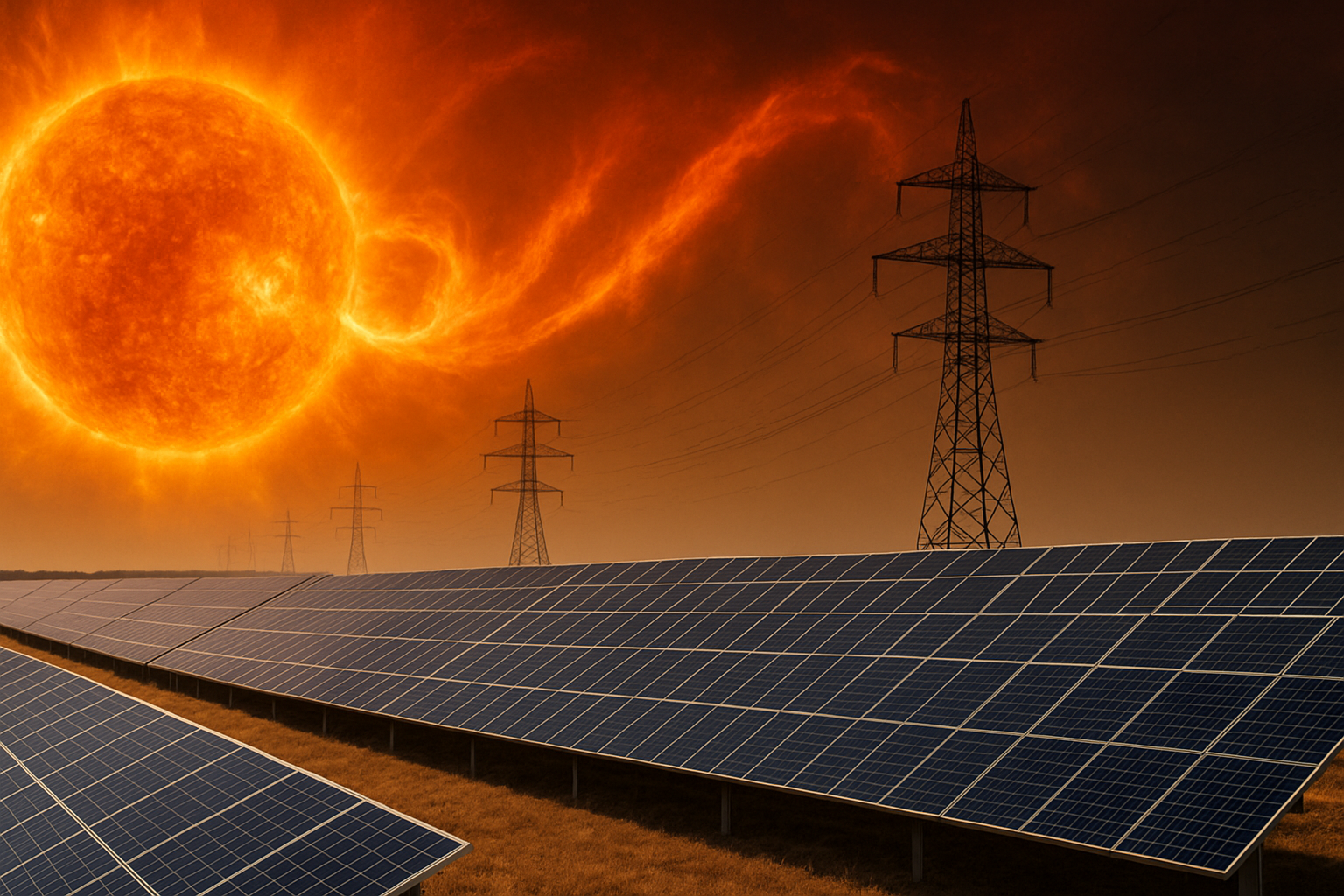
Solar eruptions hurl plasma and magnetic fields toward Earth, producing geomagnetic disturbances that can couple into power systems. Those geomagnetic storms create slowly varying ground-level electric fields that drive geomagnetically induced currents in conductors.
Long, high-voltage transmission lines are particularly effective pathways for these induced currents, which can flow into transformers and other substation equipment. When transformers are driven into saturation by DC-like currents they can overheat, experience accelerated insulation aging, and in extreme cases fail outright.
The systemic risk stems from the concentrated nature of large power transformers: units are costly, few manufacturers exist globally, and lead times for replacement can be lengthy. That potential for extended outages has focused attention on preparedness across utilities and regulators.
Mitigation measures fall into operational and physical categories. Operators can adopt short-term actions during space-weather warnings, such as adjusting flows, reducing transformer loading or temporarily taking sensitive equipment offline. Longer-term steps include installing GIC monitoring, series capacitors, or neutral resistors to limit DC flow into transformers.
Investment decisions are weighed against probabilities and costs; not every region faces the same exposure because local geology and grid topology affect induced field strength. Planning also involves coordination with transmission owners, manufacturers and emergency managers to speed recovery if damage occurs.
FAQs
What is a solar storm and how can it affect electrical infrastructure?
A solar storm refers to disturbances from the Sun, such as coronal mass ejections and solar flares, that interact with Earth’s magnetic field. These events can induce electric fields at ground level that drive currents in long conductors, potentially stressing transformers and other grid components.
What are geomagnetically induced currents (GICs)?
Geomagnetically induced currents are quasi-DC currents generated in conductive networks on Earth during geomagnetic disturbances. They flow through transmission lines and substations and can cause transformer saturation, heating and protection misoperations.
Which parts of the grid are most vulnerable to space weather?
High-voltage transmission networks with long lines and large transformers are generally most vulnerable. Local ground conductivity and line orientation also influence how strongly a region experiences induced effects.
What short-term actions can grid operators take during a space-weather warning?
Operators can reduce transformer loading, reconfigure flows, increase monitoring, and defer nonessential maintenance. In some cases they may take vulnerable equipment out of service temporarily to avoid damage.
What physical upgrades can reduce damage from solar storms?
Upgrades include GIC monitoring systems, neutral grounding resistors, series capacitors, and improved transformer designs. Such measures limit DC-like currents entering transformer windings and provide early warning of abnormal conditions.
How should communities prepare for a severe solar-storm-related outage?
Communities should include prolonged power interruptions in emergency plans, maintain communication backups, ensure critical facilities have resilient power sources, and coordinate with utilities on restoration priorities.