Only 3% Of Global Data Center Capacity Could Shift Demand By 2030
Ember says only around 3% of global data center capacity could participate in load shifting by 2030, while onsite generation and storage may offer larger peak-demand reductions.

CTJ Desk
Published •11 min read
Ember has published new analysis saying only around 3% of global data center capacity is likely to be able to shift its power demand by 2030. The study says most workloads expected to dominate data center operations by then need an immediate response, limiting how much electricity use can be moved away from peak hours.
In Ember's 29 October 2026 analysis of data centre flexibility, the think tank also examined nine major data center markets and found that load shifting would reduce peak electricity demand by an estimated 0.1% to 0.6% in seven of them. A separate Texas case study found a larger potential reduction from onsite generation and storage, with up to 2.7 GW of grid demand relief during peak demand hours.
Ember Estimates Only Around 3% Of Global Capacity Can Shift Demand By 2030
According to Ember, the main constraint on load shifting is the type of work most data centers perform. The analysis says around 87% of global data center capacity in 2030 is expected to run cloud services, enterprise IT and AI inference. Those workloads need to respond to users instantly, which means they cannot easily be paused or moved to another time.
Load shifting refers to moving electricity-intensive activity away from the hours when power demand on the grid is highest. Ember said that option is available for only a small share of expected global capacity because the technical flexibility depends on the workload inside each facility.
The study adds that AI training facilities offer more scope for shifting demand, but they represent the smallest portion of global data center capacity. That is why the global estimate for participation in load shifting remains at about 3% by 2030, according to Ember.
Seven Of Nine Markets Show 0.1% To 0.6% Peak-Demand Relief
Ember examined nine major data center markets: Texas, California and New York in the US; Ireland, the UK and Germany in Europe; and Malaysia, the Philippines and Singapore in Southeast Asia.
Across those nine markets, the analysis estimates that load shifting would cut peak demand by 0.1% to 0.6% in seven. The two higher estimates were Ireland and Malaysia, where data centers could account for around a quarter of peak demand by 2030. In those two markets, the potential peak-demand reduction from load shifting was estimated at around 1.5%.
Ember described these figures as indicative estimates based on limited available data. The organization said it has also published an interactive calculator so readers can test different assumptions.
Market Group | Estimated Peak-Demand Reduction From Load Shifting |
|---|---|
Seven of nine markets examined | 0.1% to 0.6% |
Ireland | Around 1.5% |
Malaysia | Around 1.5% |
The market-level findings sit alongside Ember's global estimate. Taken together, they describe a system in which only a limited portion of data center demand can be moved away from peak hours, even in regions where data centers make up a larger share of system load.
Texas Case Study Compares 0.55 GW From Load Shifting With Up To 2.7 GW Onsite
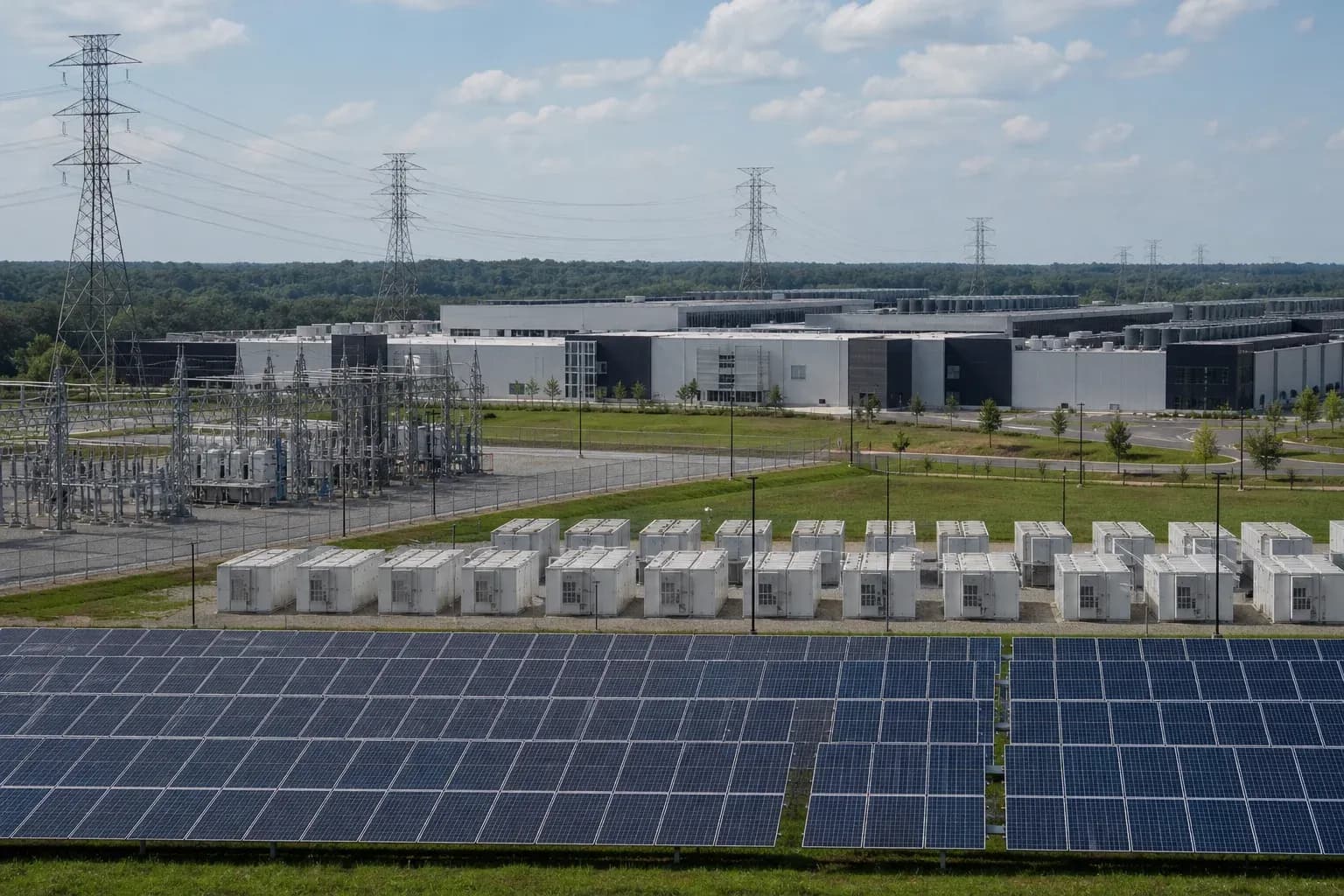
Alongside load shifting, Ember assessed onsite generation and storage as another form of flexibility. In practical terms, that means a data center continues operating while meeting more of its own power needs on site, reducing how much electricity it draws from the grid during stress events or peak hours.
For that comparison, Ember used a case study of two large Texas data centers: Stargate Abilene and Comanche Circle. According to Ember, switching to onsite generation could reduce grid demand by up to 2.7 GW during peak demand hours. The same case study estimated 0.55 GW of reduction through load shifting.
That means the onsite option in the Texas example would provide nearly five times as much peak-hour grid relief as load shifting, based on Ember's figures.
Ember said the overall system effect depends on what kind of onsite assets are built and how they are regulated. The analysis points to Malaysia as an example where developers are pairing data centers with large solar and battery storage projects.
Workload Differences Shape Which Flexibility Option A Facility Can Provide
A central finding in the analysis is that load shifting and onsite generation are not presented as substitutes for one another. Instead, Ember said the most suitable approach depends on the workloads each data center runs.
For facilities dominated by cloud services, enterprise IT and AI inference, the scope to move demand is limited because computing tasks must be delivered immediately. For facilities with more flexible workloads, such as AI training, there is more scope to change the timing of electricity use. Onsite generation and storage can then add a different layer of flexibility by lowering grid consumption while operations continue.
This distinction is important to the way Ember frames the issue. Rather than treating all data centers as having the same ability to support the grid, the analysis separates facilities by what they do and by the infrastructure installed behind the meter.
Grid Connection Rules And Behind-The-Meter Permissions Are The Next Focus
Ember says the next stage depends on regulatory decisions about how data centers connect to the grid and what assets are allowed behind the meter. According to the analysis, regulators need to account for differences in data center workloads when deciding what flexibility each facility can be expected to provide.
The study names three areas for those decisions: how data centers connect to the grid, what flexibility they can be expected to provide, and what behind-the-meter assets should be permitted. Ember also says grid operators need to account for onsite generation already installed at data centers when procuring capacity.
Those process questions follow directly from the report's two main numerical findings: only around 3% of global data center capacity is expected to be able to participate in load shifting by 2030, and onsite generation can provide larger peak-demand reductions in at least the Texas case examined. The interactive calculator published with the analysis is intended to let readers explore those estimates under different assumptions.