
Understanding Soiling Losses in Solar Power Plants: The Case for Intelligent Robotic Cleaning

CTJ Desk
October 11, 2026•11 min read
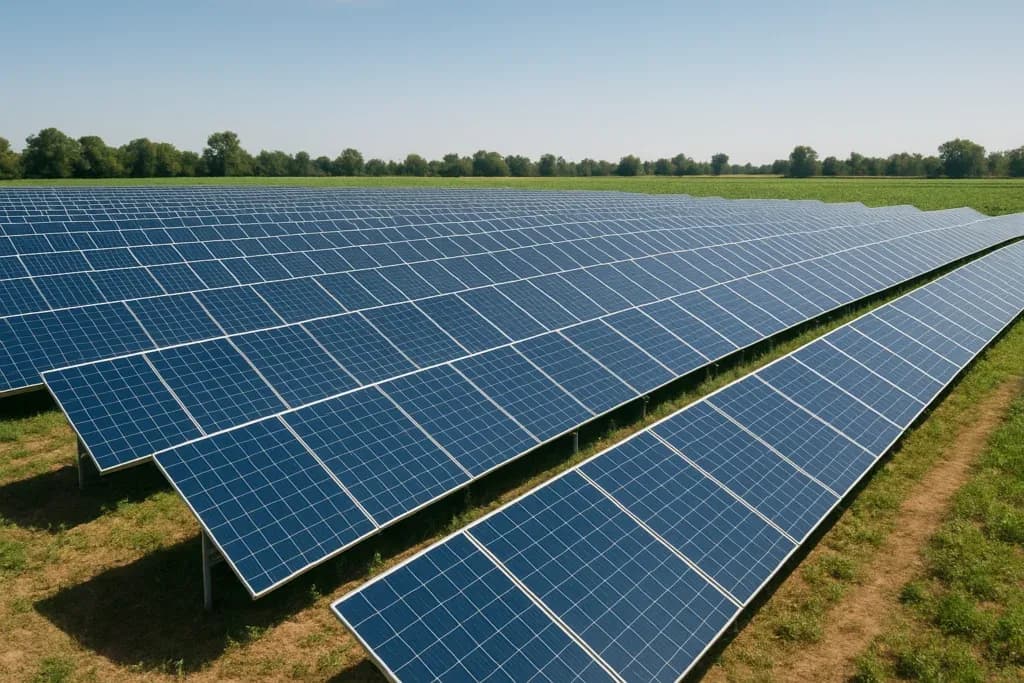
Solar energy has become a critical part of India’s renewable energy transition. As utility-scale solar installations expand, maintaining consistent energy generation and operational efficiency is becoming increasingly important. While advances in photovoltaic technology continue to improve module efficiency, one fundamental challenge remains: the accumulation of dust and other contaminants on solar panels.
Soiling, caused by dust, dirt, bird droppings and other airborne particles, reduces the amount of sunlight reaching photovoltaic cells. If left unaddressed, it can contribute to significant energy losses, affecting plant performance and overall project economics.
Understanding Soiling Losses
Soiling losses occur when contaminants accumulate on the surface of solar modules and obstruct incoming sunlight. The severity of these losses depends on several factors, including local weather conditions, dust composition, humidity, rainfall patterns and the surrounding environment.
Solar plants located near agricultural fields, industrial areas or arid regions may experience particularly challenging conditions. In some locations, moisture combines with dust to form sticky deposits that are difficult to remove through conventional cleaning methods.
The consequences extend beyond reduced energy generation. Plant operators must also account for cleaning frequency, labour availability, water consumption, equipment maintenance and operational downtime.
Consequently, effective module cleaning is not simply a maintenance activity. It is an important part of managing solar plant performance.
The Limitations of Conventional Cleaning Methods
Traditional solar panel cleaning generally relies on manual labour, brushes and water-based systems. Although these approaches can remove accumulated dirt, they present operational challenges, particularly across large utility-scale installations.
Water-based cleaning can place considerable pressure on local water resources, especially in water-stressed regions. Transporting water to remote sites can also increase operational expenditure.
Manual cleaning, meanwhile, requires workforce availability and consistent supervision. Large installations may need frequent cleaning cycles, making it difficult to maintain uniform cleaning quality across every module. Adverse weather and difficult site conditions can further disrupt operations.
These limitations highlight the need for cleaning systems that improve consistency while reducing resource consumption and dependence on manual intervention.
Waterless Robotic Cleaning: A More Efficient Approach
Robotic cleaning offers an alternative by automating repetitive cleaning operations and enabling more consistent maintenance schedules.
TAYPRO’s waterless robotic cleaning technology uses a patented Dual-Pass Cleaning mechanism that combines airflow with microfiber-based contact cleaning. The airflow helps dislodge dust, while the microfiber mechanism removes remaining contaminants from the module surface.
This approach is designed to clean solar panels without routine water consumption during the cleaning process. It can be particularly relevant for installations where water availability, labour requirements and the cost of frequent cleaning are significant operational concerns.
Automation also enables cleaning cycles to be scheduled more systematically, helping plant operators maintain module cleanliness without relying entirely on manual coordination.
The Role of AI in Solar Panel Maintenance
The next step in robotic cleaning is the integration of artificial intelligence and machine learning into operational decision-making.
Fixed cleaning schedules may not always reflect actual site conditions. Dust accumulation varies with weather, local environmental conditions and seasonal changes. Cleaning too frequently can increase operating costs, while cleaning too infrequently can allow avoidable energy losses to persist.
AI-driven scheduling can help address this challenge by using weather information and historical operating patterns to determine suitable cleaning windows.
TAYPRO’s robotic systems incorporate weather-based scheduling and adaptive control capabilities. Depending on the model and configuration, these technologies support decisions around cleaning cycles, operating conditions and robot performance.
Predictive maintenance is another important application. Monitoring operational parameters and identifying abnormal conditions can help maintenance teams investigate potential issues before they cause extended equipment downtime.
Together, these capabilities move solar panel cleaning towards a more data-informed approach, connecting routine maintenance with broader plant performance objectives.
Measuring the Operational and Financial Impact
The value of a cleaning solution should ultimately be assessed through measurable outcomes rather than technology alone.
Plant operators should evaluate energy generation before and after deployment, cleaning-related downtime, labour requirements, water consumption, maintenance expenditure and the total cost of ownership.
TAYPRO’s published project case studies illustrate the potential impact of robotic cleaning under different site conditions.
At Tata Power’s 50 MW Prayagraj solar plant, the reported outcomes included an 8–12% increase in energy output and a 60–70% reduction in cleaning-related downtime. The case study also reports annual water savings of approximately 1.8–2 million litres and a return on investment within 14–16 months.
At Avaada’s 50 MW Yadgir facility, the reported increase in energy generation was 8–10%, with payback achieved within 12–18 months.
These results are specific to the respective projects and operating conditions. Actual performance and payback periods can vary depending on baseline soiling losses, local climate, electricity tariffs, cleaning frequency, installation configuration and implementation costs.
For this reason, a site-specific assessment is essential before selecting a cleaning solution or estimating its financial returns.
Building a Performance-Focused Solar O&M Strategy
An effective solar operations and maintenance strategy should treat cleaning as part of an integrated performance management process.
The first step is to understand the site's soiling patterns and identify periods when dust accumulation has the greatest effect on energy generation. Operators should then establish an appropriate cleaning strategy based on environmental conditions, plant configuration and operating requirements.
The next step is to monitor performance consistently. Energy generation, cleaning records, equipment health and maintenance costs provide the information needed to evaluate whether a cleaning programme is delivering its intended benefits.
Finally, operators should periodically review cleaning schedules and operating procedures. Data-driven adjustments can help balance energy recovery, resource efficiency and maintenance expenditure.
The objective is not simply to keep modules clean, but to maintain reliable plant performance while controlling operating costs.
Conclusion
As India's solar capacity continues to grow, improving the operational efficiency of existing installations will remain an important industry priority. Soiling losses, water constraints and labour-intensive maintenance practices make solar panel cleaning a critical consideration for plant owners and operators.
Waterless robotic cleaning, supported by AI-driven scheduling and remote monitoring, offers a practical approach to addressing these challenges. By combining consistent cleaning with data-informed maintenance, solar operators can better manage energy losses, resource consumption and operational expenditure.
The future of solar plant maintenance will depend on integrating reliable hardware, intelligent scheduling and measurable performance evaluation. In this evolving landscape, robotic cleaning can play an important role in building more efficient and resource-conscious solar power plants.
Related Stories