News at Glance
- Solar PV plus battery storage can provide 24/7 power at Rs 5.15 per unit, according to a study reported by Down To Earth.
- The analysis positions firm renewables as cost-competitive with many conventional generation options under current pricing assumptions.
- Wider deployment of storage is key to enable round-the-clock renewable supply and ease grid integration challenges.
Firm renewable power benchmarked at Rs 5.15 per kWh
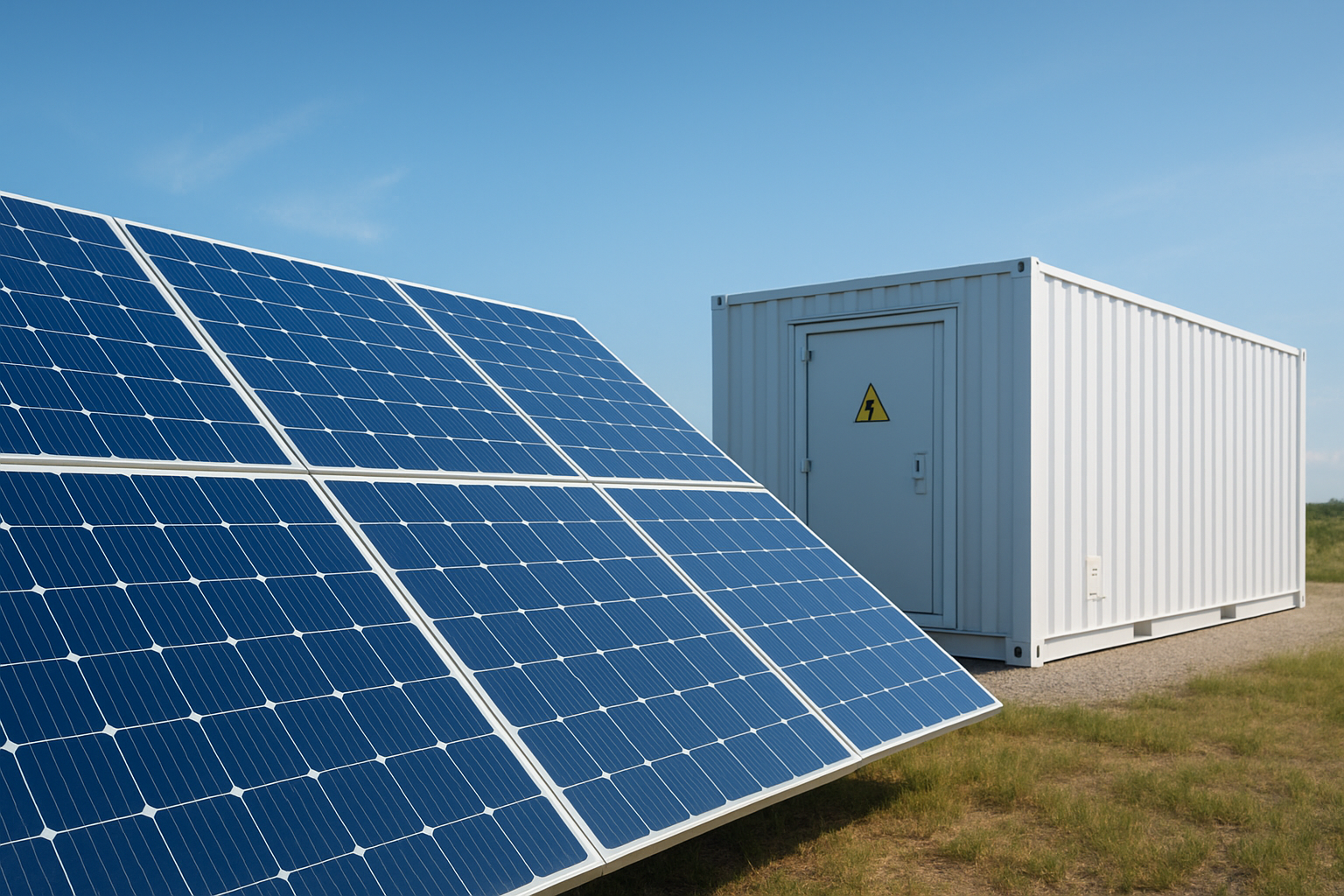
A recent study reported by Down To Earth finds that solar photovoltaic (PV) systems paired with battery storage can supply continuous, round‑the‑clock power at Rs 5.15 per unit. The finding frames a potential cost benchmark for so-called “firm” renewable electricity in India.
The analysis models a bundled approach where daytime solar generation is complemented by batteries to meet evening and overnight demand. This combination aims to replace the traditional reliance on thermal plants for baseload and peak balancing.
If realised at scale, the reported cost metric would make 24/7 renewable power competitive with many existing supply options, improving the economics of decarbonisation for utilities, large buyers and grid operators.
Experts and analysts caution that actual delivered costs will depend on factors such as capital expenses for solar and batteries, financing terms, system lifetimes and utilisation patterns. The study’s result assumes specific cost and performance inputs; variations in these inputs will change outcomes.
Beyond unit costs, integration challenges remain. Sufficient transmission capacity, market mechanisms for time‑shifted supply, and regulatory frameworks to facilitate long‑duration contracts are needed to scale firm renewable solutions.
Policymakers and investors looking to accelerate decarbonisation may view the study as evidence that greater emphasis on storage deployment alongside solar can materially reduce dependence on fossil fuels. The transition pathway will require coordinated planning across procurement, grid investment and market design.
FAQs
What does Rs 5.15 per unit mean?
It refers to the reported cost of delivering one kilowatt-hour of electricity from a combined solar PV and battery storage system, expressed in Indian rupees.
How can solar provide power at night?
Solar generates electricity during daylight hours; batteries store excess daytime generation and discharge it after sunset to provide continuous supply.
What factors affect the reported cost?
Key factors include equipment costs (solar panels and batteries), financing rates, system efficiency, lifespan and how frequently the storage is cycled.
Is this cheaper than coal-fired power?
Costs vary by project and region. The study suggests solar-plus-storage can be competitive with many conventional sources under certain assumptions, but comparisons depend on local tariffs and system costs.
What are the grid implications?
Wider adoption requires investments in transmission, updated market mechanisms for time‑shifted energy and rules for resource adequacy and dispatch.
How quickly can this be scaled?
Scale-up depends on policy support, financing availability, manufacturing capacity for batteries and solar modules, and the pace of grid and market reforms.