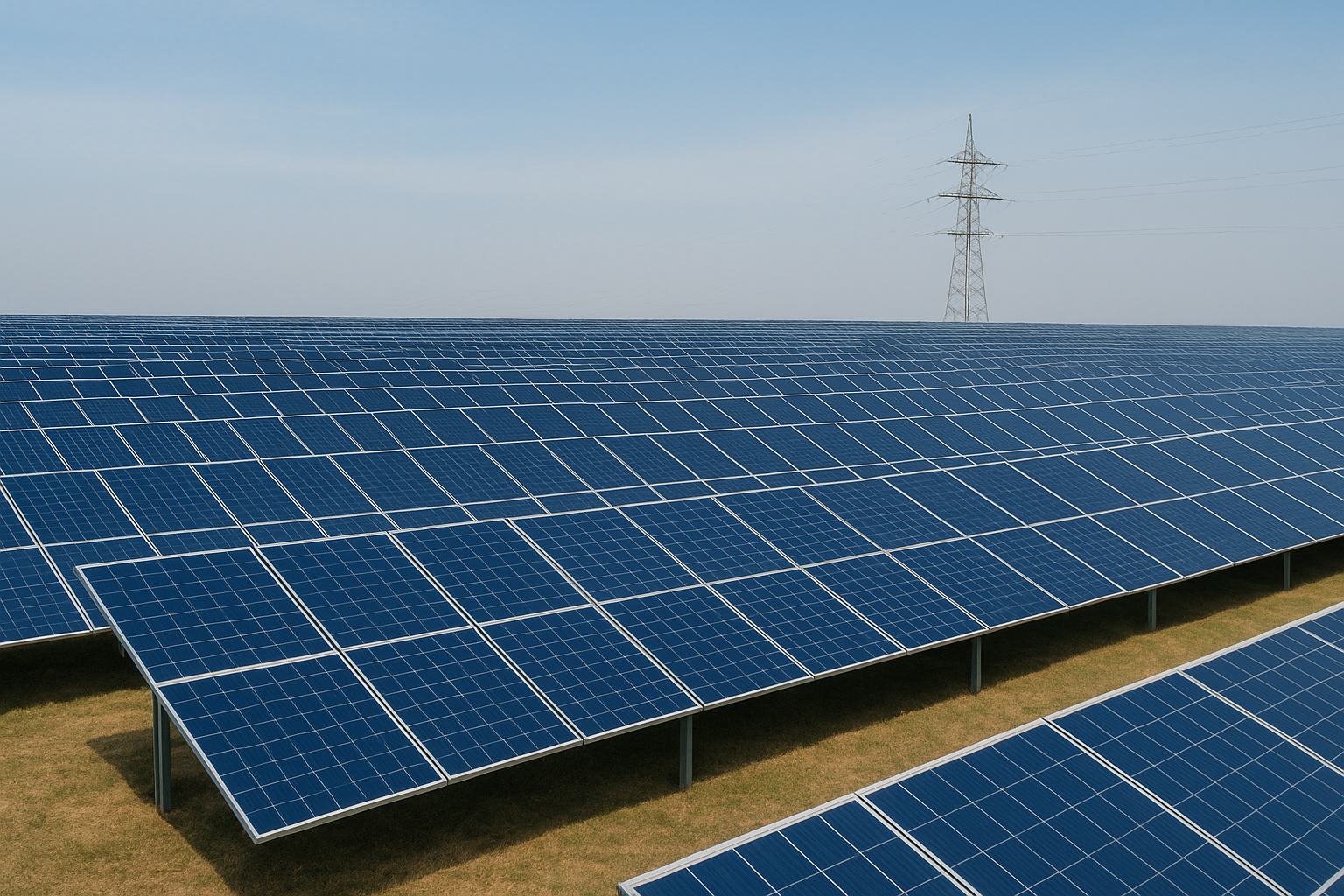
Ember’s recent analysis, reported by ETEnergyworld, finds that India’s expanding solar capacity has cut coal-fired generation during midday hours by roughly 10 gigawatts over a three-year period. The shift reflects the growing influence of utility-scale and distributed solar on the timing and composition of electricity supplies in India.
Overview
The Ember report highlights a measurable decline in coal generation during peak solar production hours, attributing much of the drop to additions of solar capacity across the country. This displacement has been most notable in the middle of the day when solar output typically peaks.
The finding adds to evidence that renewables are reshaping dispatch patterns: solar now plays a pronounced role in meeting daytime demand that traditionally would have been supplied by coal-fired plants. The analysis covers a three-year span and focuses specifically on midday generation trends.
Why This News Matters
Reduced midday coal generation carries implications for emissions, operations and investment in India’s power sector. Lower coal output during daylight hours can cut carbon dioxide emissions and local pollution when solar displaces fossil-fuel generation.
At the same time, the shift affects the economics and utilization of coal plants, which must adapt to more variable dispatch. Grid operators and policymakers face the challenge of balancing reliability with increasing shares of variable renewable energy.
Industry Perspective
For solar developers and investors, the Ember finding demonstrates the material impact of capacity additions on the power mix and supports continued development of photovoltaic projects. It also underscores the value of daytime generation in reducing reliance on fossil fuels.
Operators of thermal plants must contend with changing load factors and revenue profiles as midday demand is increasingly met by solar. The sector’s response includes exploring operational flexibility, retrofits and potential new business models to remain viable.
Future Outlook
As India continues to add solar capacity, the pattern of daytime displacement of coal generation could intensify. The pace and character of further change will depend on factors including new solar builds, grid integration measures and additions of storage and flexible resources.
Battery storage, demand response and hybrid project models are often cited as pathways to absorb excess daytime renewable generation while supporting evening and peak demand. Policy and market reforms to incentivize flexibility will play a crucial role in determining how the power system evolves.
Key Highlights
- Ember finding: Solar expansion reduced midday coal generation by about 10 GW over three years.
- Timing: The impact is concentrated during midday hours when solar output is highest.
- System effects: Displacement alters dispatch patterns and plant utilization for coal facilities.
- Integration needs: Greater flexibility, storage and market reforms are important to manage higher solar shares.
- Implication: The trend signals a shifting balance in India’s electricity mix toward daytime renewables.
Frequently Asked Questions
What exactly did the Ember report find?
The report observed that solar capacity growth in India corresponded with a reduction of about 10 GW in coal-fired generation during midday hours over a three-year period, indicating solar’s displacement effect.
Does this mean India is reducing overall coal consumption?
The finding specifically relates to midday coal generation. While it points to reduced coal use during those hours, overall annual coal consumption depends on broader factors such as total demand, other generation sources and seasonal variations.
Why is midday generation particularly affected?
Solar output peaks during the middle of the day, directly supplying demand that previously would have been met by coal plants. This timing causes the most pronounced substitution of coal by solar during daylight hours.
What are the implications for coal plant operators?
Operators may face lower utilization and changing revenue patterns for units that historically ran during the day. Adapting may require operational flexibility, efficiency improvements or participation in ancillary service markets.
How can the grid manage increased solar penetration?
Grid management can be strengthened through energy storage, demand-side response, improved forecasting, flexible generation and market mechanisms that reward flexibility and balancing services.
Will this trend continue as more solar is added?
Further solar additions are likely to exert additional downward pressure on midday coal generation, but the scale of continued displacement will depend on storage deployment, grid adaptation and policy choices that shape how new capacity is integrated.