
News at Glance
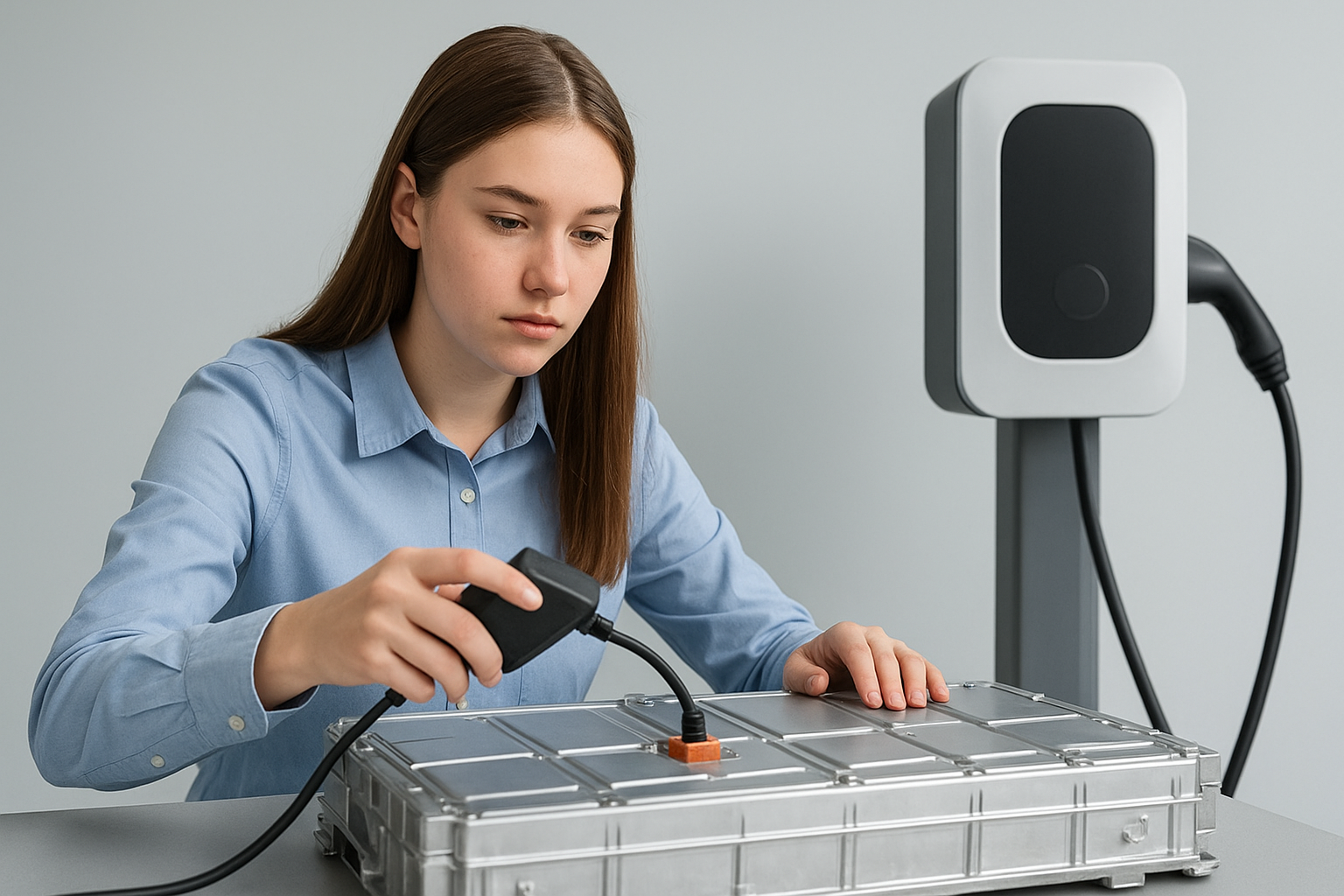
- US teenager developed a predictive model to assess the health of aging EV batteries, according to Interesting Engineering.
- Model aims to improve state-of-health estimates to support reuse, maintenance and end-of-life decisions for battery packs.
- Further validation is required before industry adoption, with wider testing and data access cited as next steps.
Model Aims to Improve State-of-Health Estimates for EV Packs
A US teenager has created a novel approach to predict the health of aging electric vehicle batteries, the technology outlet Interesting Engineering reported. The work is presented as a data-driven model intended to estimate battery condition as packs age in service.
Battery state-of-health (SOH) is a growing concern for OEMs, fleet operators and recyclers because it affects resale value, warranty costs and decisions about second-life applications. Improved SOH estimates can inform when a pack is suitable for reuse, repair or recycling, reducing financial and environmental risks.
Public reporting on the project highlights its potential rather than completed commercial deployment. The article notes that while the model shows promise, broader testing on diverse fleets and pack types is necessary to demonstrate reliability at scale.
Experts in the sector typically distinguish between physics-based and data-driven methods for estimating battery degradation; each approach has trade-offs in interpretability and data requirements. Industry players have called for larger, standardised datasets and independent validation frameworks to compare methods fairly.
If validated, improved prediction tools could help fleet managers optimise charging and maintenance, and buyers assess used packs more accurately. They could also support recycling operators by flagging batteries that still have usable capacity for second-life installations.
The Interesting Engineering piece situates this development within a broader push for better diagnostics and circular-economy practices in the EV sector. Commercial adoption will depend on transparency, peer review and alignment with industry testing protocols.
FAQs
What does the model predict?
It estimates the condition or state-of-health of aging EV battery packs to inform reuse, maintenance or recycling decisions, as reported by Interesting Engineering.
Who developed the model?
The work was reported to have been developed by a US teenager; the article focuses on the approach rather than institutional backing or commercial partners.
How could the industry use such a model?
Fleet operators, resellers and recyclers could use improved health estimates to decide on second-life use, repairs, or recycling timing and to better price used batteries.
Is the method ready for commercial deployment?
Public reporting indicates the model shows potential but requires wider validation and testing on varied battery types and operating profiles before industry uptake.
What are common approaches to battery health estimation?
Approaches generally fall into physics-based models and data-driven methods, each needing different levels of data and offering different insights into degradation mechanisms.
What are the next steps for this kind of work?
Key next steps include expanded testing, peer review, access to diverse datasets and alignment with industry standards for diagnostics and end-of-life assessment.