News at Glance
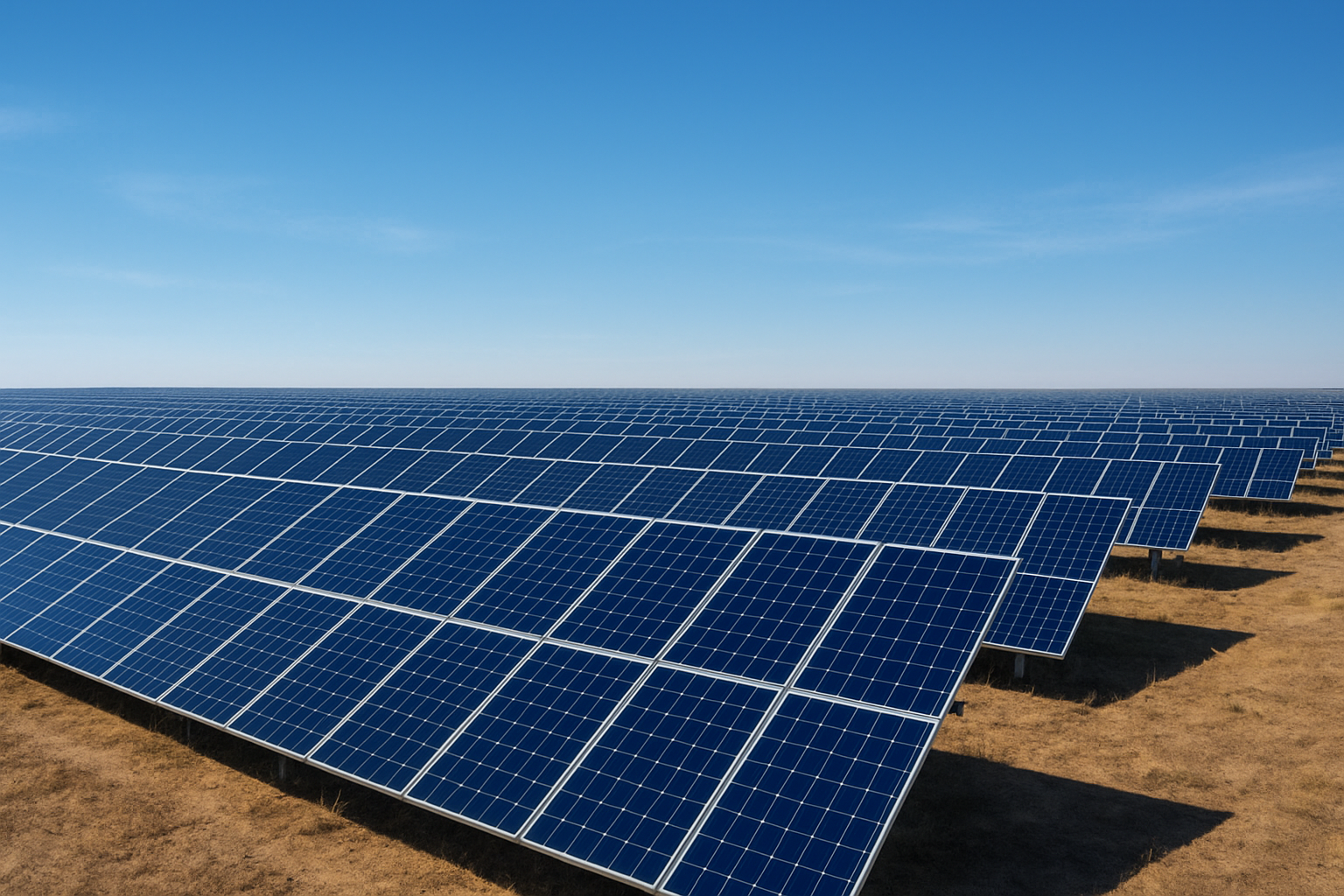
- Final regulatory hurdle cleared for what Industrial Info identifies as Europe’s largest solar project.
- Major permitting barrier removed, potentially allowing the development to move toward financing and construction stages.
- Significant scale implication: the project, once built, would be a landmark addition to Europe’s solar capacity and infrastructure.
Permit Clearance Opens Way for Next Development Steps
Industrial Info reported that the solar development described as Europe’s largest has cleared its final hurdle, a key administrative milestone for any major infrastructure project.
Clearing a final hurdle typically means that remaining regulatory, planning or consenting conditions have been satisfied, enabling project sponsors to advance to practical next steps such as arranging detailed financing, securing equipment contracts and preparing construction timelines.
Large-scale solar projects confront a range of technical and commercial tasks after approvals, including grid connection agreements, procurement of modules and inverters, and land and environmental management during build-out.
Developers must also coordinate with transmission system operators to manage capacity and grid stability, and address local stakeholder engagement and construction logistics to limit delays and cost overruns.
The project’s scale implies substantial supply-chain demand and potential regional economic impacts during construction and operation, including jobs and infrastructure investment, though specific economic figures depend on the developer’s plans.
Europe continues to accelerate solar deployment as part of broader energy-transition goals, and the progression of high-profile projects can influence policy, investment sentiment and technical approaches to grid integration and large-area solar siting.
While the cleared approval is a pivotal milestone, final delivery will depend on financing, procurement schedules, grid works and the developer’s construction programme.
FAQs
What does it mean when a large solar project “clears its final hurdle”?
Clearing a final hurdle generally means the project has obtained remaining regulatory, planning or consenting approvals required to proceed to implementation, allowing developers to focus on financing, procurement and construction planning.
How do giant solar projects connect to the electricity grid?
Large solar plants connect via substations and transmission lines coordinated with grid operators; this requires capacity studies, connection agreements, upgrades to local networks and measures to manage variability and grid stability.
What are the common permitting challenges for big solar developments in Europe?
Common challenges include land-use permissions, environmental assessments, local planning consents, grid connection approvals and meeting regulatory standards for biodiversity, water and cultural heritage protection.
Why is securing final approval important for investors?
Final approval reduces regulatory risk, making it easier for developers to secure debt and equity, finalise supply contracts and set definitive construction schedules, which investors typically require before committing capital.
What supply-chain elements are critical for large-scale solar construction?
Critical elements include photovoltaic modules, inverters, mounting systems, transformers and cabling, along with logistics for transport, site preparation, civil works and installation crews.
How do large solar projects impact local communities?
Impacts can include temporary construction employment, longer-term operations roles, changes in land use and infrastructure improvements, alongside possible concerns about landscape, traffic and local ecology that require mitigation.