News at Glance
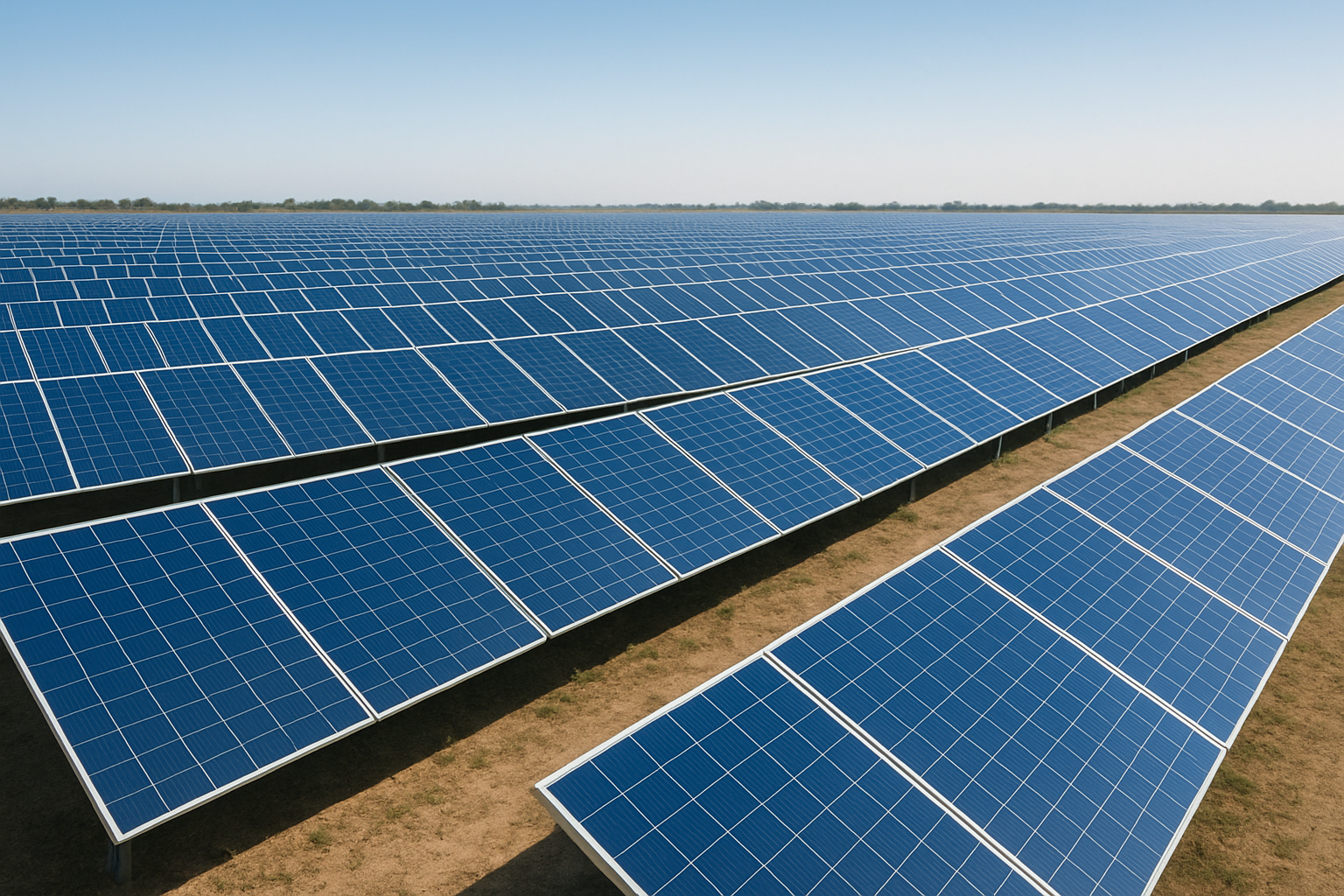
- Emerging markets are accelerating solar deployment, moving from pilot projects to larger utility and distributed systems.
- Falling equipment costs and new financing models are making projects more bankable for local and international investors.
- Integration challenges remain, with storage, grid upgrades and currency risk cited as primary barriers to faster scale-up.
Falling module prices unlock large-scale projects in emerging markets
Developers and financiers report stronger interest in solar across Africa, Latin America and parts of Asia as capital becomes more available and technology costs decline.
Policy shifts such as auction programmes, clearer permitting and incentives for private offtake have helped move projects from planning into construction in a growing number of countries.
Alongside utility-scale arrays, distributed solar—rooftops and mini-grids—continues to expand where grid access is limited, offering both energy access and commercial opportunities.
Investors are increasingly pairing solar with battery storage to manage intermittency and enhance merchant revenue prospects, although storage remains more expensive than generation in many markets.
Financing models are evolving: blended finance, guarantees from multilateral lenders and corporate power purchase agreements are being used to mitigate currency and offtaker risks that have traditionally deterred investment.
Local manufacturing and supply-chain localisation are emerging priorities for governments seeking jobs and resilience, but building manufacturing capacity requires long-term policy certainty and investment.
Despite momentum, challenges persist. Grid constraints, permitting delays and limited local project development capacity slow deployment, and high borrowing costs in some markets raise financing hurdles.
Market participants say addressing these barriers with targeted reforms and patient capital could unlock sizable solar pipelines and support broader clean-energy transitions in low- and middle-income countries.
FAQs
What drives the recent growth of solar power in emerging markets?
Declining technology costs, supportive auction and policy frameworks, and new financing approaches such as blended finance and corporate PPAs are the main drivers enabling more projects to reach construction.
How does pairing solar with batteries help projects in emerging markets?
Batteries reduce variability, allow time-shifting of generation, and can provide grid services that improve revenue stability and integration of higher shares of solar.
What financing challenges do solar projects face in emerging economies?
Common challenges include currency risk, high local interest rates, limited availability of long-term local currency debt, and the creditworthiness of offtakers or utilities.
Can distributed solar improve energy access in rural areas?
Yes. Rooftop systems and mini-grids can provide reliable electricity to communities without grid access, supporting economic activity and basic services.
Why is local manufacturing important for solar expansion?
Local manufacturing can create jobs, reduce import dependency and improve supply-chain resilience, but it requires sustained demand and supportive industrial policies.
What policy measures can accelerate solar deployment in emerging markets?
Measures include transparent auctions, streamlined permitting, credit-enhancement instruments, incentives for storage, and reforms to strengthen utility balance sheets and offtaker credibility.