
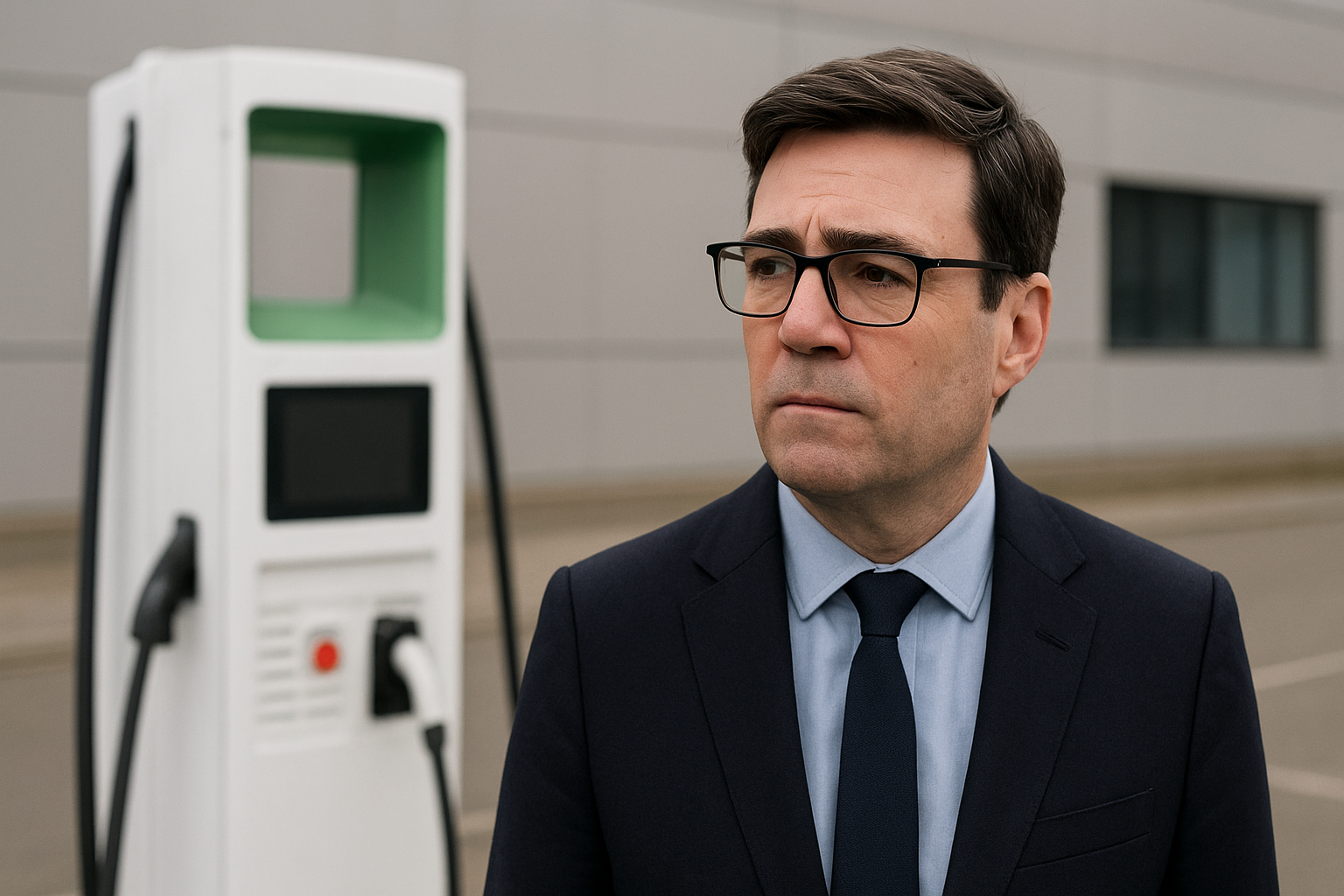
Andy Burnham, the mayor of Greater Manchester, has moved to scale back local targets for new electric-vehicle (EV) sales, prompting debate among policymakers, industry groups and clean-transport advocates.
Overview
The decision alters previously stated ambitions for the proportion of new cars sold in the region that would be zero-emission. It comes amid wider national and local conversations about the pace of the transition away from petrol and diesel cars.
Greater Manchester operates within a mix of local powers and national frameworks on transport, and its decisions can influence planning for infrastructure, incentives and fleet procurement across the region.
Why This News Matters
Local targets act as a signal to carmakers, charging network operators and consumers. A move to soften ambitions can change investment calculations for charging rollout and dealership strategies.
Beyond investment signals, adjustments to targets shape public expectations about access to low-emission vehicles, the speed of emissions cuts in transport, and planning for grid and public charging capacity.
Industry Perspective
Manufacturers and charging providers generally seek predictable, long-term policy settings to guide vehicle production and infrastructure deployment. Shifts at the local level can complicate coordination among private and public actors.
Some industry participants view realistic, phased targets as necessary to align with supply-chain constraints and charging rollout, while others caution that diluted goals risk slowing demand and delaying emissions reductions.
Future Outlook
The adjustment may prompt other city-regions to reassess local EV strategies, balancing ambition against practical considerations such as affordability, charging accessibility and grid readiness.
Observers expect continued discussion between local authorities, central government and industry on aligning incentives, harmonising targets and ensuring that investment in charging and grid capacity keeps pace with demand.
Key Highlights
- Local policy shift: The Greater Manchester mayor has moved to reduce the ambition of local new EV sales targets.
- Investment signal: Changes to targets may affect private investment in charging infrastructure and dealer preparation.
- Policy alignment: The decision highlights the challenge of coordinating local and national EV transition strategies.
- Consumer impact: Altered targets could influence incentives, vehicle availability and buyer confidence in the short term.
- Industry response: Automakers and network operators will monitor the implications for production plans and charging rollouts.
Frequently Asked Questions
Who is Andy Burnham?
Andy Burnham is the elected mayor of Greater Manchester, a devolved local authority area in England that has responsibilities for transport and regional economic policy.
What does cutting EV sales targets mean?
Reducing targets means the region will aim for a lower share of new car registrations to be electric or zero-emission within the timeframe previously set, changing the level of ambition for the local transition.
Why would a local authority change EV targets?
Local governments may adjust targets due to concerns about charging infrastructure, grid capacity, vehicle affordability, supply-chain readiness or to better align with local economic priorities and timelines.
How could this affect charging infrastructure plans?
Less ambitious targets could slow the immediate urgency for large-scale charging rollouts, but planners and operators will still need to ensure sufficient coverage for existing and future EV users.
Will this decision change national EV policy?
National policy is set by central government; a local adjustment does not alter national laws. However, it can influence debates about how national goals are implemented at regional and city levels.
What should industry and consumers watch next?
Stakeholders should monitor follow-up statements from local authorities, any revisions to procurement or incentive programmes, and changes in investment plans from charging network operators and vehicle retailers.