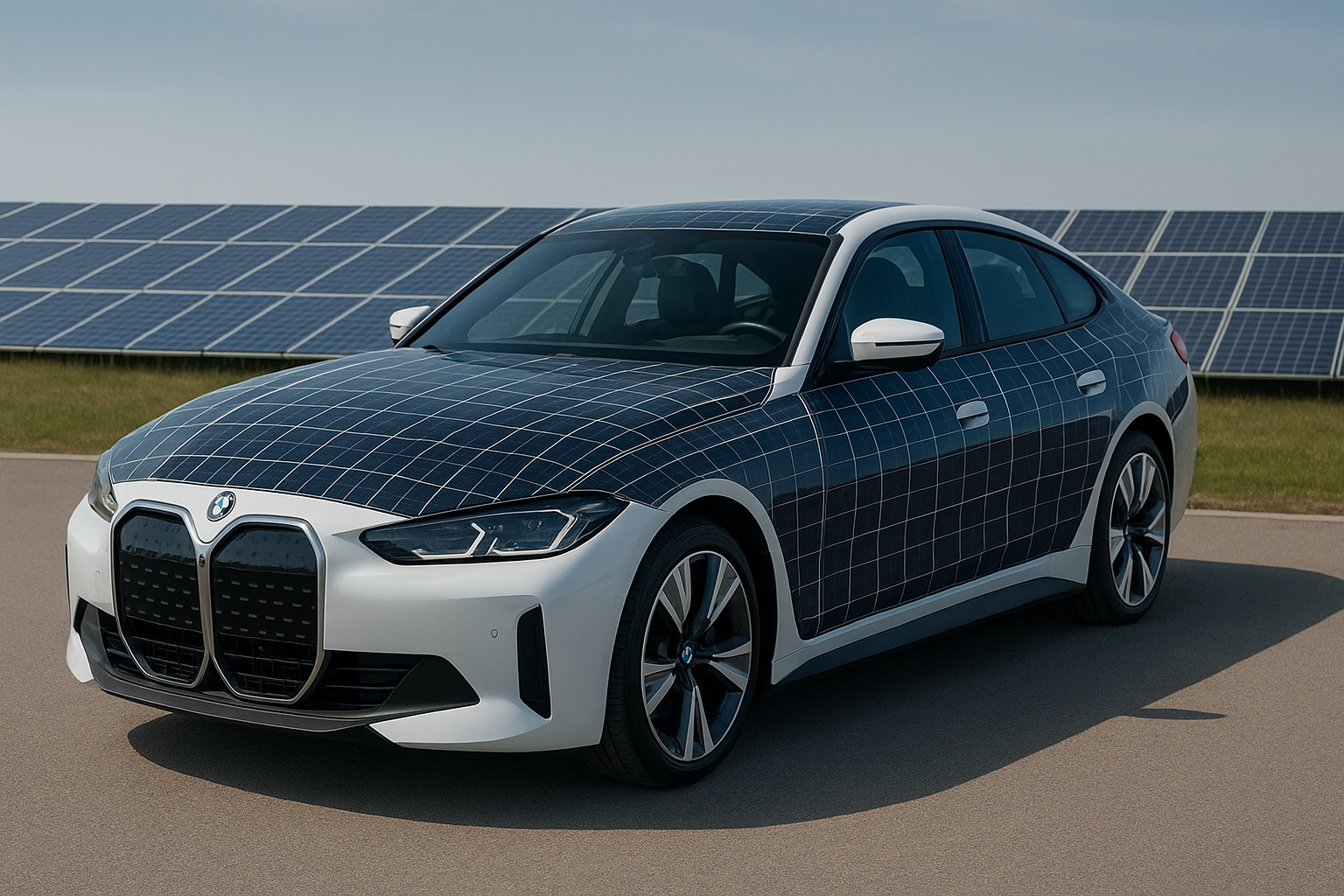
A BMW-backed solar electric vehicle has been reported to generate more energy than it consumes under certain conditions, a development that could reshape expectations for vehicle energy balance and on-board solar capability.
Overview
Automakers and startups have been integrating photovoltaic cells into vehicle bodies for years to extend range and support auxiliary systems. In this case, a vehicle supported by BMW investment claims to produce a net positive energy output during real-world operation.
The vehicle pairs on-board solar arrays with battery storage and efficient energy management systems. These components work together to capture solar irradiance, store surplus power, and use it for propulsion or to feed energy back to external loads when feasible.
Why This News Matters
If confirmed and reproducible, a solar EV that generates more energy than it consumes would be a milestone for sustainable mobility. It would reduce the effective grid demand of vehicle charging and improve lifecycle emissions metrics for certain use cases.
Energy-positive operation could also alter ownership economics by lowering running costs and reducing reliance on charging infrastructure in sunny or low-mileage scenarios. The result may be wider adoption of solar-integrated designs across passenger and light commercial vehicles.
Industry Perspective
The automotive industry has watched solar-integrated vehicles with interest, balancing the promise of additional range against constraints in cost, roof area and panel efficiency. Achieving a net energy surplus typically requires a combination of high-efficiency cells, low vehicle energy consumption and favorable operational conditions.
OEMs and suppliers will need to evaluate durability, warranty exposure, repairability and the integration of solar modules into vehicle safety structures. Regulators and testing bodies may also consider new protocols to verify net energy claims under standardized conditions.
Future Outlook
Scaling the concept beyond limited demonstrations depends on improvements in cell efficiency, reduced cost of vehicle-integrated photovoltaics, and optimized vehicle aerodynamics and powertrain efficiency. Advances in lightweight materials and mounting techniques will also be important.
Broader deployment would require clear metrics and independent validation of energy performance across climates and usage patterns. If validated at scale, energy-positive vehicles could influence fleet strategies, charging infrastructure planning and policies aimed at reducing transport-sector emissions.
Key Highlights
- BMW-backed project: A solar EV supported by BMW investment is reported to produce a net energy surplus in some conditions.
- Integrated photovoltaics: The vehicle combines on-board solar arrays with battery storage and energy management systems.
- Importance of conditions: Net positive output depends on factors such as sunlight, vehicle efficiency and usage patterns.
- Industry implications: Widespread adoption hinges on cost, durability, verification and regulatory frameworks.
- Potential benefits: Energy-positive operation could reduce grid demand, lower operating costs and improve life-cycle emissions in certain scenarios.
Frequently Asked Questions
Can a car really make more energy than it uses?
In theory, a car with sufficiently efficient solar panels and low energy consumption can generate surplus energy during sunny periods and light usage. Achieving a sustained net surplus under typical driving conditions is challenging and depends on multiple variables, including climate and daily mileage.
What enables a solar EV to be energy-positive?
Key enablers are high-efficiency photovoltaic cells, large effective panel area on the vehicle, very efficient powertrains, low rolling resistance, and intelligent energy management that prioritizes charging and discharging to maximize net yield.
Does this mean drivers won’t need to charge from the grid?
Not necessarily. Even with solar contribution, many users in less sunny regions or with high daily mileage will still rely on grid charging. Energy-positive performance is more likely in specific use cases, such as low-mileage drivers in sunny climates or vehicles that operate primarily during daylight.
How will regulators verify such energy claims?
Verification would likely require standardized testing across a range of climates and use scenarios, transparent reporting of assumptions, and possibly third-party validation. Existing vehicle certification frameworks may need adaptation to assess net energy performance for solar-equipped cars.
What challenges remain for mass adoption?
Challenges include the added cost and complexity of integrating solar modules, ensuring long-term durability and repairability, maintaining vehicle safety standards, and creating reliable, comparable performance metrics for buyers and fleet operators.
What are the broader implications for the automotive sector?
If energy-positive solar vehicles become commercially viable, they could change fleet electrification strategies, reduce peak charging demand, and spur innovation in vehicle-integrated renewables. The impact will depend on technology maturation, cost reductions, and verified real-world performance.