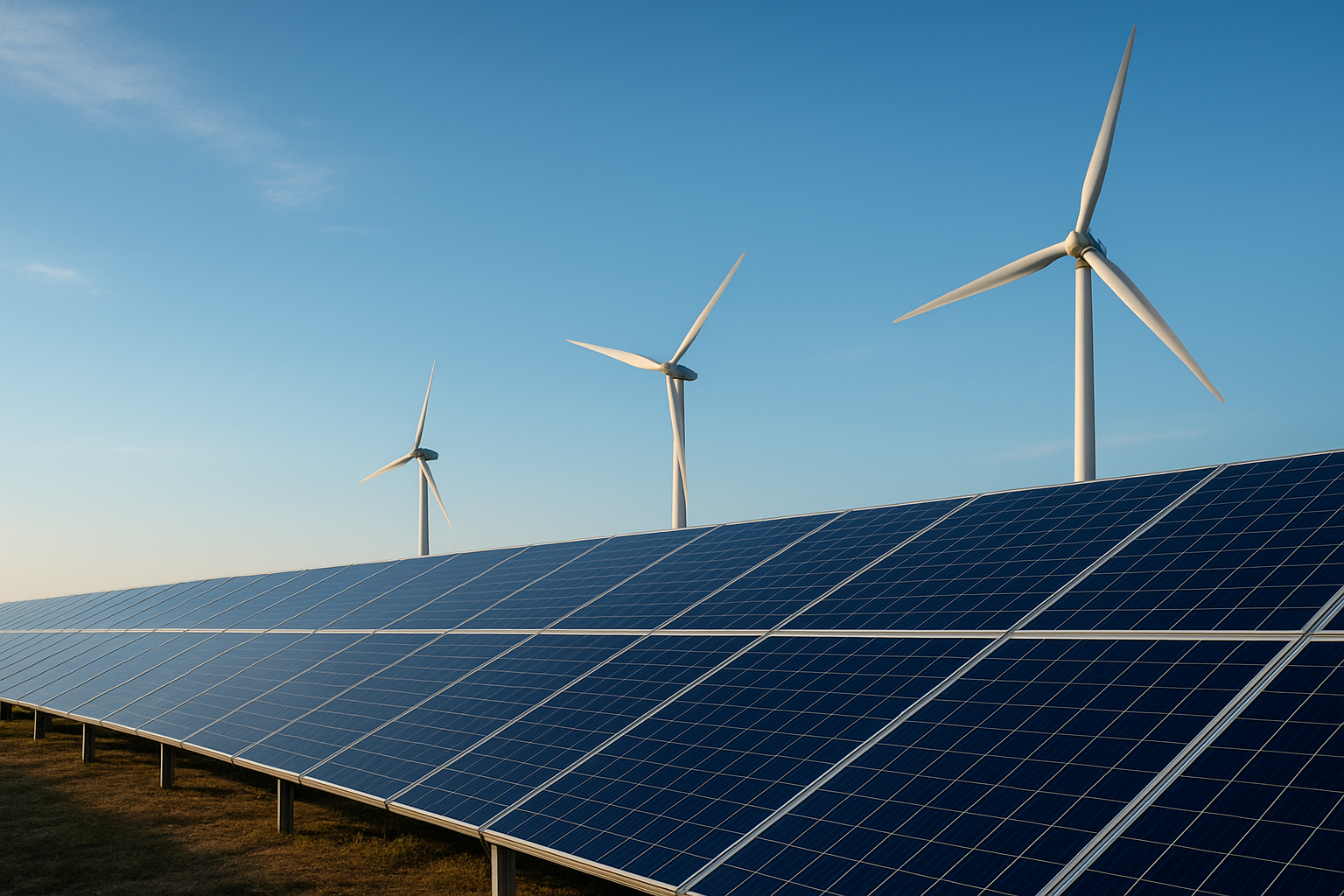
India has crossed the 300 gigawatts (GW) mark in installed non-fossil fuel power capacity, a development that places the country more than 60% of the way toward its stated 2030 target for non-fossil energy capacity. The milestone reflects sustained additions to the power system and strengthens the country’s trajectory toward lower-carbon electricity supply.
Overview
The 300 GW threshold is a cumulative measure of capacity from non-fossil sources. These sources form a central pillar of India’s broader energy transition and climate commitments.
Progress has come through a combination of new capacity installations, policy frameworks that facilitate deployment, and ongoing investments across the power sector. The achievement is being watched closely by domestic and international stakeholders tracking clean energy progress.
Why This News Matters
Reaching this level of non-fossil capacity has implications for emissions trajectories, energy security and the economics of power. A higher share of non-fossil capacity can reduce dependence on imported fossil fuels and exposure to fuel-price volatility.
At the same time, rapid capacity additions reshape the investment landscape, creating opportunities across manufacturing, project development and ancillary services. The milestone also intensifies focus on the operational and regulatory measures needed to integrate this capacity reliably into the grid.
Industry Perspective
Industry participants view the milestone as validation of long-term market demand for clean power. Equipment makers, financiers and project developers have been active in deploying capital to capture growth across multiple technology segments.
However, sector experts also stress the need for complementary investments. Strengthening transmission networks, expanding storage and modernising market mechanisms are frequently cited priorities to ensure renewable and other non-fossil capacity delivers consistently and at scale.
Future Outlook
While crossing 300 GW marks important progress, reaching the full 2030 target will require continued momentum. The pace of additions, availability of capital, and the evolution of grid services will determine how quickly remaining capacity is brought online.
Policymakers and industry will need to align on enabling measures—such as streamlined permitting, grid planning and incentives for storage—to translate installed capacity into reliable, dispatchable power that supports broader climate and development goals.
Key Highlights
- Milestone reached: India has surpassed 300 GW of non-fossil fuel power capacity.
- Progress toward 2030: This level represents more than 60% of the country’s announced 2030 non-fossil capacity goal.
- Market validation: The milestone underscores investor and developer appetite for clean power deployment in India.
- Integration challenge: Grid upgrades, storage and market reforms are needed to maximise system value from added capacity.
- Policy focus: Continued policy support and coordinated planning will be key to sustaining installation rates.
Frequently Asked Questions
What counts as non-fossil fuel power capacity?
Non-fossil fuel capacity generally refers to electricity generation assets that do not burn coal, oil or natural gas. This includes a range of technologies commonly considered low- or zero-emission sources.
How significant is 300 GW for India?
Crossing 300 GW is a notable marker of scale in India’s power system. It signals steady deployment of non-fossil resources and shifts the composition of capacity toward cleaner sources, although operational integration remains important.
Does this mean India has met its climate targets?
Reaching this capacity milestone contributes toward India’s climate and energy objectives, but it is one element among many. Meeting broader targets also depends on generation patterns, energy efficiency, and emissions from other sectors.
What are the main challenges after capacity additions?
Key challenges include integrating variable generation into the grid, expanding transmission and distribution infrastructure, building sufficient storage and creating market arrangements that support flexibility and reliability.
How will this affect energy investment in India?
The milestone may attract further investment by demonstrating market potential, but investors will look for clarity on returns, policy stability and the readiness of grid infrastructure to support additional capacity.
What are the next steps to reach the 2030 target?
Next steps include sustaining deployment rates, upgrading grid systems, expanding storage capacity and aligning policies to encourage financing, manufacturing and timely project execution to close the remaining gap to the 2030 goal.