
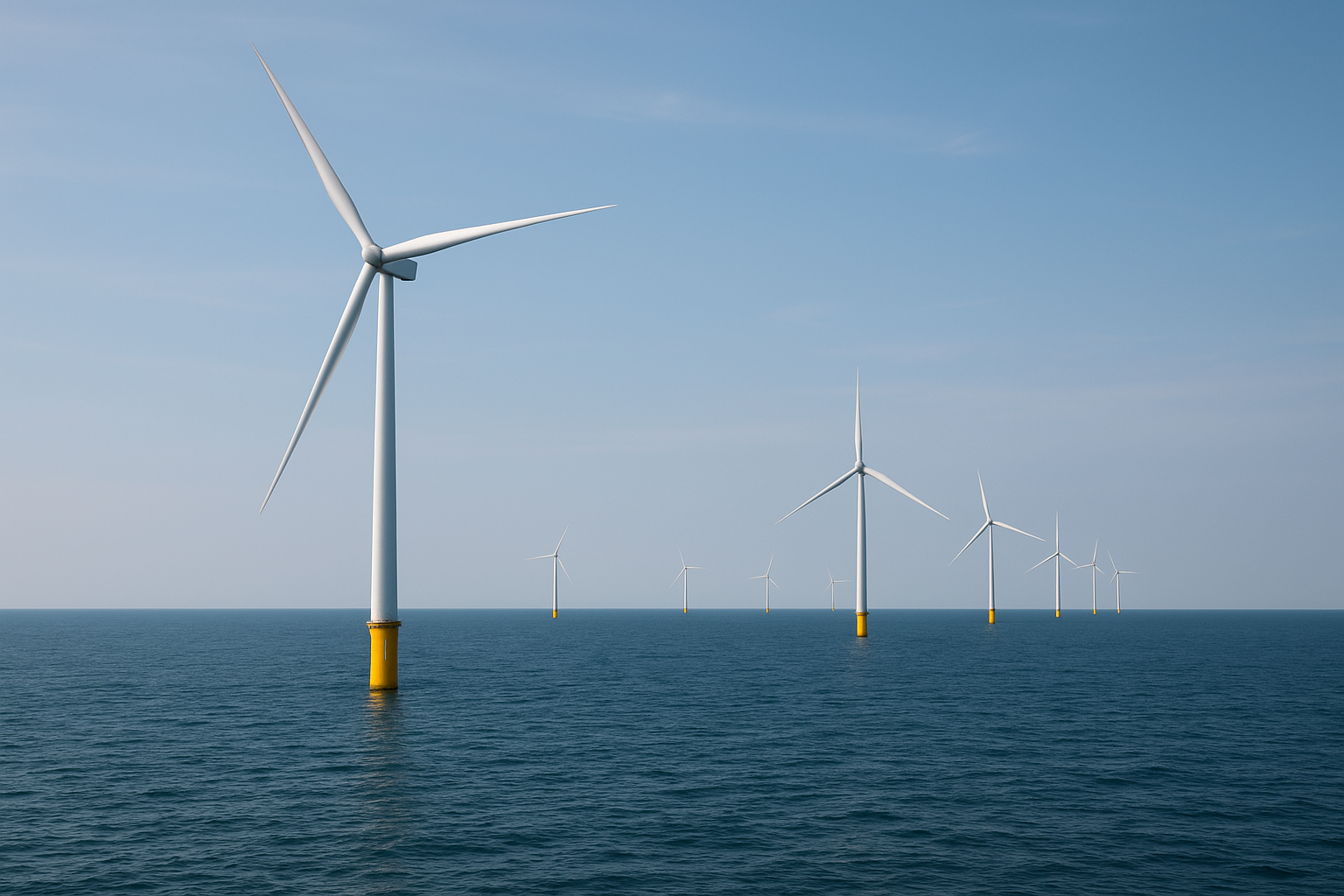
A recent Danish offshore wind tender has offered a practical demonstration that Contracts for Difference (CfDs) can produce competitive bids from developers, according to reporting by industry body WindEurope. The outcome is being watched across Europe as governments weigh auction design and financing instruments for large-scale offshore projects.
Overview
Contracts for Difference are a policy tool that provides revenue stability by guaranteeing a fixed strike price for generated electricity, with payments adjusted against market prices. The Danish tender used a CfD framework to allocate projects, aiming to balance investor certainty with competitive pricing pressure.
Industry observers say the tender attracted serious participation and brought forward bids that reflected market confidence in the CfD model. While detailed bid figures are controlled by tender authorities, the broader result underlined the ability of CfDs to mobilise capital for capital-intensive offshore developments.
Why This News Matters
The success of a CfD-backed tender in Denmark matters because it offers an operational example for other countries designing support mechanisms for renewables. Policymakers are looking for approaches that secure supply while managing cost to consumers and fiscal exposure.
By reducing merchant revenue risk, CfDs can shorten financing timelines and lower the cost of capital for developers. That can translate into more reliable delivery schedules for projects that are essential to decarbonisation targets and grid planning.
Industry Perspective
Developers, lenders and project investors generally view revenue certainty instruments as key to making offshore wind bankable at scale. The Danish experience suggests that CfDs can coexist with competitive auction dynamics when properly structured.
At the same time, industry participants caution that auction outcomes depend on broader conditions, including supply-chain capacity, grid connections and permitting timelines. Effective CfD schemes must therefore be paired with robust infrastructure planning and realistic delivery windows.
Future Outlook
Market participants expect other jurisdictions to study the Danish example when refining their own auction frameworks. CfDs may be adapted to support hybrid projects, co-located storage, or green hydrogen-linked schemes as markets evolve.
Policy design will remain crucial. The clarity of strike-price mechanisms, contract length, allocation rules and contingency provisions for delays all shape investor appetite and the eventual costs borne by consumers and taxpayers.
Key Highlights
- CfDs provided revenue stability: The Danish tender demonstrated that guaranteed payments can attract competitive developer interest.
- Auction design matters: Clear contract terms and delivery expectations supported robust participation.
- Investor confidence strengthened: Reduced merchant risk helped mobilise capital for large projects.
- Complementary policies required: Grid readiness, permits and supply-chain planning remain critical to realise projects on schedule.
- Model scalable internationally: Other markets may adapt the CfD approach for offshore wind and related technologies.
Frequently Asked Questions
What is a Contract for Difference (CfD)?
A CfD is a mechanism that guarantees a fixed strike price for electricity from a project. If the market price is below the strike, the contract pays the difference to the generator; if the market price is above the strike, the generator pays back the excess.
Why are CfDs used for offshore wind?
CfDs reduce revenue volatility and make project cash flows more predictable, which helps attract financing for capital-intensive offshore wind developments in the face of fluctuating power markets.
Do CfDs lower costs for consumers?
CfDs can lower financing costs and support timely delivery, which may reduce long-term system costs. The net effect depends on contract terms, auction competitiveness and how costs are allocated through tariffs or budgets.
Are there risks associated with CfDs?
Risks include potential fiscal exposure for governments, mismatch between contracted capacity and grid readiness, and the need to ensure auction design prevents market distortions. Proper risk-sharing and transparent processes help mitigate these issues.
Can other countries replicate the Danish approach?
Many countries can adapt CfD elements, but success requires alignment with domestic market structures, grid development plans and industrial capabilities. Local conditions will shape contract specifics and auction formats.
What does this mean for the offshore wind industry?
The Danish tender signals that well-designed CfDs can be an effective tool to mobilise investment and maintain competitive pressures in auctions, provided they are integrated with comprehensive planning for delivery and system integration.