
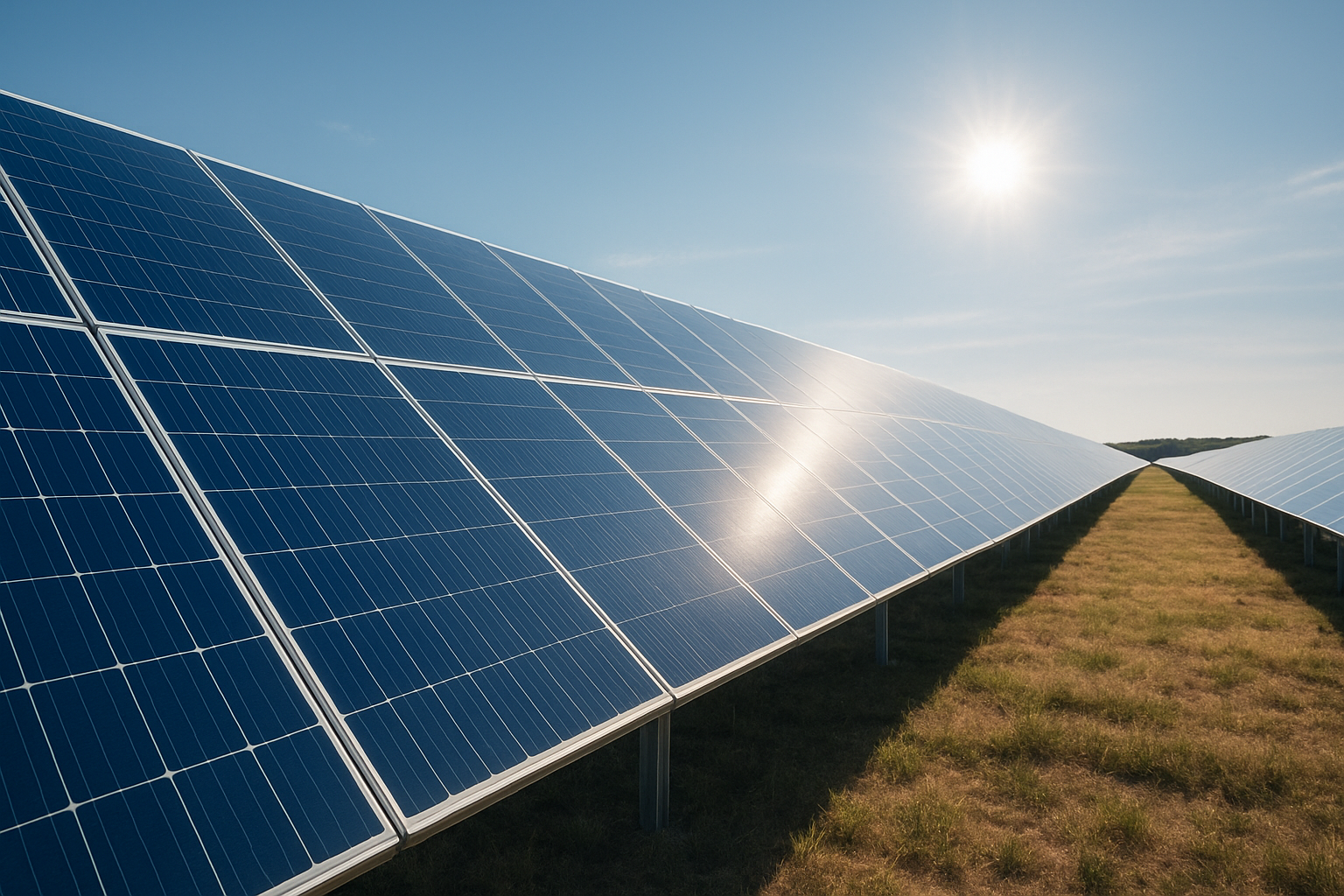
The long arc of scientific inquiry and industrial development has reached a turning point: solar photovoltaic (PV) technology, the product of more than five decades of research, has become the dominant source of energy in many power systems worldwide. This development reflects cumulative advances in device efficiency, manufacturing scale, system integration and supportive policy frameworks.
Overview
Progress in materials science, engineering and economics has transformed PV from a niche, high-cost technology into a mainstream energy provider. Improvements in module performance, balance-of-system components and installation practices have each contributed to steady cost reductions.
Alongside technology gains, investment in manufacturing capacity and the maturation of global supply chains have enabled rapid deployment at utility, commercial and distributed scales. Coupling PV with energy storage and smarter grid management has further increased its utility and reliability.
Why This News Matters
The ascendancy of solar PV alters the fundamentals of energy markets, affecting generation portfolios, wholesale pricing dynamics and investment flows. Systems with high shares of PV change daily and seasonal demand profiles, requiring new approaches to flexibility and reserve management.
For policymakers and regulators, the shift elevates priorities around grid planning, transmission investment and market design to accommodate variable generation. It also raises questions about raw material supply, recycling and circularity for PV components as deployment scales.
Industry Perspective
Manufacturers and developers have focused on expanding capacity, improving module reliability and reducing soft costs associated with permitting and interconnection. These commercial efforts have been matched by financiers who see predictable cash flows from long-term power contracts and asset portfolios.
Grid operators and utilities are adapting operations and procurement practices to manage significantly higher shares of PV. This involves investments in forecasting, flexible dispatch resources and grid upgrades to maintain reliability while integrating variable generation at scale.
Future Outlook
Continued innovation will determine whether solar PV maintains its dominant position while enabling deep decarbonization. Research into higher-efficiency cells, tandem architectures and novel materials promises incremental gains, while system-level advances in storage and demand response will address variability.
Challenges remain around lifecycle management, including module recycling, second-life applications and responsible sourcing of materials. Policy and market reforms that incentivize flexibility and long-duration storage will be crucial to sustaining high PV penetration without compromising grid stability.
Key Highlights
- Long-term research payoff: Decades of incremental improvements have driven PV to a central role in energy systems.
- System integration: Pairing PV with storage and grid management tools has enhanced reliability.
- Economic shift: Lower costs and mature financing models have accelerated deployment across scales.
- Supply chain focus: Manufacturing scale-up and logistics have been essential to meeting demand.
- Policy implications: Grid planning, recycling policy and market design are priorities for sustained integration.
Frequently Asked Questions
How did solar PV become the dominant energy source?
Solar PV’s rise reflects sustained research and development, manufacturing scale-up, cost reductions, and widespread deployment practices that improved performance and lowered installation costs over decades.
Does high solar PV penetration affect grid reliability?
High PV shares change generation patterns and require investments in flexibility, such as storage, demand response and improved forecasting, to maintain reliability and manage variability.
What role does energy storage play in a solar-dominant system?
Energy storage smooths variability, shifts dispatchable energy to match demand, and provides ancillary services that help integrate large amounts of PV into the grid.
Are there material supply risks with widespread PV deployment?
Scaling PV increases demand for certain materials, prompting attention to supply chain resilience, recycling, and alternative material pathways to reduce dependency on constrained resources.
How will the industry handle end-of-life PV modules?
Lifecycle strategies include expanding recycling infrastructure, designing for easier recovery of valuable materials, and developing markets for second-life applications to reduce waste and recover resources.
What technologies could further improve PV performance?
Ongoing research into higher-efficiency cell designs, tandem cells, improved module reliability and system-level controls offers pathways to incremental performance gains and lower lifecycle costs.