News at Glance
- Frameless modules are being tested directly on soil without conventional steel racking.
- Potential benefits include lower embodied steel, simplified installation and reduced mounting costs.
- Key concerns focus on soiling, cooling, durability and permitting under existing standards.
California demonstration probes racking-free solar on bare ground
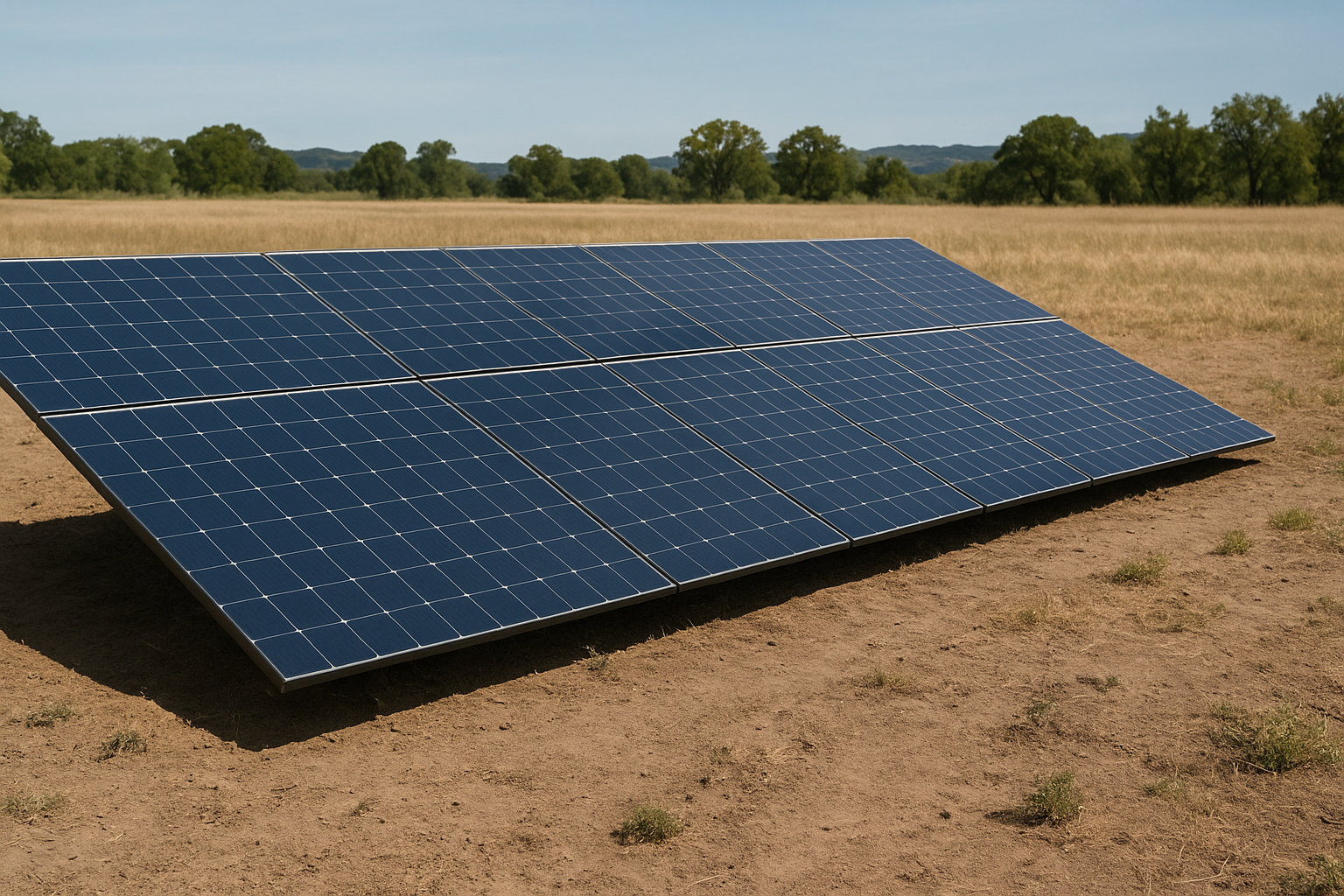
Utility‑scale and distributed solar developers are testing a different approach: glass modules without metal frames or conventional racking, placed directly on the earth. Industry reporting describes a demonstration in California that has deployed such modules as a live test of the concept.
The frameless, rack‑free design aims to reduce material use and installation complexity by eliminating steel posts, rails and many fasteners. Proponents say this can lower upfront capital and embodied carbon, and speed deployment on sites where conventional civil works are costly.
Operational trade‑offs are immediate. Modules sitting flush to the soil face higher dust accumulation and restricted airflow beneath the panel, which can reduce energy yield and complicate cleaning. Ground moisture and mechanical abrasion are also potential long‑term durability issues.
Permitting and standards present another hurdle. Current module qualification and fire‑safety tests assume framed products and defined mounting systems. Regulators and certifiers will need data from field trials to adapt codes and ensure safety and reliability.
Manufacturers and project owners view these trials as an early step to validate lifecycle performance and total cost of ownership. If field results demonstrate acceptable yields and longevity, frameless, rack‑free systems could carve a niche for low‑cost, low‑impact solar installations, particularly for temporary or relocatable arrays.
FAQs
What are frameless solar panels and how do they differ from traditional panels?
Frameless solar panels omit the aluminum or steel perimeter frame and are typically glass‑on‑glass constructions. Unlike framed modules, they can be installed without standard racking or rails, potentially allowing placement directly on the ground or on minimal supports.
Why would developers place solar panels directly on the earth without racking?
Removing racking and frames can reduce material costs, embodied carbon and installation time. It may also simplify logistics for temporary or low‑cost installations where traditional foundations are impractical.
What are the main performance risks of ground‑laid, frameless modules?
Key risks include increased soiling, limited cooling from reduced airflow, potential moisture ingress or abrasion from soil contact, and possible impacts on long‑term reliability and output.
How could frameless systems affect permitting and safety standards?
Existing tests and codes assume framed modules and fixed mounting. Regulators will need field data to update fire, mechanical and electrical safety standards for frameless, ground‑laid systems.
Are frameless, rack‑free solar installations suitable for all sites?
No. They may suit low‑cost, temporary or relocation‑focused projects, but sites with heavy soiling, flooding risk, or strict durability requirements may still need framed, racked systems.
What data is needed to determine if this approach can scale commercially?
Long‑term energy yield records, degradation rates, maintenance needs, lifecycle carbon and cost comparisons versus conventional systems, and compliance with safety standards are all necessary to judge commercial viability.