
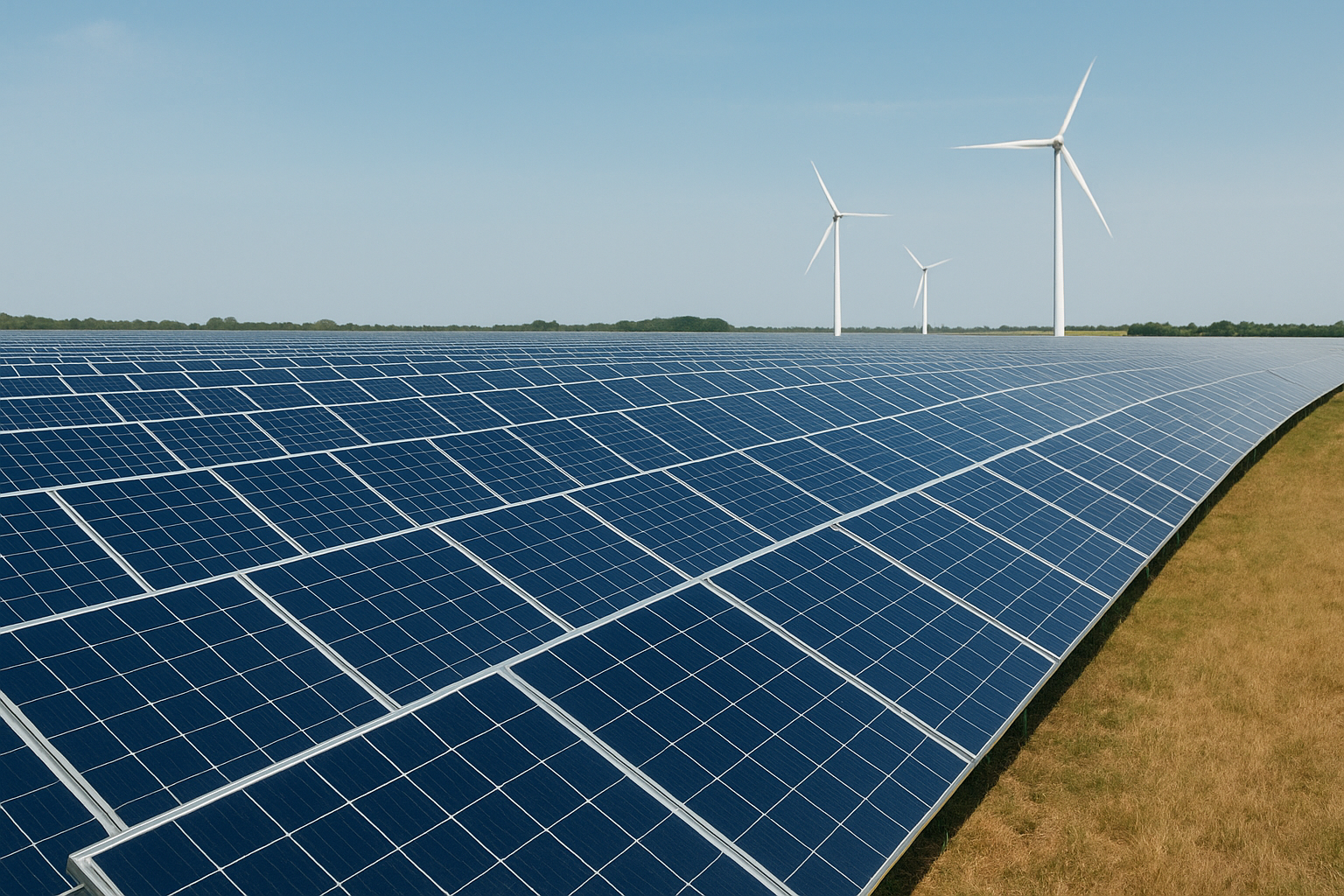
The Hinduja Group has announced a major investment commitment of ₹2,500 crore in Tamil Nadu, targeting projects in renewable energy and new mobility solutions. The move represents a significant private-sector allocation to India’s clean energy transition and emerging transport technologies.
Overview
The announced investment by the Hinduja Group will be deployed across initiatives in renewables and new mobility solutions within Tamil Nadu. Details on project-level allocation and timelines have not been disclosed publicly.
The company’s announcement underscores a strategic focus on sectors that are receiving heightened attention from investors as India accelerates its decarbonisation and electrification efforts.
Why This News Matters
Private capital commitments of this scale can help bridge financing gaps for infrastructure and technology deployment. In particular, investments that span both power generation and mobility can create synergies between clean electricity supply and electrified transport systems.
For Tamil Nadu, which has established industrial and energy-sector capacities, such investment signals continued private-sector interest in leveraging state-level market opportunities for renewables and mobility technologies.
Industry Perspective
Investments in renewables and mobility are typically evaluated for their ability to accelerate project development, stimulate local supply chains and support workforce transitions. Market observers will be watching how the funds are allocated between generation assets, storage, charging infrastructure and vehicle development or deployment.
Stakeholders in the energy and transport sectors often cite challenges such as grid integration, land acquisition, permitting and supply chain readiness. How the Hinduja Group addresses these implementation aspects will shape the pace and footprint of the projects.
Future Outlook
The investment could catalyse additional private and institutional capital if early projects demonstrate commercially viable models and clear regulatory alignment. Cross-sector investments that link clean power to mobility platforms are increasingly viewed as a pragmatic approach to decarbonisation.
Execution timelines, project partners, and technology choices will determine the ultimate impact. Close coordination with state authorities and grid operators will be important to ensure that renewable capacity and charging or mobility deployments are integrated effectively.
Key Highlights
- Investor: Hinduja Group.
- Commitment: ₹2,500 crore earmarked for Tamil Nadu.
- Sectors: Renewable energy and new mobility solutions.
- Location focus: Tamil Nadu, a state with established energy and industrial infrastructure.
- Implication: Potential to strengthen linkages between clean electricity and transport electrification.
Frequently Asked Questions
What exactly is the Hinduja Group investing in?
The group has announced a ₹2,500 crore investment in Tamil Nadu directed at projects in renewable energy and new mobility solutions. Specific project-level details and allocations have not been disclosed publicly.
Will this investment create jobs in Tamil Nadu?
Large-scale infrastructure and technology projects typically generate employment across construction, operations and supply chains. The precise number and type of jobs will depend on the scope and execution plans of the individual projects.
Does the announcement specify timelines for project roll-out?
The public announcement did not provide detailed timelines. Implementation schedules are likely to be determined as project plans are finalised and necessary approvals are obtained.
How might this investment affect renewable energy capacity in the state?
The investment could support additional renewable generation or related infrastructure, but the exact impact on installed capacity will depend on how funds are allocated among generation, storage and grid-integration measures.
Are there details on the types of new mobility solutions to be supported?
The announcement references new mobility solutions broadly. It does not specify particular vehicle types, charging infrastructure, or mobility services, so further information will be needed for clarity.
What are the main challenges for implementing these projects?
Common challenges include securing land, obtaining permits, aligning with grid capacity, navigating supply-chain constraints and coordinating with local authorities. Addressing these will be central to timely project delivery.