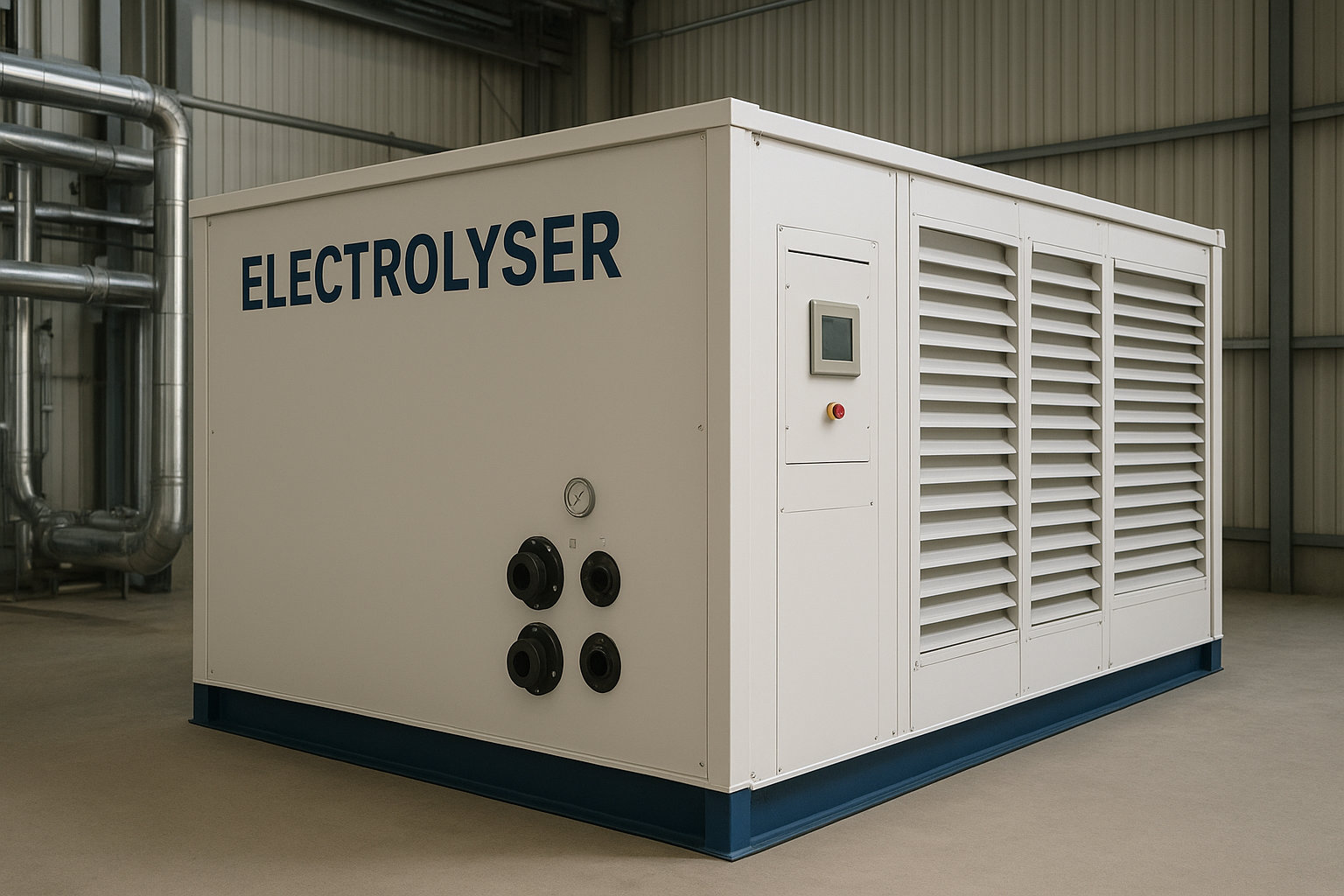
Hystar and Bharat Heavy Electricals Limited (BHEL) have announced a collaboration to develop local production capabilities for proton exchange membrane (PEM) electrolysers in India. The partnership targets the localisation of key components and assembly to support the scaling of green hydrogen production across industrial and energy sectors.
The agreement reflects growing industry attention on building domestic supply chains for electrolysers, a critical technology for producing hydrogen using renewable electricity. Both parties describe the move as a step toward improving access, reducing costs and strengthening India’s capacity to deploy green hydrogen at scale.
Overview
The collaboration pairs Hystar’s technology expertise with BHEL’s manufacturing footprint and industrial experience. The aim is to establish manufacturing capacity for PEM electrolysers, which use membranes and catalysts to split water into hydrogen and oxygen when powered by electricity.
Local manufacturing can involve sourcing components domestically, assembling stacks and systems in India, and developing associated testing and service capabilities. This can shorten lead times for project developers and reduce exposure to international supply chain disruptions.
Why This News Matters
Electrolysers are central to green hydrogen strategies because they enable conversion of renewable electricity into a storable, transportable fuel. Wider availability of locally manufactured PEM electrolysers could accelerate deployment in sectors such as chemicals, fertilisers, refining and heavy industry.
By targeting domestic production, the partnership seeks to decrease reliance on imports and enhance industrial self-reliance. For policymakers and investors, stronger local capacity can also improve project economics and support job creation along new manufacturing value chains.
Industry Perspective
Industry observers say scaling electrolyser manufacturing is a necessary complement to renewable power expansion if green hydrogen is to reach commercial volumes. PEM electrolysers offer operational advantages such as rapid response and high purity hydrogen, but they also depend on specialised materials and manufacturing precision.
Partnerships between technology providers and established industrial players are one route to marry R&D and factory-scale production. Such alliances can help transfer know-how, establish quality control, and meet local procurement requirements for public and private projects.
Future Outlook
Realising a domestic PEM electrolyser industry will require sustained investment in manufacturing, workforce training and component supply chains. The wider policy environment, including incentives for green hydrogen projects and access to low-cost renewable electricity, will influence the pace of uptake.
Challenges remain, including scaling production costs down, securing critical materials, and integrating electrolysers with intermittent renewable power. If these are addressed, locally produced electrolysers could play a significant role in lowering the cost trajectory of green hydrogen in India.
Key Highlights
- Partnership announced: Hystar and BHEL are collaborating on local PEM electrolyser manufacturing in India.
- Technology focus: The initiative centres on PEM electrolysis, a method suited for variable renewable power.
- Localisation goals: Efforts include component sourcing, assembly and service capabilities within India.
- Strategic value: Aims to reduce import dependence and support industrial decarbonisation efforts.
- Broader impact: Could strengthen supply chains, create jobs and improve project economics for green hydrogen.
Frequently Asked Questions
What is a PEM electrolyser?
A PEM (proton exchange membrane) electrolyser uses a solid polymer electrolyte to separate hydrogen and oxygen during water electrolysis. It is valued for its compact design, rapid response to power changes, and ability to produce high-purity hydrogen.
Why is local manufacturing important for electrolyser deployment?
Local manufacturing can lower lead times, reduce shipping costs and exposure to global supply bottlenecks, and support domestic industrial capacity. It can also spur job creation and align production with local quality and regulatory standards.
How does this partnership affect India’s green hydrogen ambitions?
Partnerships that build manufacturing capability are an enabling element of scaling green hydrogen. They complement renewable energy growth and project development by improving access to essential equipment and services.
What are the main challenges for scaling PEM electrolyser production?
Key challenges include reducing capital costs, securing specialised materials and catalysts, building component supply chains, and ensuring skilled manufacturing and maintenance capacity.
Will local manufacturing immediately lower hydrogen costs?
Local manufacturing can contribute to cost reductions over time by improving supply chain efficiency and increasing competition. However, hydrogen costs also depend on electricity prices, economies of scale, and supportive policies.
What role do policies play in enabling this development?
Stable policy frameworks, incentives for green hydrogen projects, and support for manufacturing investments and workforce development are important to attract capital and accelerate deployment of electrolysers at scale.