News at Glance
- Pre-construction surveys predicted at most 32 desert tortoises at the Ivanpah solar site in the Mojave, according to reporting.
- Field crews found close to 1,000 tortoises, prompting a three-month construction stoppage.
- Approximately $56 million was spent on relocation and mitigation after the unexpected discovery, per reports.
Field crews encountered far more tortoises than surveys indicated, halting work and raising mitigation bills
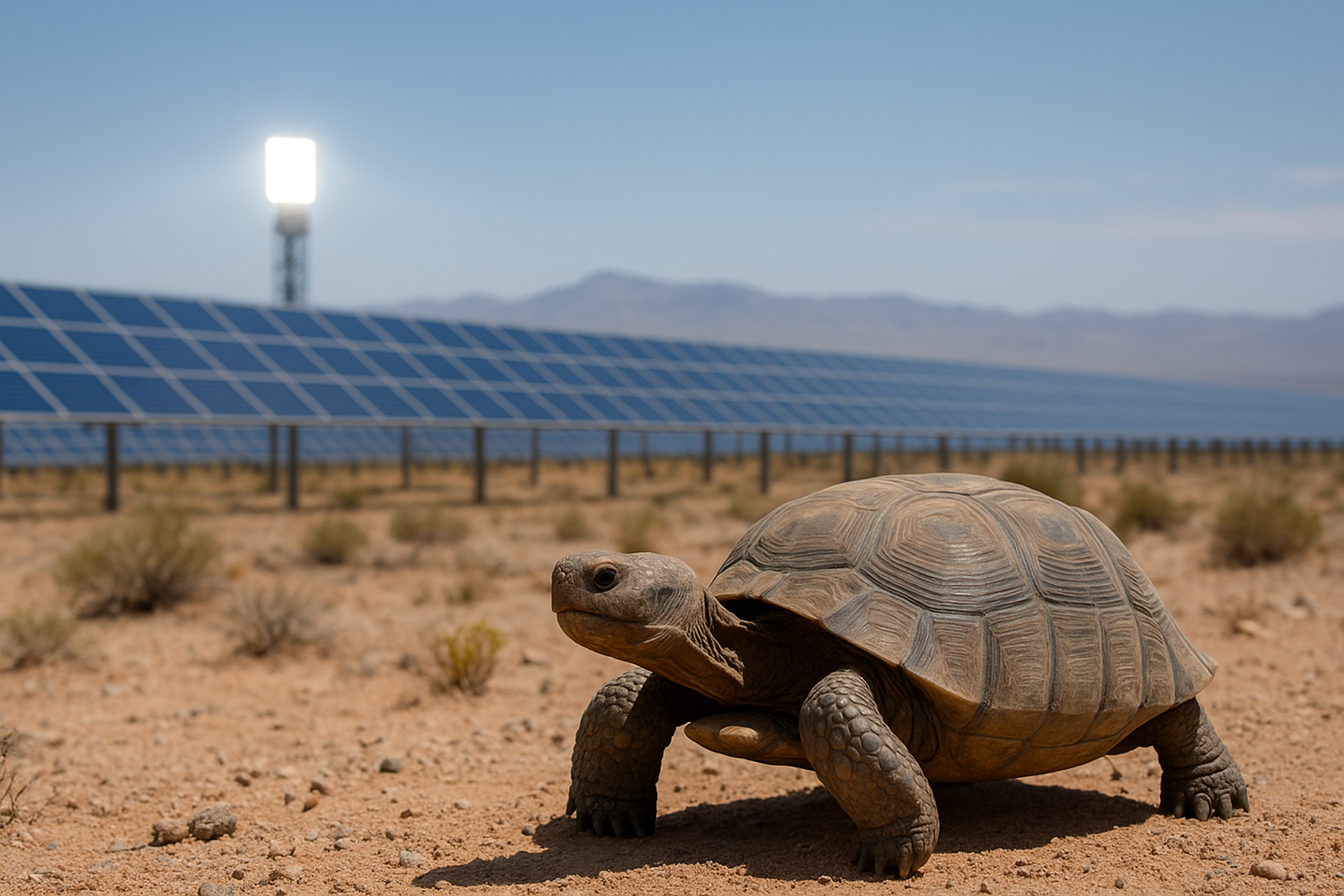
Construction at the Ivanpah solar complex in the Mojave was interrupted after on-site crews uncovered far higher numbers of desert tortoises than pre-construction surveys had forecast. The discrepancy forced project managers to pause work while wildlife relocation and protective measures were undertaken.
According to reporting, surveys had identified no more than 32 tortoises before ground disturbance began, but field teams later documented close to 1,000 individuals. The unexpected count led to an approximately three-month construction stoppage and substantial mitigation spending.
Project operators allocated significant funds to move and temporarily house animals, install protective fencing and comply with permit conditions. Reports cite a figure near $56 million for those efforts, highlighting the potential cost of underestimating ecological risks at large-scale solar developments.
Developers and regulators face scrutiny over survey methodologies, timing and the adequacy of contingency planning. In arid landscapes like the Mojave, wildlife populations can be patchy and seasonal, complicating accurate pre-construction assessments.
Industry observers say this case underscores the operational and financial risks of incomplete ecological data. Robust, multi-season surveys, adaptive management plans and earlier engagement with wildlife specialists can reduce the chance of costly surprises during construction.
For utility-scale renewable projects, the incident also reinforces the need to balance rapid deployment with careful environmental review. Lessons from Ivanpah may affect future permitting, risk allocation and project timelines for desert solar investments.
FAQs
What triggered the construction halt at Ivanpah?
Field crews discovered far more desert tortoises on site than pre-construction surveys had reported, prompting a temporary stop while relocation and mitigation measures were implemented.
How large was the discrepancy between surveys and findings?
Pre-construction counts reportedly estimated at most 32 tortoises, while later on-site work documented close to 1,000 individuals.
What kinds of mitigation were undertaken?
Reported measures included relocating animals, installing protective barriers and pausing construction to meet environmental compliance obligations and reduce harm to wildlife.
Who bore the cost of relocation and mitigation?
Costs were covered by project operators as part of permit compliance and mitigation responsibilities; reporting cites roughly $56 million spent on these efforts.
Why can surveys miss large numbers of animals?
Survey accuracy can be affected by seasonal movements, burrowing behavior, habitat heterogeneity and limited survey windows; multi-season and targeted methods reduce but do not eliminate uncertainty.
What are the broader implications for solar development?
The incident highlights the need for stronger pre-construction ecological assessment, contingency funding, and adaptive management to limit schedule risk and unforeseen environmental costs.