
U.S. Small-Scale Solar Generation Rises Nearly Fivefold Since 2016
New data from the U.S. Energy Information Administration highlights the expansion of small-scale solar across the country, with state incentives and rising installed capacity supporting growth.

CTJ Desk
Published •4 min read
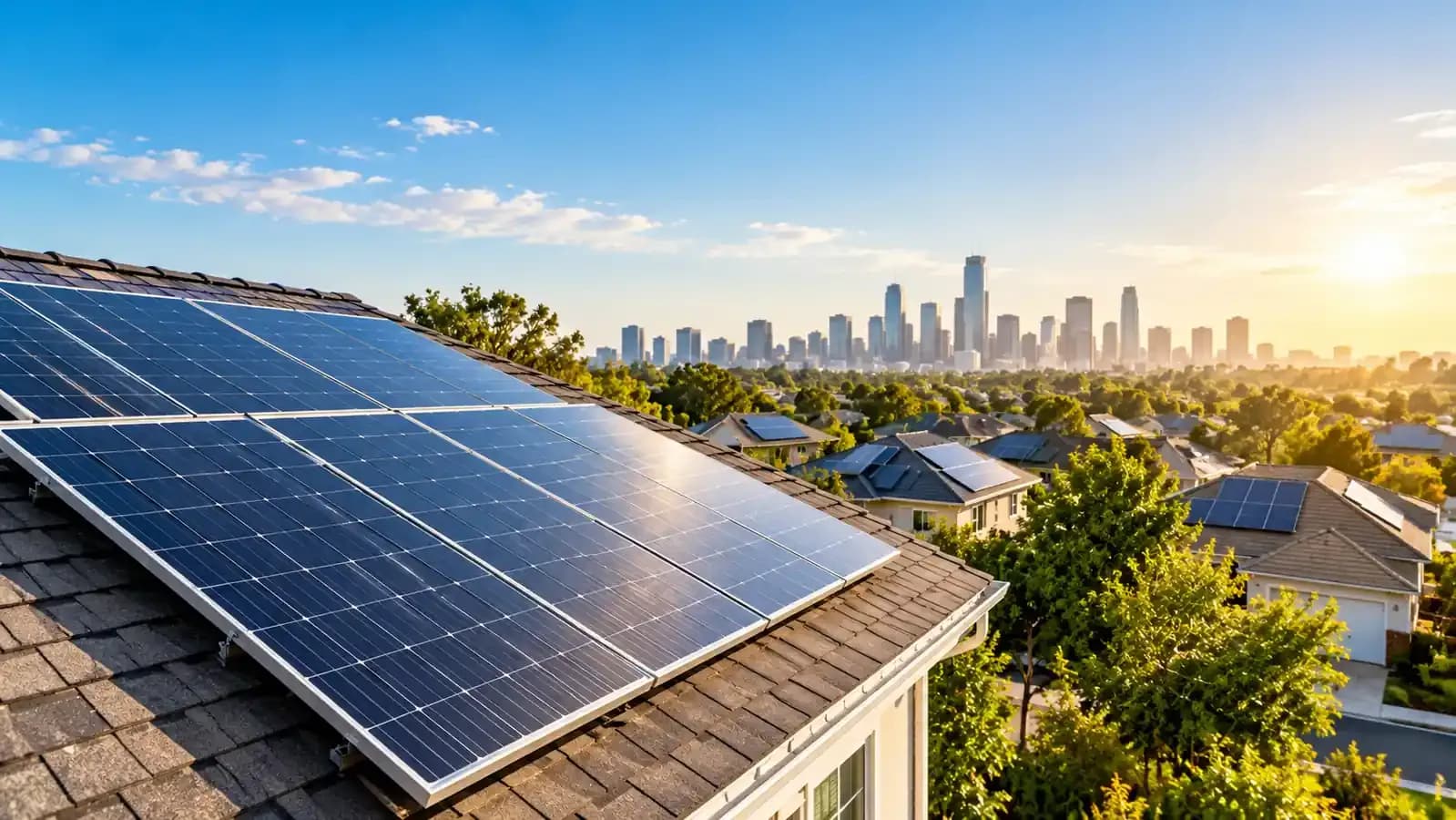
U.S. electricity generation from small-scale solar photovoltaic (PV) systems has increased nearly fivefold over the past decade, rising from 18,812 gigawatt-hours (GWh) in 2016 to an estimated 92,979 GWh in 2026, according to the U.S. Energy Information Administration (EIA).
The figures cover small-scale solar installations with a capacity of less than 1 megawatt (MW), including rooftop solar systems. Growth has been driven by capacity additions, technology improvements and state-level incentives, although the annual growth rate has slowed since 2022.
California remained the largest contributor to U.S. small-scale solar generation in 2025, accounting for 37% of the national total, or 34,411 GWh. Generation in the state increased 8% from 2024 to 2025, supported largely by capacity growth. California's small-scale solar capacity rose from 18 gigawatts (GW) in 2024 to 20 GW in 2025.
Arizona ranked second, contributing 5,795 GWh, or more than 6% of total U.S. small-scale solar generation in 2025. Its generation grew 6% year over year. The state's growth was particularly strong between 2022 and 2023, when small-scale solar generation increased 22%. Arizona offers a 25% state income-tax credit and other incentives for rooftop solar installations.
Texas and Florida have also recorded substantial growth over the past decade. Small-scale solar generation in Texas increased from 391 GWh in 2016 to 5,408 GWh in 2025. In Florida, it rose from 205 GWh to 5,198 GWh over the same period. Both states offer property tax exemptions and other incentives through state and, in some cases, utility programmes.
States with comparatively lower solar irradiance have also expanded rooftop solar adoption through incentives. New York ranked fifth nationally in small-scale solar generation, supported by capacity growth, technology improvements and state incentives. New Jersey, Massachusetts and Illinois have also introduced programmes supporting rooftop solar deployment.
The EIA reported that U.S. small-scale solar generation recorded particularly strong year-over-year growth in 2022, increasing 25% amid record capacity additions. Changes in state incentive programmes partly contributed to this trend.
In California, the Net Energy Metering (NEM) 2.0 programme, which offered higher compensation for electricity exported to the grid than the subsequent Net Billing Tariff, remained available through April 2023. Capacity installed under NEM 2.0 was grandfathered into the programme, encouraging installations ahead of the transition to NEM 3.0.
The EIA estimates small-scale solar generation because utilities do not necessarily have direct information on the electricity produced by rooftop systems connected to their distribution networks. Its estimates use tools developed by the National Renewable Energy Laboratory, including the System Advisor Model and PVWatts, alongside information on installed capacity and system configurations.
Despite continued year-over-year growth, the pace of U.S. small-scale solar generation expansion has declined since 2022.
SOURCES
- U.S. Energy Information Administration (EIA)