
News at Glance
- Mini-wind turbines deliver kilowatt-scale generation suitable for individual homes, farms and small businesses.
- Key components include rotors, hubs, generators and power electronics that convert mechanical rotation into grid-compatible electricity.
- Siting and turbulence determine yield and reliability, making placement and mounting critical for performance.
Mini-turbines provide local, kilowatt-scale power to buildings and small enterprises
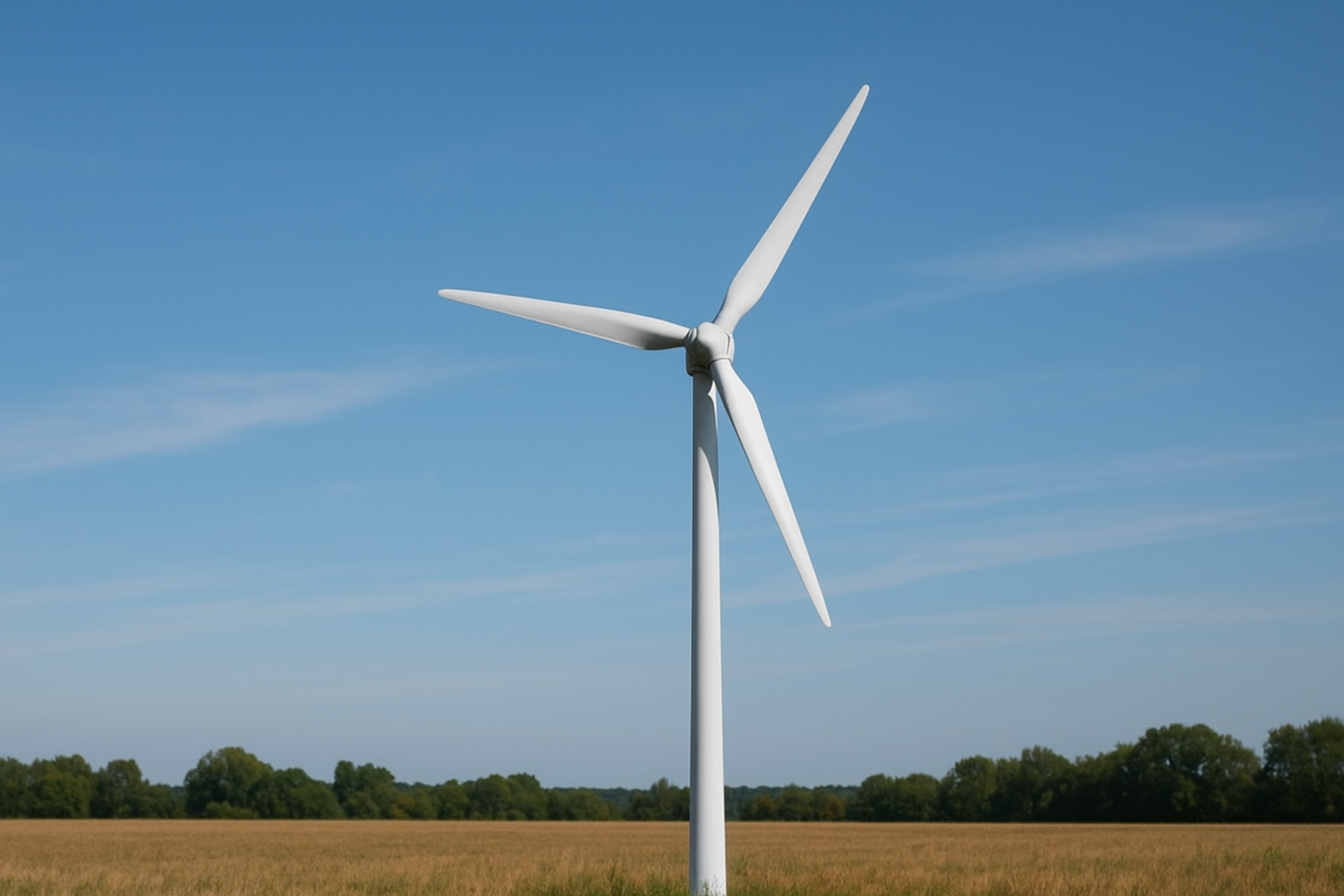
Mini-wind systems convert the kinetic energy of moving air into electrical energy using the same basic physical principles as larger turbines. Blades capture wind and drive a rotor, transforming linear wind speed into rotational motion that the turbine’s drive train directs to an electrical generator.
Designs vary between geared and direct-drive systems. Many small turbines now favour direct-drive generators to reduce moving parts and maintenance, while others use lightweight gearboxes to match blade speeds to optimal generator rpm. Power electronics then condition the output for batteries or local AC loads.
Control systems manage blade pitch and yaw where fitted, protecting the turbine at high wind speeds and optimising capture at lower winds. Cut-in and cut-out thresholds, set by design and electronics, determine when the unit produces useful power versus when it must shut down for safety.
Siting is a decisive factor for mini-wind performance. Turbulence from buildings, trees and complex terrain reduces average speeds and can increase wear. Towers or masts elevate rotors into steadier flows, improving energy yield and longevity.
Small wind complements other distributed renewables, pairing with rooftop solar and battery storage to smooth supply and improve self-consumption. Economic viability depends on local wind resources, installation costs, permits and maintenance overhead.
While not a universal solution, mini-wind offers a decentralised option for locations with consistent winds or where grid connection is costly. Advances in materials and electronics continue to improve reliability and integration with local energy systems.
FAQs
How does a mini-wind turbine generate electricity?
Blades capture wind and rotate a shaft that drives a generator; the generator produces electrical current which is then conditioned by power electronics for use or storage.
Where are mini-wind turbines best deployed?
They perform best in open, low-turbulence sites or when mounted on towers that place rotors above nearby obstructions to access steadier wind flows.
What maintenance do small wind turbines require?
Maintenance typically includes periodic inspection of blades, bearings and electrical connections, with more frequent checks in turbulent or offshore-adjacent environments.
Can mini-wind work with solar panels?
Yes. Mini-wind can complement solar by supplying power at times when solar output is low, and both can charge shared battery systems for greater resilience.
Do mini-wind turbines feed the grid?
Some systems are designed to export through inverters and local grid connections, while others are off-grid and charge batteries or supply dedicated loads directly.
What limits the energy output of small turbines?
Primary limits are local wind speed, turbulence, rotor size and height, and the turbine’s power curve; suboptimal siting and frequent shutdowns for safety also reduce yield.