
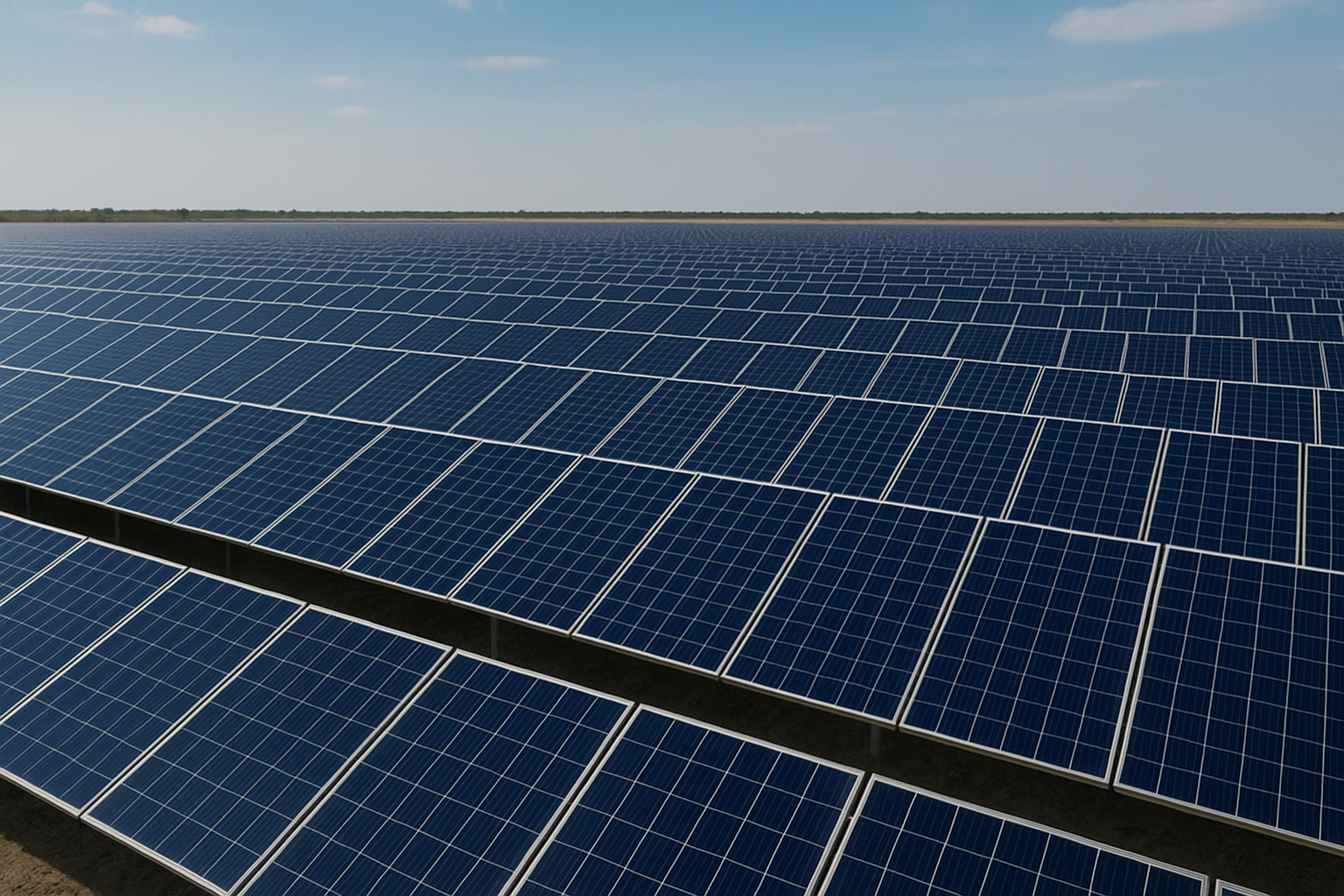
The Indian Ministry of New and Renewable Energy (MNRE) has expanded the first Approved List of Models and Manufacturers (ALMM-I) by 12.7GW of solar module capacity, bringing the total listed capacity to more than 217GW. The update is the latest administrative step in maintaining a vetted roster of module suppliers eligible for government-linked procurement and incentives.
Overview
The ALMM is a registry used by authorities and procurers to verify that solar modules meet defined technical and domestic manufacturing criteria. The recent inclusion of 12.7GW of additional capacity increases the pool of pre-approved modules and manufacturers available to developers and public tenders.
The expansion affects ALMM-I specifically, the list that tracks eligible module models and manufacturing lines under current government frameworks. The move reflects ongoing updates to accommodate new or scaled production capacity from module producers.
Why This News Matters
An enlarged ALMM list can smooth procurement for large-scale projects by expanding the set of modules recognized for compliance with policy requirements. This reduces uncertainty for developers participating in tenders that mandate ALMM-listed products.
The update also signals oversight activity to ensure that listed capacity and models align with evolving technical standards and domestic content expectations. For policymakers, the list serves as a tool to balance quality assurance with market access.
Industry Perspective
Manufacturers view ALMM inclusion as a commercial advantage because many state and central tenders specify ALMM-listed modules. Being added can therefore open new market opportunities and support contract wins without additional pre-qualification steps.
For project developers and financiers, a broader ALMM can ease due diligence by providing an authoritative starting point for module selection. However, stakeholders continue to weigh ALMM status alongside price, bankability and long-term warranty performance when choosing suppliers.
Future Outlook
Regular updates to ALMM lists are likely as production capacities change and as new manufacturers meet technical and policy criteria. Greater transparency and frequency of updates could further reduce procurement friction.
Longer term, the interaction between ALMM listings and other policy instruments—such as domestic manufacturing incentives, standards revisions and import rules—will shape how quickly the domestic module base scales and diversifies. Market participants will watch for further guidance from authorities on list-management and eligibility checks.
Key Highlights
- 12.7GW added to the ALMM-I list in the latest update.
- Total listed capacity for ALMM-I now exceeds 217GW.
- ALMM role remains central for tender and procurement eligibility.
- Implications include easier project procurement and broader supplier access.
- Ongoing updates expected as manufacturers scale or meet criteria.
Frequently Asked Questions
What is ALMM-I?
ALMM-I refers to the Approved List of Models and Manufacturers maintained by India’s MNRE. It lists solar module models and manufacturing lines that meet defined technical and policy criteria for use in government-linked procurement.
Why are ALMM listings important for developers?
Many public tenders and policy-driven procurements require modules from ALMM-listed manufacturers. Inclusion reduces the need for separate technical pre-qualification and provides a commonly recognized compliance benchmark.
Does ALMM listing guarantee quality?
ALMM listing indicates that a module model or manufacturing line has met specified criteria at the time of listing. Buyers typically complement ALMM status with independent due diligence on performance, warranties and bankability.
How often is the ALMM updated?
Updates occur periodically as manufacturers apply and meet the necessary criteria or as authorities revise listings. The exact frequency can vary, and stakeholders monitor official notifications for changes.
Can manufacturers be removed from the ALMM?
Yes. Manufacturers or models can be delisted if they no longer meet eligibility requirements, fail compliance checks, or if information provided during the listing process is found to be inaccurate.
What does this expansion mean for India’s solar industry?
The addition of capacity to ALMM-I broadens the set of pre-approved module options for procurement, which can reduce transaction friction and support deployment. It also underscores ongoing administrative efforts to align supply with policy frameworks that govern public and incentive-linked projects.