US Solar Manufacturing Outlook to 2030 and What Comes Next
-2.png&w=3840&q=75)
CleanTech Journal Desk
September 4, 2026•7 min read
News at Glance
- Domestic PV manufacturing is accelerating as industry and investors respond to US policy incentives and market demand.
- Supply-chain and equipment constraints persist, creating near-term bottlenecks for rapid factory scale-up.
- Technology and workforce development will shape competitiveness for US-produced wafers, cells and modules beyond 2030.
Supply-chain buildout increases pressure on raw materials and specialised equipment
US solar manufacturing growth to 2030 is being framed by a complex interplay of policy signals, private capital and global market dynamics. Incentives and procurement policies have encouraged onshore investment in silicon, cell and module production without guaranteeing uniform outcomes across the value chain.
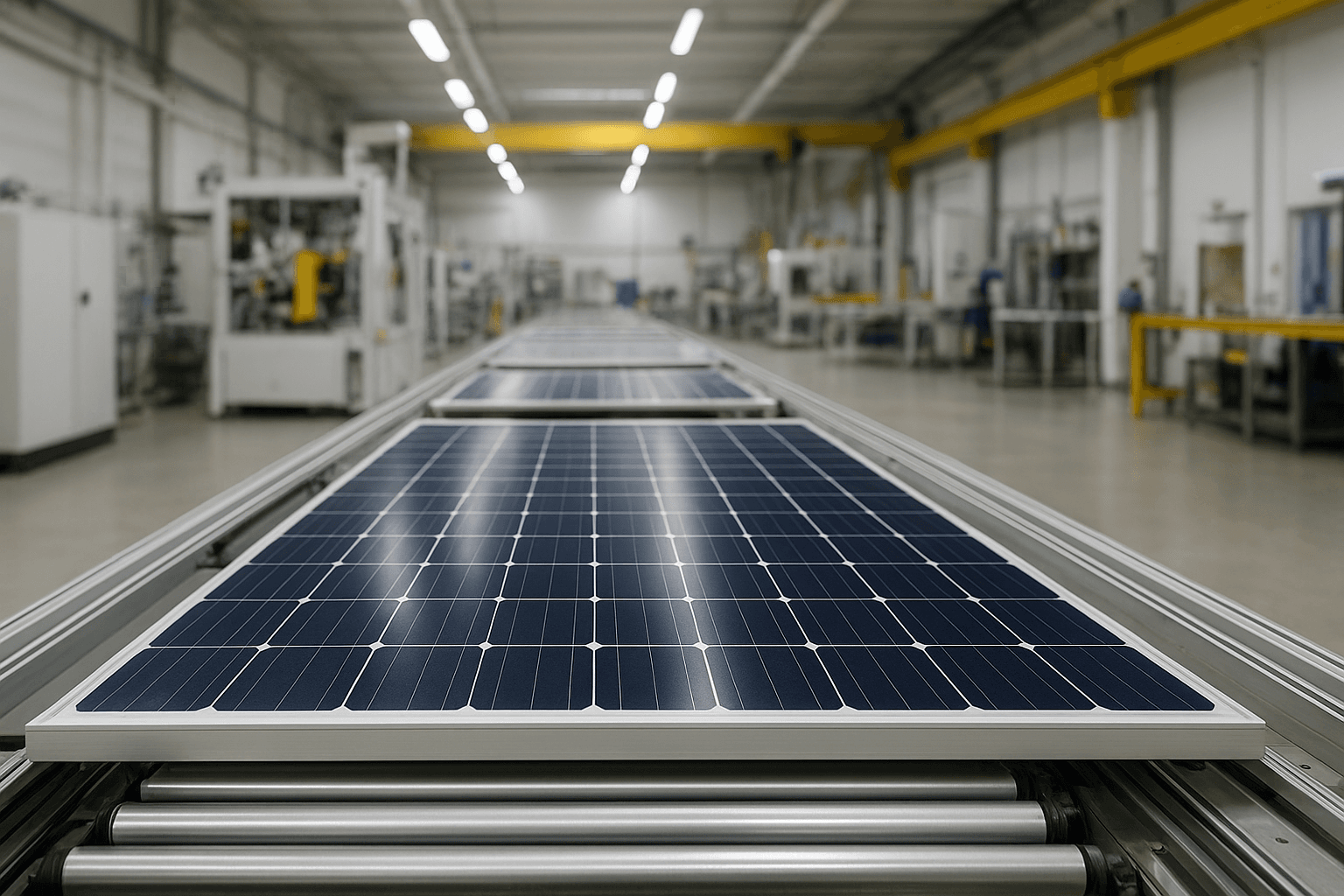
Industry participants face familiar scaling challenges: sourcing feedstock, securing advanced manufacturing equipment and training a sizeable workforce. Those constraints influence where and how quickly new facilities can begin commercial production and reach competitive cost levels.
Technology choices will determine manufacturing footprints, with several cell and module architectures under consideration by factory planners. Decisions on automation, capital intensity and process flexibility will affect unit costs and the ability to adapt to evolving module designs.
Trade dynamics and global supply availability will continue to shape US competitiveness in the sector. Even with domestic production rising, manufacturers will likely remain sensitive to international component flows and raw-material markets.
Opportunities extend beyond manufacturing lines to recycling, balance-of-system components and services that can deepen domestic value capture. Localised ecosystems that connect production, installation and recycling could bolster resilience and long-term job creation.
Looking beyond 2030, outcomes will hinge on sustained policy clarity, timely permitting and investment in skills and logistics. Analysts and industry leaders note that execution — not intent — will determine whether expanded capacity translates into durable industry leadership.
FAQs
What factors are driving increased investment in US solar manufacturing?
Investment is driven by a combination of policy incentives, rising demand for solar installations, and a desire to reduce reliance on offshore supply chains, prompting firms and financiers to commit capital to local production.
Which parts of the solar value chain are priorities for domestic production?
Priorities commonly include upstream polysilicon and wafer processing, cell and module assembly, and downstream components such as inverters and mounting systems, alongside emerging recycling capabilities.
What are the main bottlenecks to rapidly scaling US PV factories?
Bottlenecks include limited availability of specialised equipment, constrained feedstock supply, permitting timelines, and the need for trained manufacturing workforces.
How could technology choices affect US solar manufacturing competitiveness?
Choices around cell architecture, automation, and process flexibility influence production costs, yield, and the ability to adapt to market shifts, all of which affect competitiveness.
Will domestic manufacturing eliminate dependence on global supply chains?
Domestic manufacturing can reduce exposure to some international risks but is unlikely to fully eliminate reliance on global suppliers for certain materials and specialized machinery in the near term.
What policy actions matter most for long-term growth of US solar manufacturing?
Key actions include consistent incentive frameworks, streamlined permitting, workforce development programs, and support for supply-chain infrastructure to enable predictable investment and scaling.