Spain Renewables Lose €140 Million To Curtailment Since April 2025 Blackout
Spain's renewable sector has lost €140 million to curtailment since the April 2025 blackout, with constrained-off volumes at 4% of available supply and some nodes above 25%.

CTJ Desk
Published •8 min read
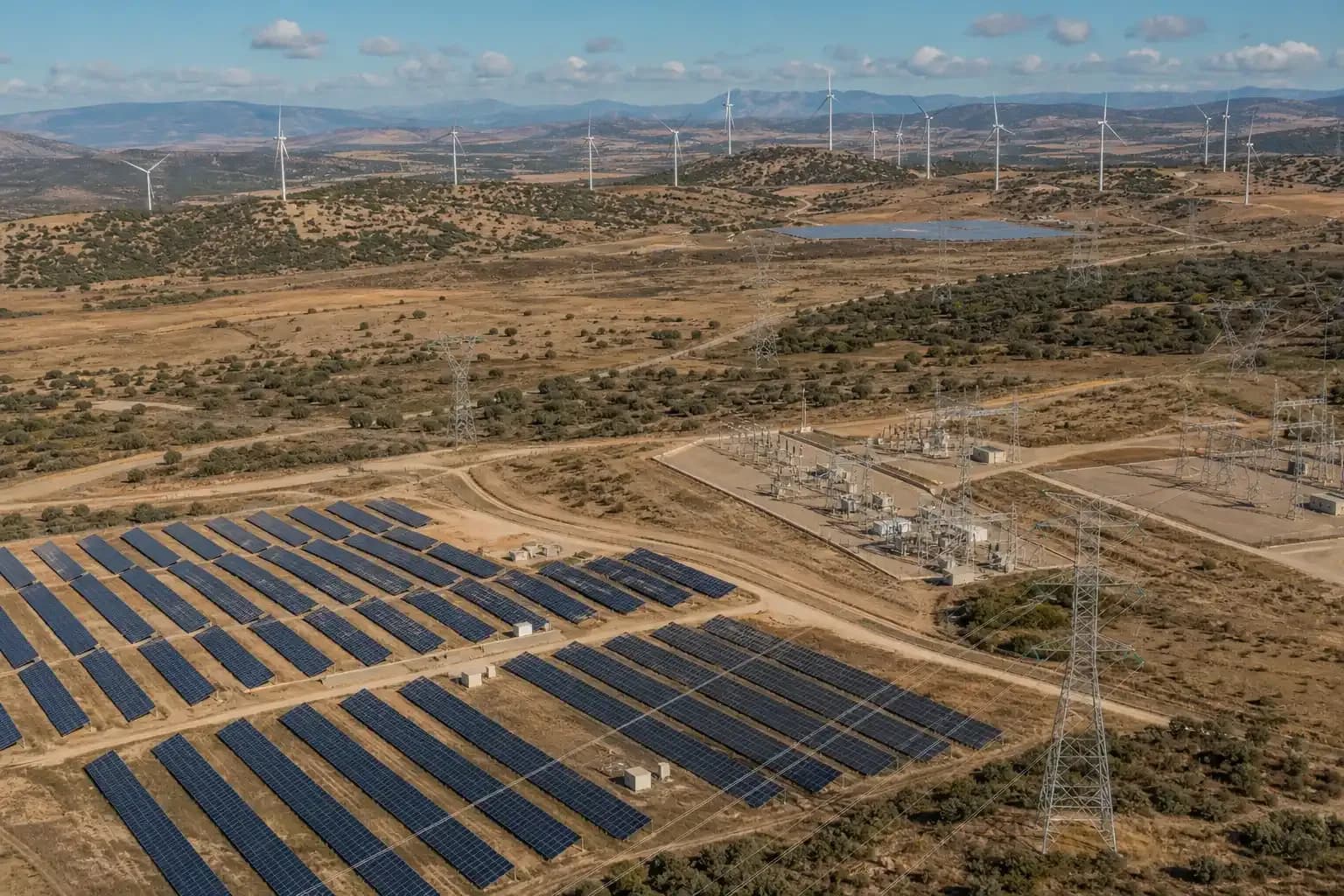
Spain's renewable sector has lost €140 million in revenue to curtailment since the April 2025 grid blackout, and uncompensated constrained-off volumes now equal 4% of available renewable supply year-to-date, according to Wood Mackenzie. The analysis says curtailment is much higher at certain nodes in Extremadura and Murcia, where it already exceeds 25% of renewable output. About 10 GW of utility-scale solar is still due to connect from October 2026 through 2028, adding to the same transmission system.
€140 Million In Lost Revenue Sits Alongside A 4% National Curtailment Rate
The figures come from Spain's Technical Curtailment Crunch: How the Next Wave of Solar Growth Will Impact Trends, which models conditions at nodal level across Spain's full transmission system.
At national level, redispatch volumes in the technical constraints market have not returned to pre-blackout levels. Year-to-date, uncompensated constrained-off volumes stand at 4% of available renewable supply. The analysis says that national average hides much sharper local effects. At certain nodes in Extremadura and Murcia, curtailment already exceeds 25% of renewable output, meaning a quarter of potential generation revenue is not being earned at those locations.
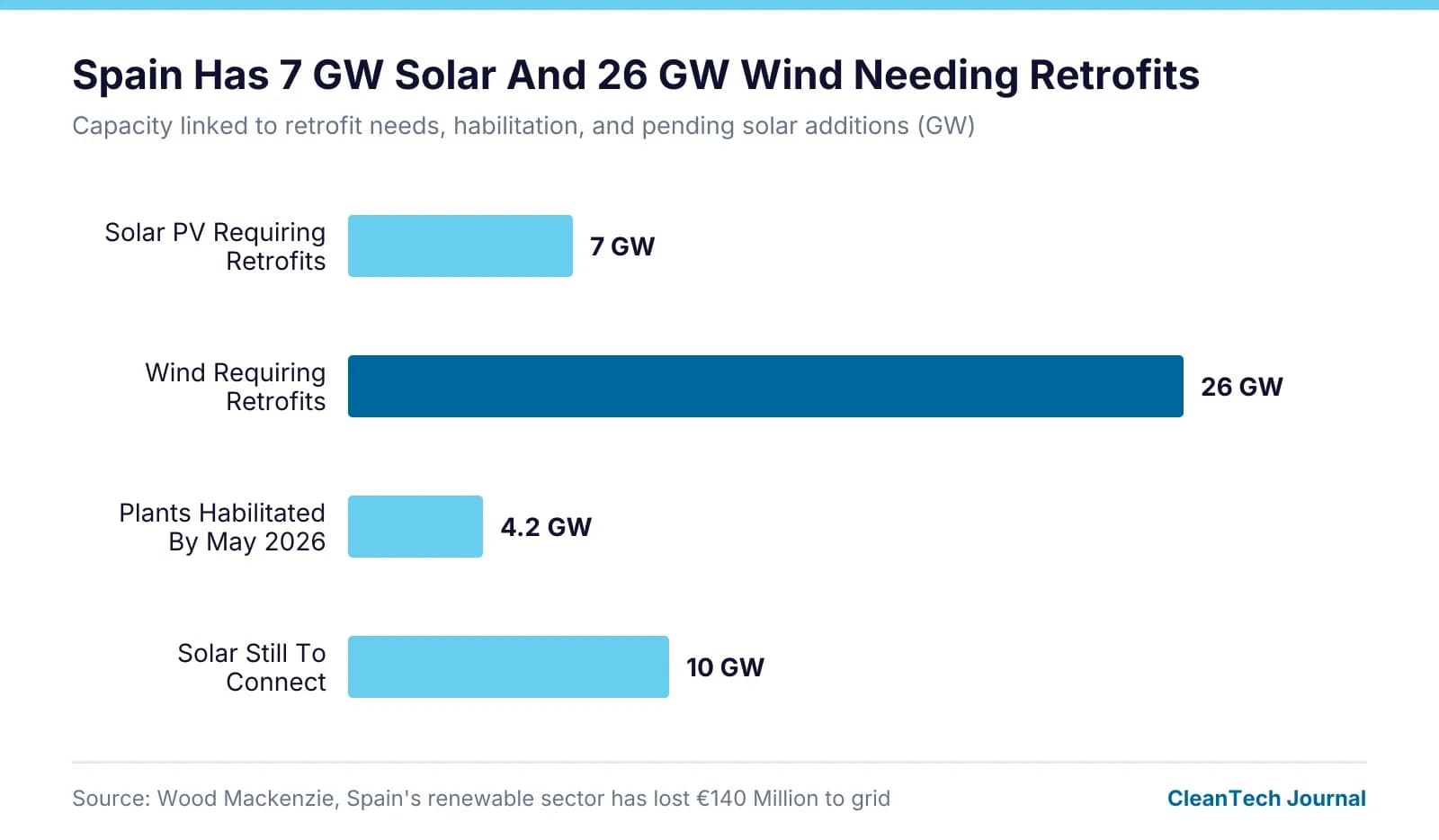
The study ties the revenue loss to elevated curtailment after the April 2025 blackout and says the next wave of capacity is arriving before those conditions have eased. Across 2026 to 2028, Spain is expected to add 16 GW of new utility-scale capacity, with approximately 10 GW still to connect from October 2026 through 2028. A significant portion of that wider 16 GW wave had already connected in the first eight months of 2026.
That sequence matters because the power system is managing both existing constrained-off volumes and additional incoming solar at the same time. The national figures therefore combine two very different pictures: a 4% average across the country and much higher losses in the most affected nodes.
Roughly Half Of 2026 Technical Curtailment Comes From System Stability Needs
The analysis says the main issue is no longer only physical congestion on transmission lines. Roughly half of technical curtailment in 2026 stems from synchronous system issues, including inertia, short-circuit current, and frequency and voltage control.
In practice, that means some renewable generation is being switched off even when line capacity is not the only limit. Gas is being called on to replace curtailed solar and wind in order to manage grid stability. The analysis adds that congestion which was once driven mainly by wind supply is now driven mainly by solar supply.
This pressure is concentrated around Madrid, Toledo and Cáceres, where 3 GW of new solar PV is coming online in those corridors. The report also says developers are siting new projects in lower-resource zones including León, Valladolid, Huesca and Zaragoza.
The technical point behind this is that gas and nuclear plants provide synchronous services as part of normal operation, while inverter-based solar and wind plants must be specifically configured to replicate them. A large share of Spain's existing renewable fleet is not yet configured to do that.
Dynamic Voltage Control Compliance Determines Whether Curtailment Stabilises
The analysis identifies dynamic voltage control as the main variable in whether curtailment levels stabilise or rise further. Around 7 GW of solar PV and 26 GW of wind capacity require inverter retrofits to provide dynamic voltage control because they were commissioned before Royal Decree 647/2020 came into force.
Up to 50% of the existing renewable fleet cannot provide that service without further investment. At the same time, more than 35 GW can be enabled to provide dynamic voltage control at no additional cost, and plants that do so receive priority of dispatch. Grid operator REE had habilitated 4.2 GW of renewable plants through its habilitación program by May 2026.
If none of the 35 GW of renewables capable of providing dynamic voltage control at no additional cost are brought to compliance, curtailment is forecast to rise 18% over the next two years. Under that condition, total curtailment reaches 6.5 TWh by 2028, compared with 1.3 TWh in 2023.
The base case is different. It projects curtailment stabilizing in 2027 and 2028, but only if dynamic voltage control from new and existing renewable plants keeps pace with the approximately 10 GW of solar capacity still to connect. The analysis therefore separates two drivers: network congestion itself and the speed at which existing and new plants are able to provide the stability services the system requires.
Battery Storage, Data Centres And Synchronous Condensers Shape The 2030 Outlook
For the near term, the analysis points to battery storage and rising demand as the parts of the system with more weight than grid reinforcement. It gives grid reinforcement a seven-year average lead time from greenfield development to completion, which places it outside the near-term response.
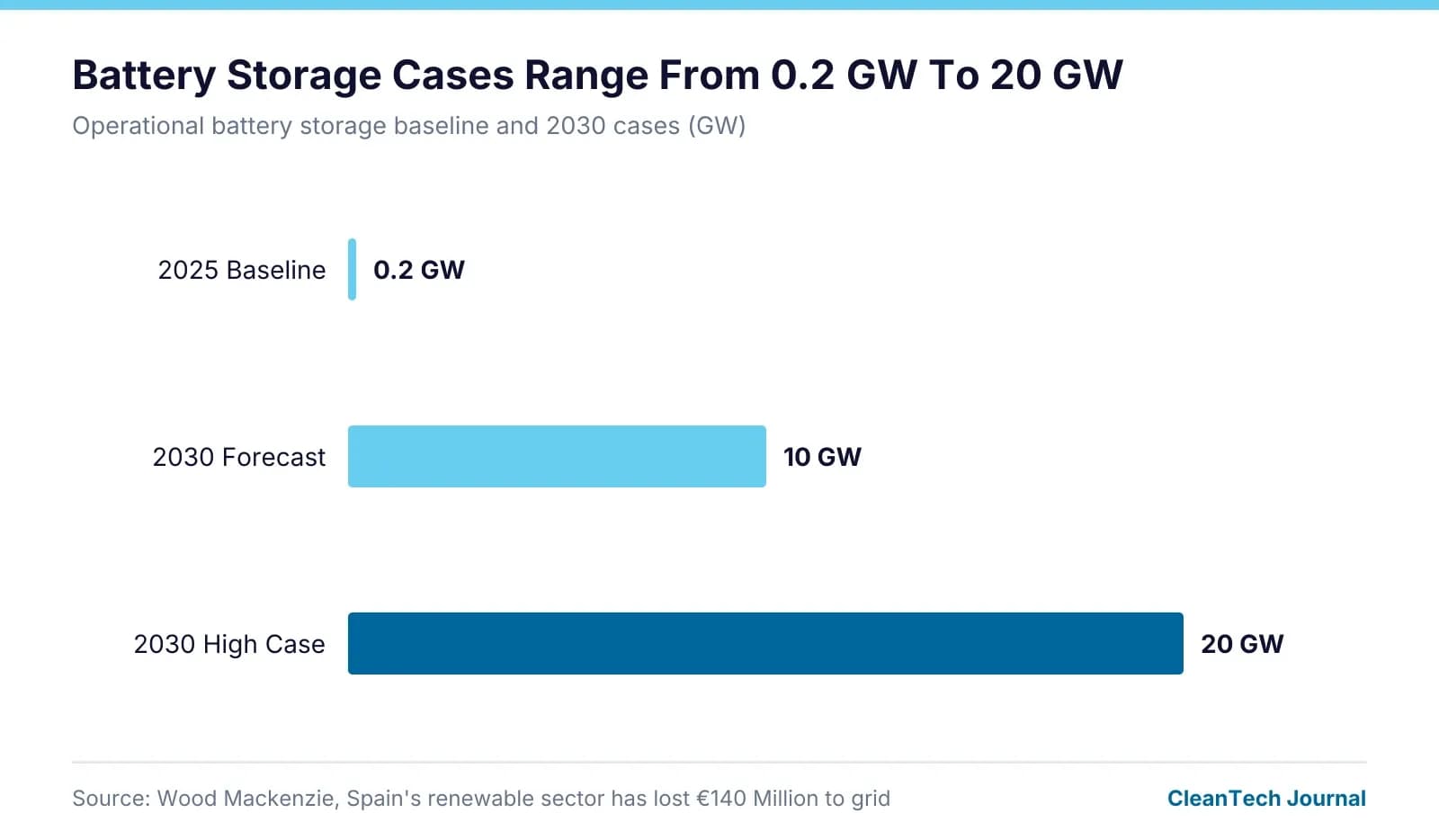
Battery capacity is forecast at 10 GW operational by 2030, rising to 20 GW in the high case, from a 2025 baseline of 0.2 GW. More than 40 GW of battery storage is under development, and 25 GW already holds grid access approval.
On the demand side, data centres add 2.3 GW to the pipeline, with over 2 GW forecast online by 2030. The analysis says renewables are expected to resolve half of the enhanced contingency management problem, with synchronous condensers closing the remainder by 2029.
If those conditions hold, curtailment is projected to fall 30% per year over the outlook. That projected decline depends on several elements named in the analysis: more battery capacity, additional demand, dynamic voltage control from renewable plants, and synchronous condensers becoming fully operational by 2029.
SOURCES
- Wood Mackenzie: Spain's renewable sector has lost €140 Million to grid ...