Top 10 Largest Utility Companies in the US by Customers
The largest utility companies in the US ranked by customers served, from Exelon's almost 11 million to Duke Energy, PG&E, Southern Company and AEP.

Suraj Kadam
Published •27 min read
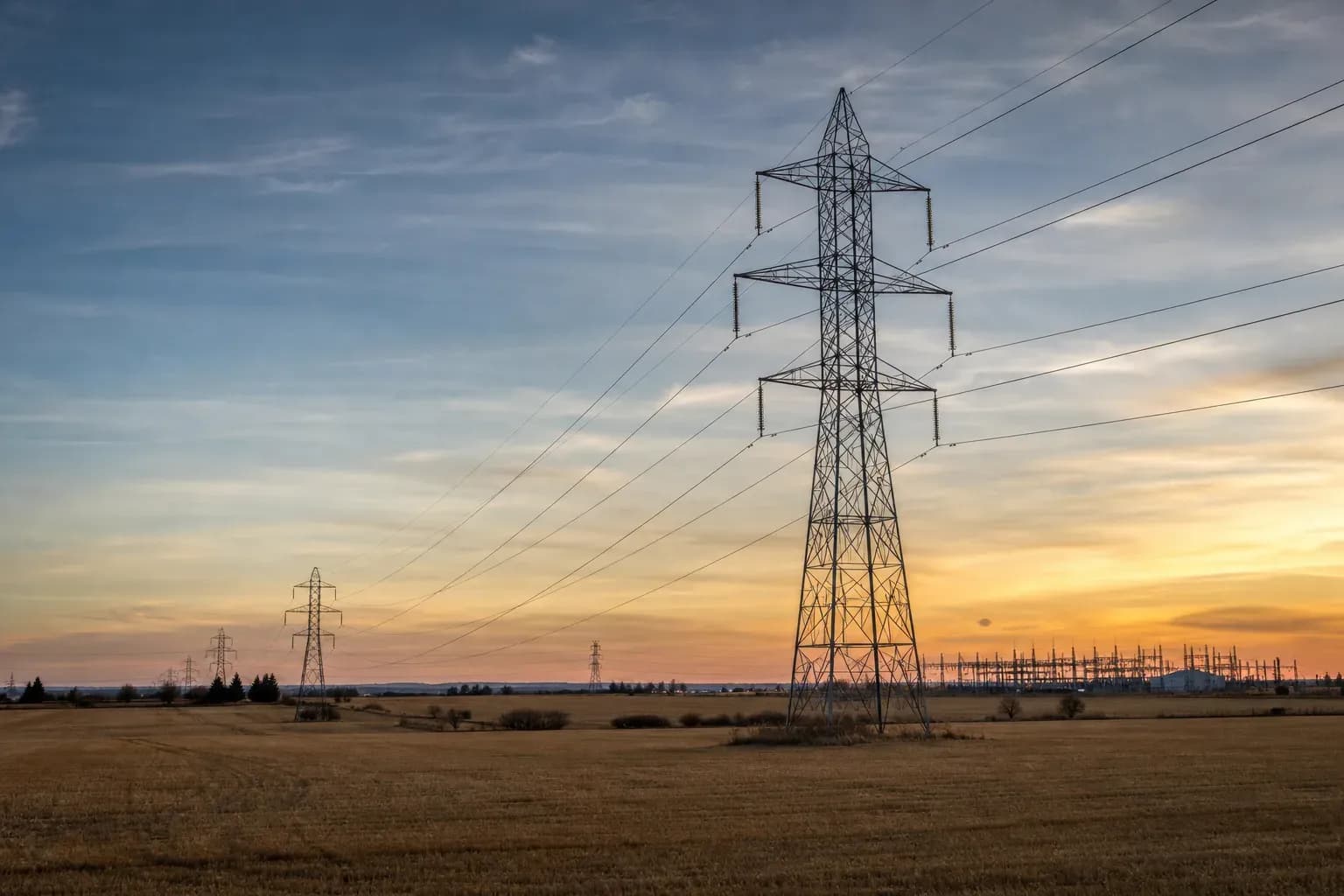
Picture a map of the US power grid colored by who owns the wires. A handful of holding companies would cover most of it, and the largest utility companies in the US each serve between roughly 5.6 million and 11 million electric and natural gas customers.
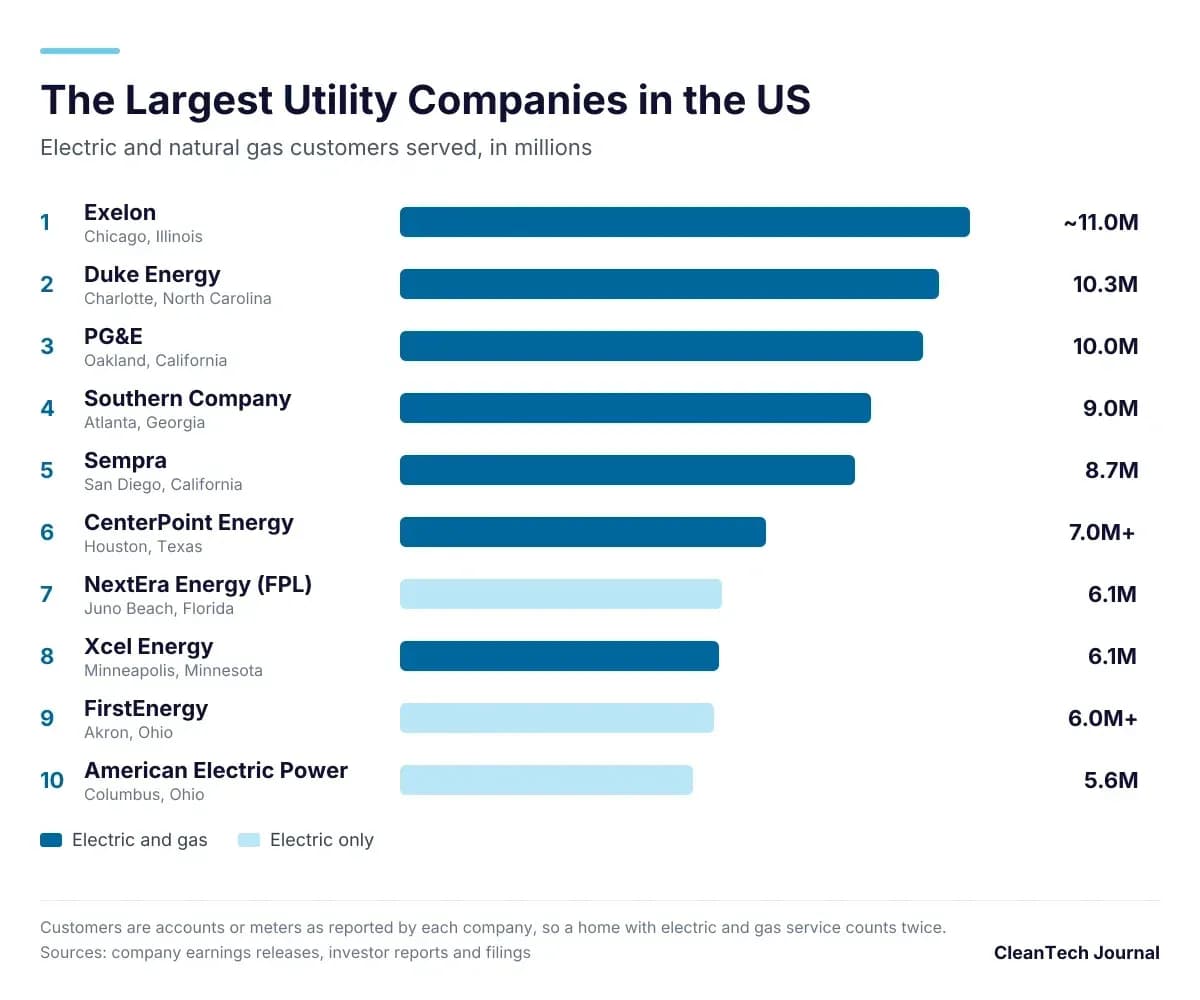
We ranked investor-owned utility holding companies headquartered in the US by the total number of customers their regulated utilities serve, as stated in each company's own earnings releases, investor reports or filings. A customer here means an electric or gas account or meter, not a person, so one household with both services counts twice.
Largest Utility Companies in the US at a Glance
Rank | Company | Headquarters | Customers | Service |
|---|---|---|---|---|
1 | Exelon | Chicago, IL | Almost 11 million | Electric and gas |
2 | Duke Energy | Charlotte, NC | About 10.3 million | Electric and gas |
3 | PG&E | Oakland, CA | About 10 million | Electric and gas |
4 | Southern Company | Atlanta, GA | 9 million | Electric and gas |
5 | Sempra | San Diego, CA | About 8.7 million | Electric and gas |
6 | CenterPoint Energy | Houston, TX | More than 7 million | Electric and gas |
7 | NextEra Energy (FPL) | Juno Beach, FL | About 6.1 million | Electric |
8 | Xcel Energy | Minneapolis, MN | 6.1 million | Electric and gas |
9 | FirstEnergy | Akron, OH | More than 6 million | Electric |
10 | American Electric Power | Columbus, OH | 5.6 million | Electric |
Duke Energy, PG&E, Sempra and Xcel Energy totals are CleanTech Journal sums of the electric and gas customer figures each company reports.
1. Exelon
Exelon owns six regulated transmission and distribution utilities: ComEd in Illinois, PECO in Pennsylvania, BGE in Maryland, and Pepco, Delmarva Power and Atlantic City Electric in the mid-Atlantic. Together they serve almost 11 million customers, according to Exelon.
Exelon no longer owns power plants. It spun off its generation business in 2022 and now focuses on delivering electricity and gas, making it the largest of the utility companies in the US by customers.
2. Duke Energy
Electric service in six states, natural gas in four
Duke Energy's electric utilities serve about 8.7 million customers in North Carolina, South Carolina, Florida, Indiana, Ohio and Kentucky. Its natural gas utilities add about 1.6 million customers in four of those states, for a total of about 10.3 million.
Unlike Exelon, Duke also owns a large generating fleet, about 55,700 MW of capacity across its electric utilities.
3. PG&E
Pacific Gas and Electric serves about 16 million Californians across a 70,000-square-mile area of Northern and Central California. In its most recent breakdown, the company reported 5.5 million electric and 4.5 million natural gas customer accounts.
4. Southern Company
Southern Company serves 9 million customers across the Southeast and beyond. It runs electric utilities in three states, Alabama Power, Georgia Power and Mississippi Power, and natural gas distribution companies in four states.
Georgia Power is the largest co-owner of Plant Vogtle, the largest nuclear plant in the US.
5. Sempra
Sempra's California utilities, San Diego Gas & Electric and Southern California Gas Company, had about 1.55 million electric and 7.15 million gas customer meters as of June 2026, or about 8.7 million in total. SoCalGas is the largest natural gas distribution utility in the US by customers.
Sempra also owns a majority stake in Oncor, which serves about 4.1 million electric meters in Texas. Oncor operates under its own board as a ring-fenced utility, so we have not added its customers to Sempra's total.
6. CenterPoint Energy
Houston's power delivery company, with gas customers across four states
CenterPoint Energy serves more than 7 million metered customers in Indiana, Minnesota, Ohio and Texas, as of March 2026. In the Houston area, it delivers electricity over its wires to homes and businesses that buy their power from competing retail providers.
7. NextEra Energy (Florida Power & Light)
NextEra Energy's regulated utility, Florida Power & Light, had about 6.15 million customer accounts at the end of June 2026, according to NextEra's investor statistics. FPL is an electric-only utility serving much of Florida.
NextEra's other major business, NextEra Energy Resources, is one of the world's largest developers of wind and solar power, but it sells electricity mostly on the wholesale market rather than to retail customers.
8. Xcel Energy
Xcel Energy serves 3.9 million electricity customers and 2.2 million natural gas customers across eight Western and Midwestern states, including Colorado, Minnesota and Texas. Combined, that is 6.1 million customers.
9. FirstEnergy
FirstEnergy serves more than 6 million customers in Ohio, Pennsylvania, New Jersey, West Virginia, Maryland and New York. All of them are electric customers, served through utilities such as Ohio Edison, Jersey Central Power & Light, Mon Power and Potomac Edison.
10. American Electric Power
American Electric Power delivers electricity to 5.6 million customers in 11 states, from Ohio and Virginia to Oklahoma and Texas. AEP also operates the largest electric transmission system in the country, with about 40,000 line miles.
Other Large US Utility Companies
Several other investor-owned groups serve millions of customers, including Edison International, the parent of Southern California Edison, as well as Dominion Energy, Eversource Energy and Berkshire Hathaway Energy.
National Grid also runs large electric and gas utilities in New York and New England. We left it out because its parent company is based in the UK.
How the Largest Utility Companies in the US Compare
Customer counts are only one way to size utility companies in the USA. Rankings by revenue, market value or generating capacity can look quite different, because some companies own large fleets of power plants while others mainly operate wires and pipes.
Size also depends on what each company counts. Some utilities report customer accounts, others report meters, and some report the number of people served, which is why figures should be compared with care.
Frequently Asked Questions
What is an investor-owned utility?
It is a privately owned company, usually listed on a stock exchange, that provides electricity or gas to customers under rates set by state regulators. Investor-owned utilities serve most US electricity customers, alongside public power systems and electric cooperatives.
Can I choose my electric utility?
Usually not for the poles and wires, which are owned by a single local utility. In states with retail choice, such as Texas, Pennsylvania and Illinois, many customers can choose a different company to supply the electricity itself.
Who regulates utility rates in the US?
State public utility commissions approve the rates that utilities charge retail customers. The Federal Energy Regulatory Commission oversees interstate transmission and wholesale electricity markets.
What is a utility holding company?
It is a parent company that owns one or more regulated utilities, often in several states. Each utility subsidiary is regulated separately by the states where it operates.
What is the largest public power utility in the US?
Public power utilities are owned by cities, states or federal agencies rather than investors. Large examples include the Los Angeles Department of Water and Power and the Tennessee Valley Authority, a federal agency that sells power to local utilities across seven states.
SOURCES
- Exelon
- Duke Energy: First-quarter 2026 financial results
- PG&E Corporation: 2024 proxy statement
- Southern Company: Third-quarter 2026 earnings release
- Sempra: Second-quarter 2026 results
- CenterPoint Energy news release
- NextEra Energy: FPL statistics, second quarter 2026
- Xcel Energy: 2026 dividend announcement
- FirstEnergy: First-quarter 2026 financial results
- American Electric Power: Third-quarter 2026 earnings
Written by
Suraj Kadam
Suraj Kadam is a journalist and Chief Editor of CleanTech Journal, a knowledge and media platform covering clean technology, solar energy, and renewable energy. He reports on emerging technologies, industry developments, policy trends, and innovations shaping the global clean energy transition. Through his editorial work, Suraj aims to make complex clean technology topics accessible to industry professionals, researchers, policymakers, and readers interested in sustainable energy. His work focuses on delivering insightful, informative, and engaging coverage of the evolving renewable energy landscape.