News at Glance
- *Anthropocene Magazine reported* that discarded solar panels could contain as much as $1 trillion in recoverable materials.
- *End-of-life panels* are expected to become a large secondary materials stream as global photovoltaic deployment expands.
- *Recycling and collection barriers* — not raw material scarcity — are the main obstacles to realising that value.
Report flags up to $1 trillion in recoverable panel materials
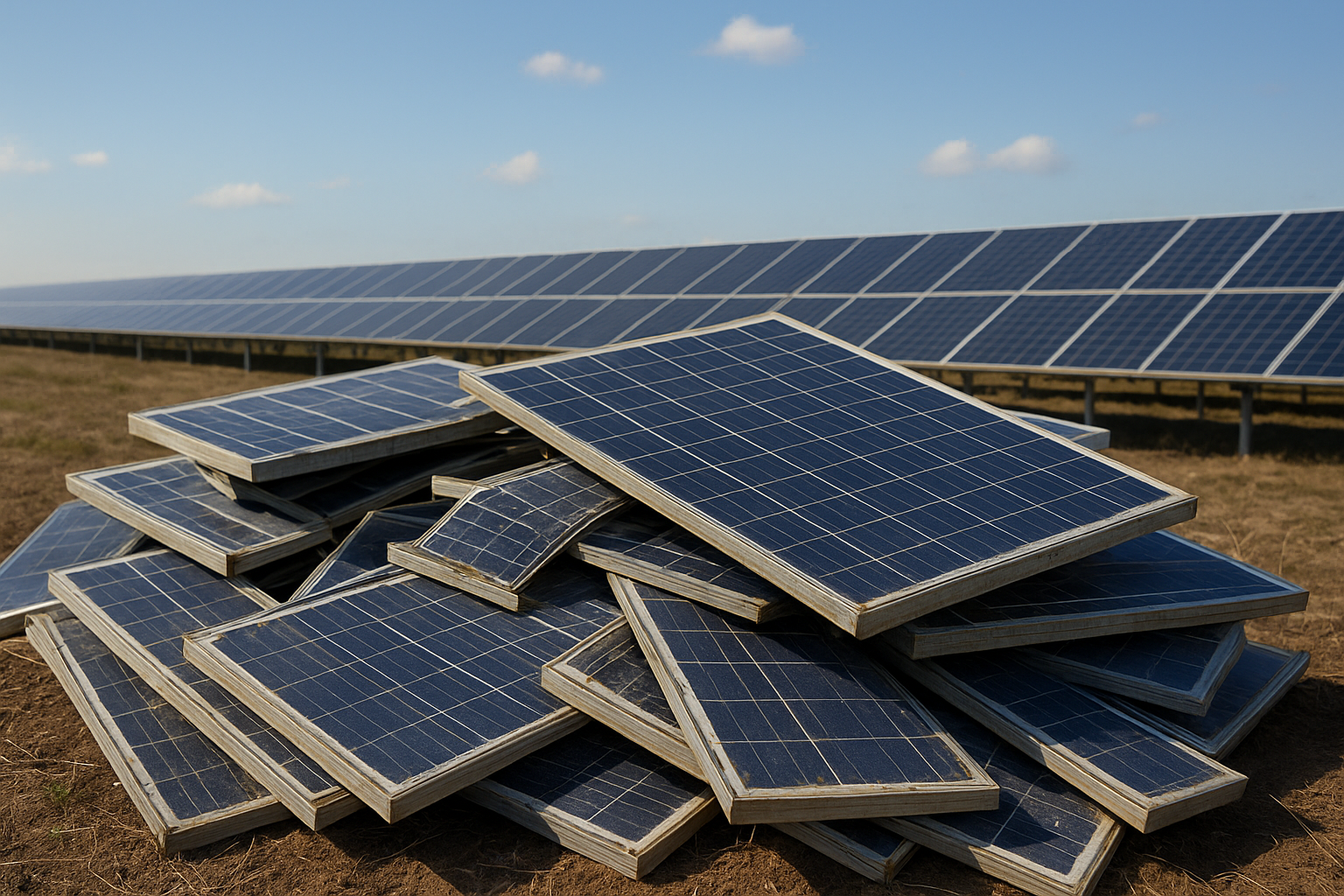
Anthropocene Magazine published an analysis suggesting that end-of-life solar panels could hold up to $1 trillion in recoverable materials, framing panel waste as a potential new resource for the energy transition.
Solar photovoltaic modules contain glass, aluminium frames, silicon, and a variety of metals including copper and silver. These components can be reclaimed using established mechanical, thermal and chemical recycling processes.
Industry observers and analysts say the potential value depends on efficient collection, transport and the economics of recycling. High labour and processing costs, plus low volumes today, make many recovery routes uncompetitive without policy or market support.
Technological approaches range from manual disassembly and mechanical separation to chemical leaching for metals and thermal treatments for polymer removal. Each method recovers different fractions and has trade-offs in cost and environmental footprint.
Policy instruments such as extended producer responsibility, mandated take-back schemes and subsidies for recycling can change the business case, according to experts following the issue. Traceability and standardised module design would also lower costs over time.
While recovering materials could reduce pressure on mining and supply chains, the scale-up challenge is significant. Fragmented regulation, cross-border waste flows and evolving panel chemistries add uncertainty to forecasts of recovered volumes and value.
FAQs
What did the Anthropocene Magazine analysis claim?
The magazine reported that discarded solar panels could contain up to $1 trillion in recoverable materials, highlighting the economic potential of large-scale recovery.
Which materials in panels are recoverable?
Common recoverable materials include glass, aluminium, copper, silver and silicon, alongside polymers and potentially small amounts of other metals depending on panel design.
Are recycling technologies available today?
Yes. Mechanical, thermal and chemical recycling methods exist, each suited to different components, but costs and environmental trade-offs vary.
What prevents wide-scale recovery now?
Key barriers are collection logistics, low current volumes, processing costs and inconsistent regulations across markets.
How could policy help capture value?
Policies such as producer responsibility, take-back requirements and recycling subsidies can improve the economics and incentivise design for recycling.
Will recovered materials reduce mining demand?
Recycling could contribute to secondary supply and ease pressure on primary resources, but the net effect depends on scale-up, material recovery rates and market dynamics.