10 Largest Renewable Energy Projects in the World by Capacity
The 10 largest renewable energy projects in the world by capacity, from Tibet's 60 GW hydropower project and India's Khavda park to the Three Gorges Dam.

Suraj Kadam
Published •29 min read
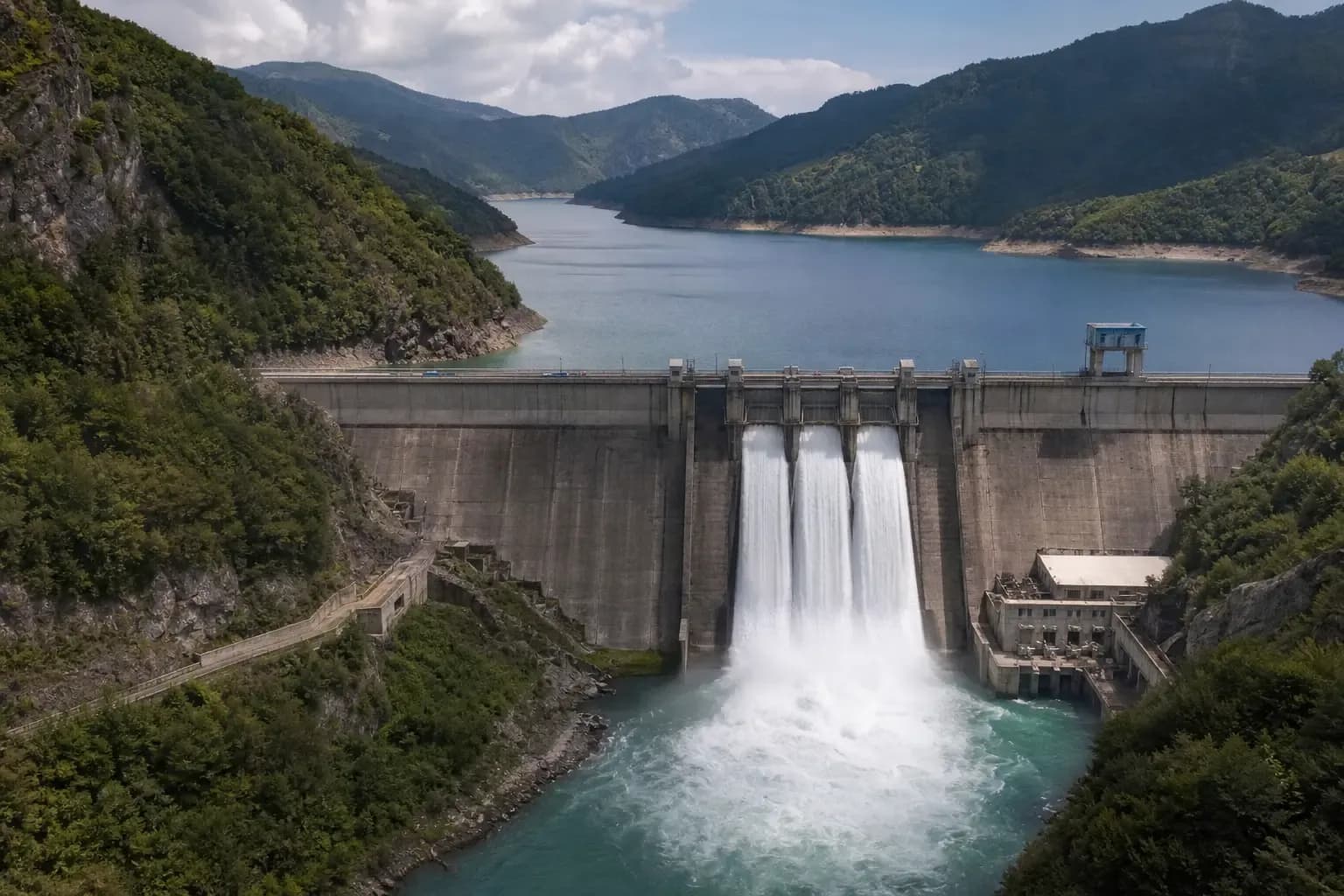
Renewables produced about a third of the world's electricity in 2025, according to the International Energy Agency's Renewables 2026 report, and hydropower is still the largest renewable source. The agency expects solar to overtake hydropower as the largest renewable source only in 2029.
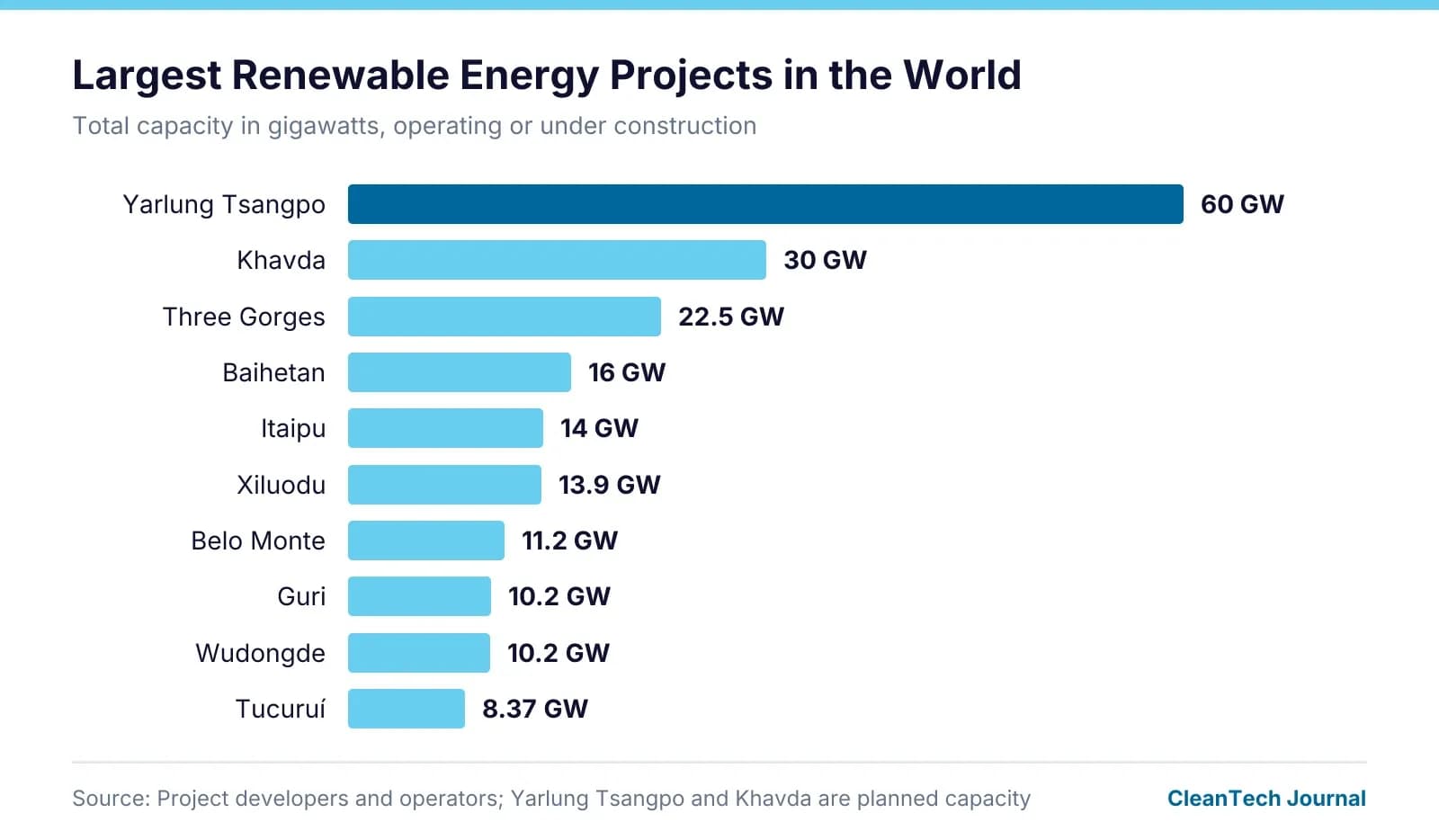
CleanTech Journal has ranked the 10 largest renewable energy projects in the world by total capacity, including projects already in operation and those under construction, using figures from the governments, developers and operators behind them. A hydropower project in Tibet that began construction in 2025 leads at about 60 gigawatts (GW), followed by the Khavda solar and wind park in India.
Largest Renewable Energy Projects Ranked by Capacity
Rank | Project | Country | Type | Capacity (GW) | Status |
|---|---|---|---|---|---|
1 | Yarlung Tsangpo Lower Reaches Hydropower Project | China | Hydropower | About 60 | Under construction |
2 | Khavda Renewable Energy Project | India | Solar and wind | 30 | Partly operating |
3 | Three Gorges Dam | China | Hydropower | 22.5 | Operating |
4 | Baihetan Dam | China | Hydropower | 16 | Operating |
5 | Itaipu Dam | Brazil and Paraguay | Hydropower | 14 | Operating |
6 | Xiluodu Dam | China | Hydropower | 13.86 | Operating |
7 | Belo Monte Dam | Brazil | Hydropower | 11.23 | Operating |
8 | Guri Dam | Venezuela | Hydropower | 10.24 | Operating |
9 | Wudongde Dam | China | Hydropower | 10.2 | Operating |
10 | Tucuruí Dam | Brazil | Hydropower | 8.37 | Operating |
1. Yarlung Tsangpo Lower Reaches Hydropower Project, China
The Yarlung Tsangpo project in Tibet is the largest renewable energy project ever started. Construction began in July 2025 with five cascade hydropower stations on the lower reaches of the river, and the total investment is about CNY 1.2 trillion (USD 168 billion).
Its capacity is expected to reach nearly 60 GW, with about 300 terawatt-hours (TWh) of electricity a year, according to the head of state-owned PowerChina, which drew up the plans. That is close to three times the size of the Three Gorges Dam.
The project is run by China Yajiang Group, a new state company set up to build and operate it. Most of its power is meant for areas outside Tibet, and no completion date has been given.
2. Khavda Renewable Energy Project, India
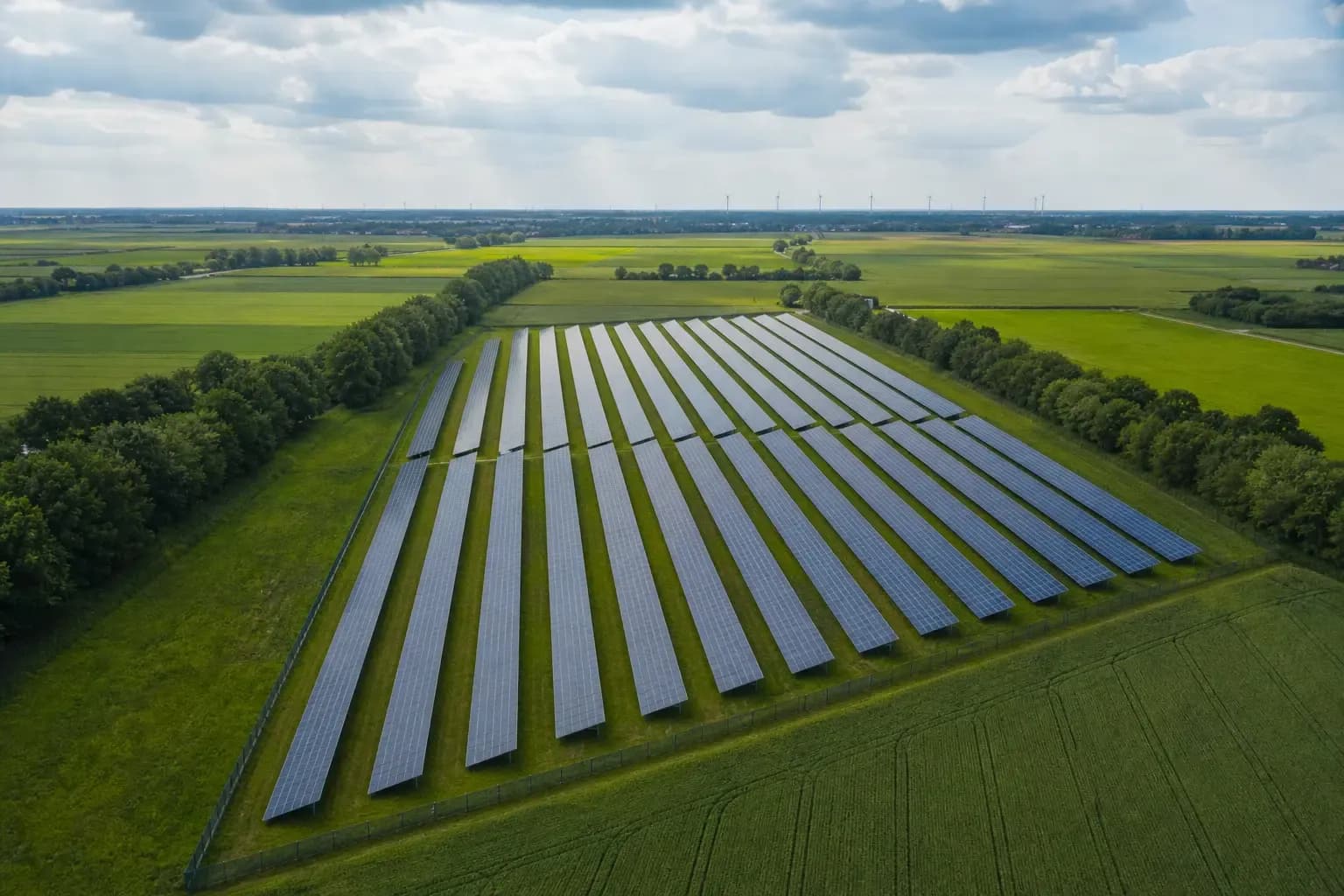
Adani Green Energy's Khavda project in Gujarat is described by the company as the world's largest renewable energy plant, with 30 GW planned across 538 square kilometers of barren land near the border with Pakistan. It had 9.4 GW in operation by March 31, 2026, and is due to be completed by 2029.
The site combines strong sunshine with steady winds, and it uses 5.2 MW wind turbines, the largest onshore turbines in India. Once finished, it is expected to produce about 87.4 billion kWh of electricity a year, enough to power about 17.4 million homes.
3. Three Gorges Dam, China
The Three Gorges Dam on the Yangtze River is the largest power plant of any kind in operation, at 22.5 GW. It has 32 main turbines of 700 megawatts (MW) each, plus two smaller units of 50 MW.
The dam was completed in 2012 and is operated by China Three Gorges Corporation. Besides generating power, it controls floods on the Yangtze and allows large ships to travel further upstream.
4. Baihetan Dam, China
Baihetan, on the Jinsha River between Sichuan and Yunnan provinces, has 16 GW of capacity. Its 16 turbines of 1,000 MW each are the most powerful hydropower units ever installed.
The last of its units started operating in December 2022. Baihetan is one of six large dams operated by China Three Gorges Corporation along the Jinsha and Yangtze rivers, which together generate about 300 billion kWh a year.
5. Itaipu Dam, Brazil and Paraguay
Itaipu, on the Paraná River, has 14 GW of capacity from 20 turbines of 700 MW each. It is jointly owned by Brazil and Paraguay, and each country is entitled to half of its power.
For decades it was the largest hydropower plant in the world, and it set a world record of 103.1 TWh of annual generation in 2016. Paraguay uses only part of its share and sells the rest to Brazil.
6. Xiluodu Dam, China
Xiluodu, also on the Jinsha River, has 13.86 GW of capacity from 18 turbines of 770 MW each. It was completed in 2014.
The dam is about 285 meters tall and sits upstream of the Xiangjiaba Dam. Together, they send power to eastern and southern China through long-distance transmission lines.
7. Belo Monte Dam, Brazil
Belo Monte, on the Xingu River in the state of Pará, has 11.23 GW of capacity, making it the largest hydropower plant entirely within Brazil. It was completed in November 2019 and is operated by Norte Energia.
The plant is a run-of-river design with a small reservoir, so its output rises and falls with the river's seasonal flow. It has been the subject of long-running debate over its impact on the Amazon and on Indigenous communities.
8. Guri Dam, Venezuela
The Guri Dam, officially the Simón Bolívar Hydroelectric Plant, has 10.24 GW of capacity on the Caroní River. It was finished in 1986 and is operated by state utility Corpoelec.
Guri is the backbone of Venezuela's power system. Its reservoir is one of the largest in the world, and low water levels during droughts have led to power rationing in the country.
9. Wudongde Dam, China
Wudongde, upstream of Baihetan on the Jinsha River, has 10.2 GW of capacity from 12 turbines of 850 MW each. All of its units were operating by June 2021.
Its double-curvature arch dam is about 270 meters tall. Wudongde is the first link in China Three Gorges Corporation's chain of six dams on the Jinsha and Yangtze rivers.
10. Tucuruí Dam, Brazil
Tucuruí, on the Tocantins River in Pará, has 8.37 GW of capacity. Its first units started operating in 1984 and it was expanded in the 2000s, and it is operated by Eletrobras.
It is the second-largest hydropower plant entirely in Brazil, after Belo Monte. Just outside this top 10 is the Grand Coulee Dam in the United States, at 6.8 GW.
Hydropower Still Dominates
Nine of the 10 largest renewable energy projects are hydropower dams. Large rivers allow huge amounts of power to be generated in one place, something solar and wind can only match by spreading across very large areas.
China has five projects on the list, including the top one. Brazil has three, while India, Paraguay and Venezuela each have one, counting Itaipu for both Brazil and Paraguay.
Solar and Wind Are Catching Up
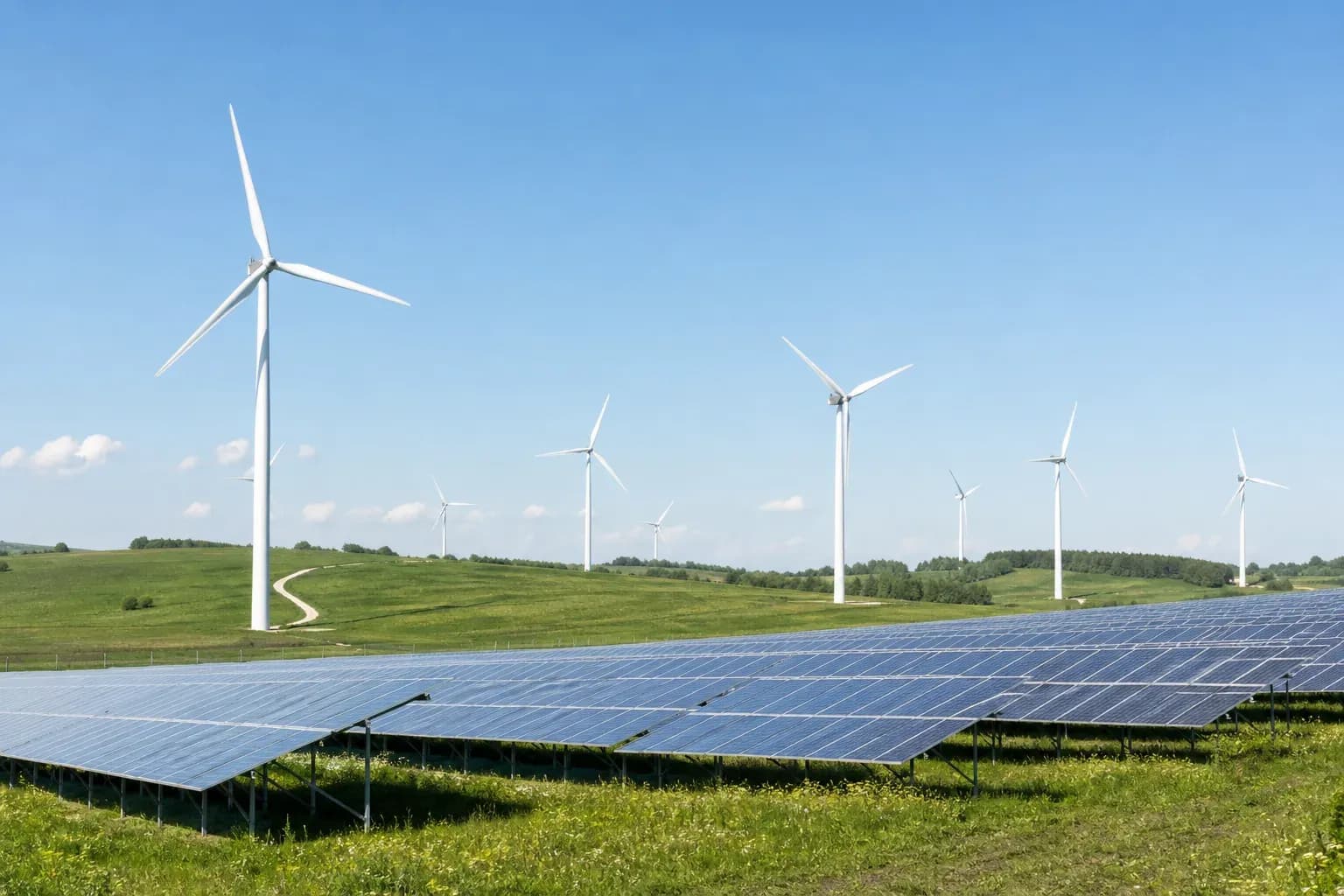
The Khavda project shows how fast solar and wind are scaling up. With 30 GW planned, it will be larger than any operating power plant in the world once it is complete.
Most new large renewable projects are now solar and wind parks. They are faster to build than mega-dams, but their output depends on the weather, so many are being paired with battery storage.
Frequently Asked Questions
How does a hydropower dam generate electricity?
A hydropower dam holds back a river to create a reservoir. Water released from the reservoir flows through large pipes and spins turbines connected to generators, which turn the energy of the moving water into electricity before the water returns to the river below the dam.
What is pumped storage hydropower?
Pumped storage hydropower works like a giant battery. When electricity is cheap or in surplus, it pumps water uphill into a reservoir, and when power is needed, it releases the water back down through turbines. It stores energy rather than producing new renewable power.
What is run-of-river hydropower?
A run-of-river hydropower plant uses the natural flow of a river with little or no reservoir. It causes less flooding than a large dam, but its output changes with the seasons because it cannot store much water for dry periods.
What is the difference between capacity and generation?
Capacity, measured in gigawatts (GW), is the maximum power a plant can produce at any moment. Generation, measured in gigawatt-hours (GWh) or terawatt-hours (TWh), is the total electricity it actually produces over a period, which depends on how often and how hard it runs.
What are the environmental impacts of large dams?
Large dams can flood wide areas of land, displace communities, block fish migration and change the flow of sediment and nutrients downstream. Many new projects are designed with fish passages and controlled water releases to reduce these effects, but the impacts remain a key part of the debate over mega-dams.
SOURCES
- IEA, Renewables 2026
- PowerChina (China Electric Power Construction Group), statement on Yarlung Tsangpo lower reaches development, November 2020
- Adani Green Energy, Annual Report 2025-26: The 30 GW Khavda RE Project
- China Three Gorges Corporation
- Itaipu Binacional
- Norte Energia, Belo Monte Hydroelectric Plant
- Corpoelec
- Eletrobras
Written by
Suraj Kadam
Suraj Kadam is a journalist and Chief Editor of CleanTech Journal, a knowledge and media platform covering clean technology, solar energy, and renewable energy. He reports on emerging technologies, industry developments, policy trends, and innovations shaping the global clean energy transition. Through his editorial work, Suraj aims to make complex clean technology topics accessible to industry professionals, researchers, policymakers, and readers interested in sustainable energy. His work focuses on delivering insightful, informative, and engaging coverage of the evolving renewable energy landscape.