Top 10 Benefits of Renewable Energy for People and the Planet
The top 10 benefits of renewable energy, from cheaper power and USD 480 billion in fuel savings to cleaner air, water savings and 16.6 million jobs.

Suraj Kadam
Published •13 min read
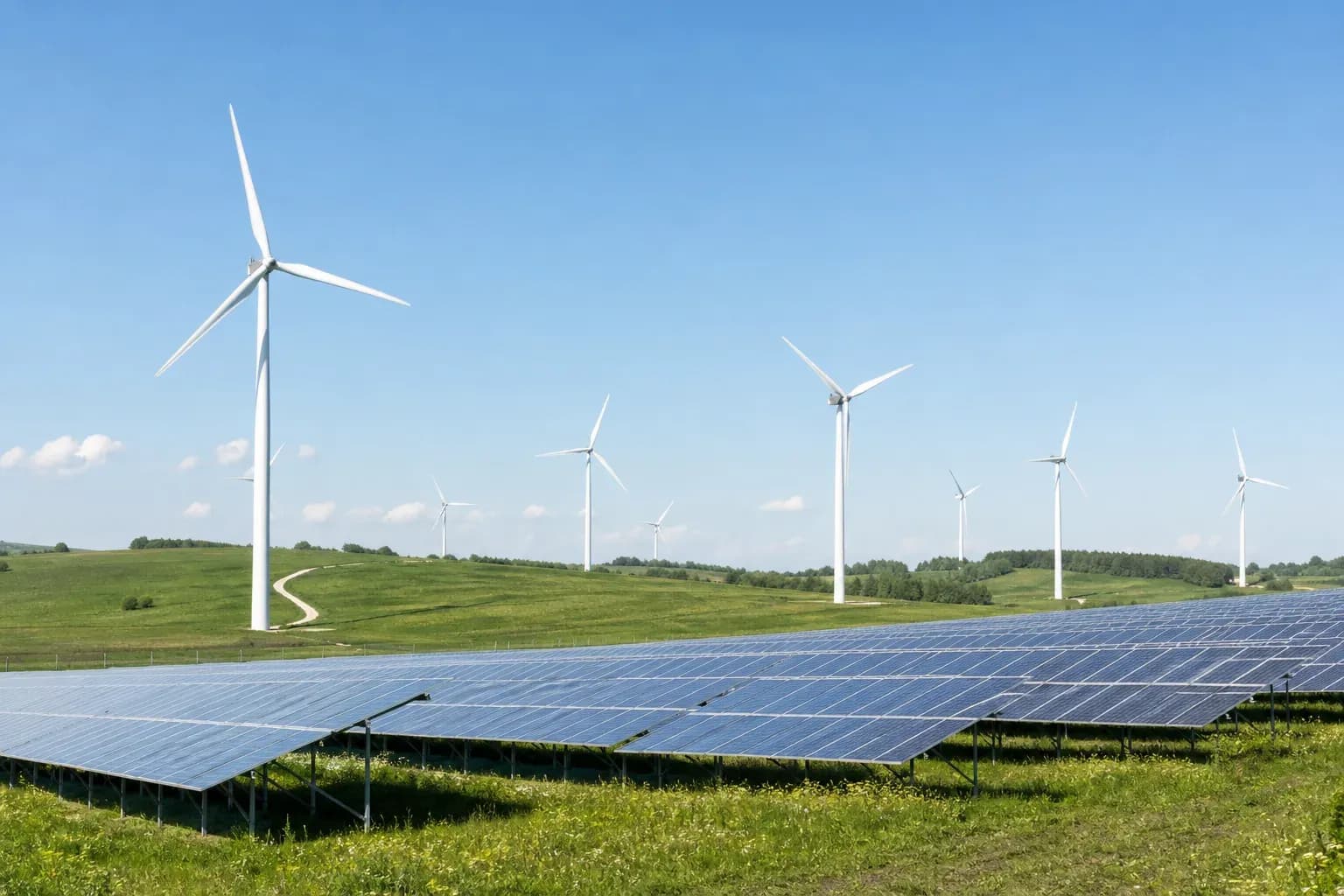
Renewable power built since 2010 cut the world's demand for fossil fuels by about 41 exajoules in 2025, according to the International Energy Agency's Renewables 2026 report. That is the same as avoiding about 615 million tonnes of coal, 515 billion cubic meters of natural gas and 2.4 million barrels of oil a day.
CleanTech Journal has put together the 10 biggest benefits of renewable energy, from lower power bills to cleaner air, using the latest data from the IEA, the International Renewable Energy Agency (IRENA), the World Health Organization and other official bodies. Many of these gains already show up in power prices, import bills and air quality.
1. The Cheapest Source of New Electricity
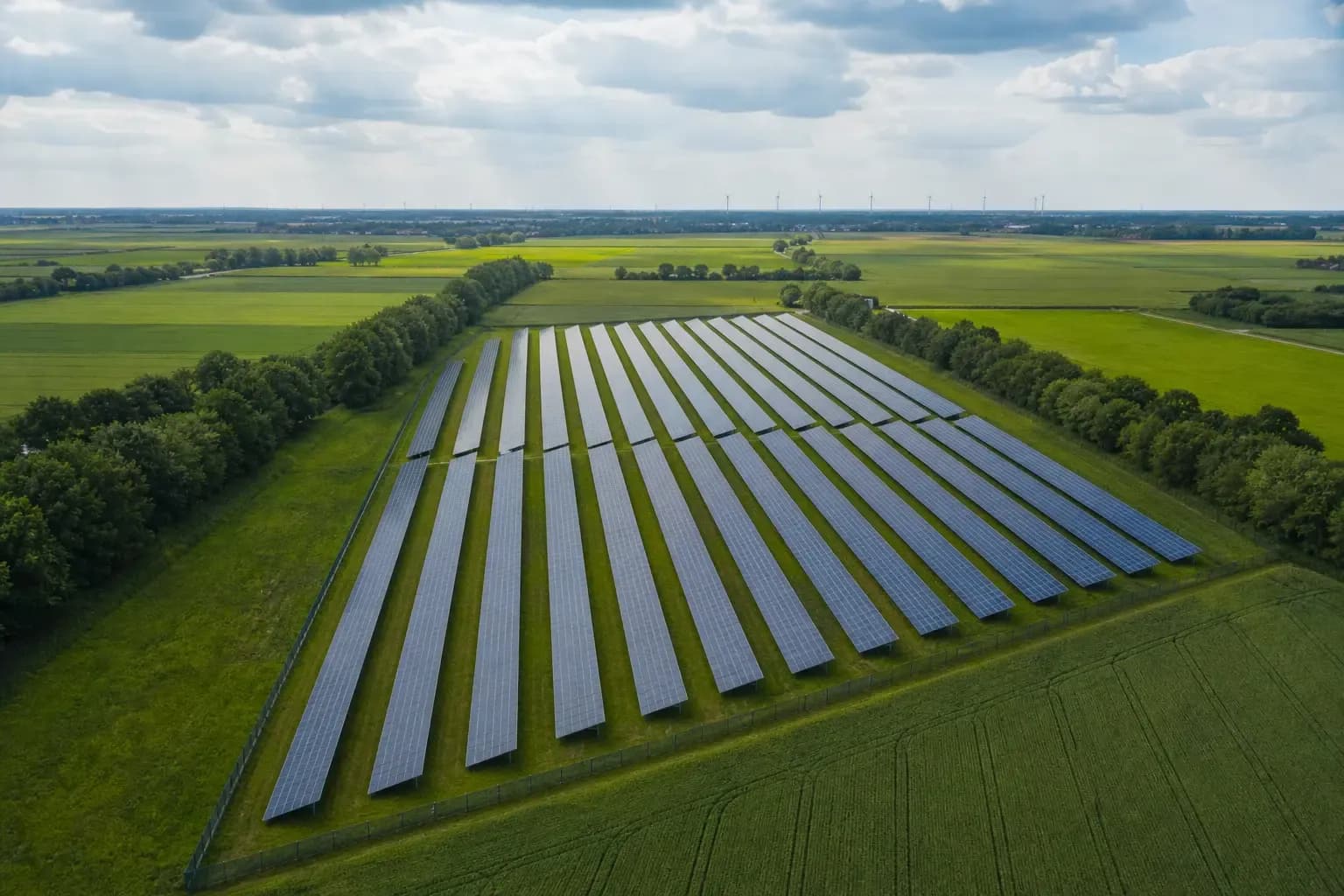
Renewables are now the lowest-cost option for most new power plants. In 2025, more than 90% of new utility-scale renewable capacity produced electricity more cheaply than the cheapest new fossil fuel alternative, according to IRENA's Renewable Power Generation Costs in 2025 report.
New onshore wind farms produced power at an average of USD 33 per megawatt-hour (MWh), and solar plants at USD 44 per MWh. In Italy, Germany and Japan, the cost of power from gas plants approached USD 100 per MWh.
Costs have fallen sharply over 15 years. Since 2010, the average cost of power from new solar PV plants has dropped by 89%, and from onshore wind by 71%.
2. Billions Saved on Fossil Fuel Bills
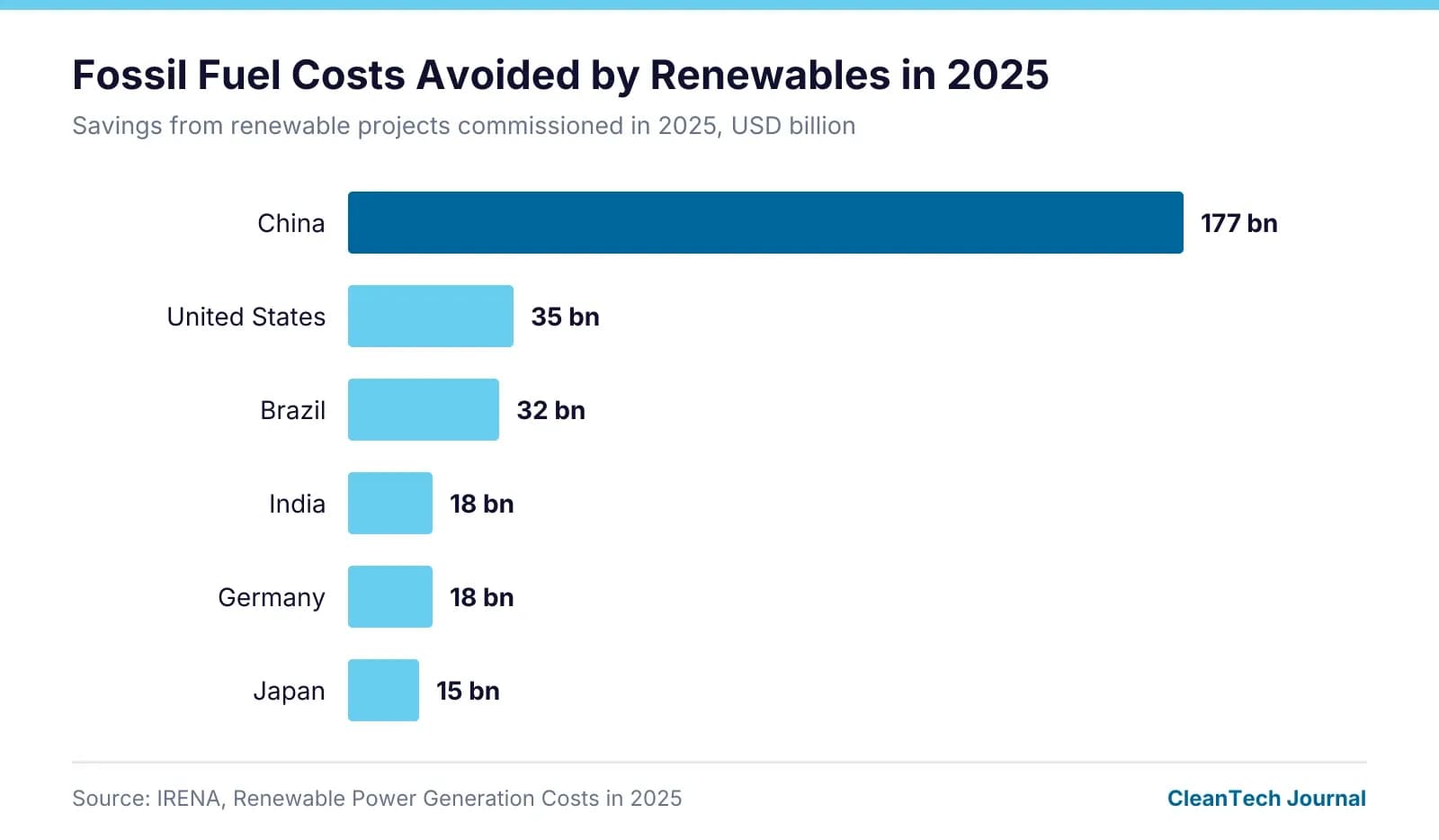
Because sunlight and wind are free, renewable plants do not need to buy fuel. Renewable projects commissioned in 2025 alone avoided about USD 480 billion in fossil fuel costs worldwide, according to IRENA.
China saved the most, at about USD 177 billion, followed by the United States at USD 35 billion and Brazil at USD 32 billion. India and Germany each avoided about USD 18 billion.
3. Stronger Energy Security
Countries that import oil, gas and coal are exposed to price shocks and supply disruptions abroad. Every unit of power made from local sun, wind or water reduces that risk.
Investment in clean energy, electrification and efficiency helped the five largest fuel-importing regions avoid about USD 260 billion in fossil fuel imports in 2025, according to the IEA's World Energy Investment 2026 report. China accounted for about USD 110 billion of that.
4. Far Lower Greenhouse Gas Emissions
Wind and solar power produce no emissions while they run, and very little over their full life. A life-cycle study by the United Nations Economic Commission for Europe (UNECE) puts onshore wind at 7.8 to 16 grams of CO2 equivalent per kilowatt-hour (kWh), and solar PV at 8 to 83 grams.
That compares with 403 to 513 grams for modern gas plants and 751 to 1,095 grams for coal. These ranges include building, running and dismantling each plant.
5. Cleaner Air and Better Health
Burning coal, oil and gas releases fine particles and gases that damage the lungs and heart. Outdoor air pollution caused about 4.2 million premature deaths in 2019, according to the [World Health Organization](https://www.who.int/news-room/fact-sheets/detail/ambient-(outdoor)-air-quality-and-health).
Almost everyone is exposed. The WHO says 99% of the world's population lives in places where its air quality guidelines are not met, and power generation is one of the main sources it names.
6. Much Less Water Use
Coal, gas and nuclear plants need large amounts of water to cool their steam cycles. In the United States, these thermoelectric plants account for more than 41% of all freshwater withdrawals, according to the U.S. Geological Survey.
In 2020, they withdrew about 59.9 billion gallons of freshwater a day. Wind turbines and solar panels need almost no water to generate electricity, which matters most in dry and drought-prone regions.
7. Millions of Jobs
Renewable energy employed about 16.6 million people worldwide in 2024, according to IRENA and the International Labour Organization. Solar PV was the largest employer, with 7.3 million jobs.
China accounted for about 44% of all renewable energy jobs. Brazil, India and the United States each had more than 1 million.
8. Electricity for People Who Have None
About 655 million people still live without electricity, and more than 560 million of them are in Sub-Saharan Africa, according to the Tracking SDG7 report published by the IEA, IRENA, the World Bank, the WHO and the United Nations.
Many of them live far from the grid. Off-grid solar systems and mini-grids are often the fastest and cheapest way to bring them power, and they already serve hundreds of millions of people.
9. A Magnet for Investment
Clean energy now attracts far more money than fossil fuels. The IEA expects about USD 2.2 trillion to go into renewables, grids, storage and other clean energy in 2026, almost twice the USD 1.2 trillion going to oil, gas and coal.
That money builds factories, power plants and grids. Spending on electricity networks alone is expected to reach about USD 550 billion in 2026, and on battery storage more than USD 100 billion.
10. A Power Source That Will Not Run Out
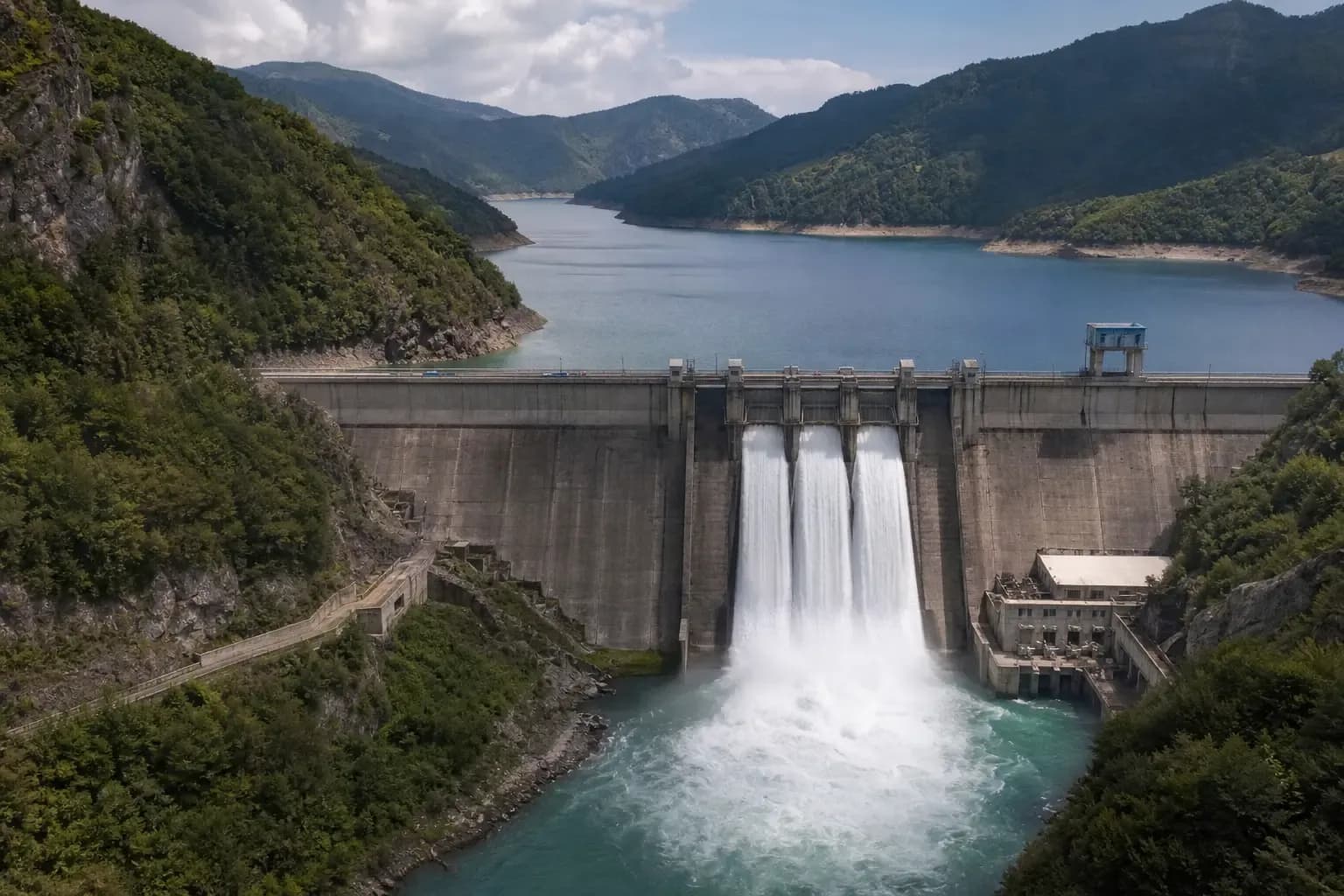
Sunlight, wind and flowing water are replenished naturally, so they will not run out the way coal, oil and gas reserves eventually do. That allows countries to plan their power supply for decades without worrying about fuel.
Renewables already produce about a third of the world's electricity, and the IEA expects that share to reach about 43% by 2031. It expects solar to become the largest renewable source of electricity in 2029, overtaking hydropower.
Frequently Asked Questions
What is renewable energy?
Renewable energy comes from natural sources that are constantly replenished, such as sunlight, wind, flowing water, the Earth's heat and organic matter. The main types are solar, wind, hydropower, geothermal and bioenergy.
Is renewable energy reliable when the sun is not shining or the wind is not blowing?
Solar and wind output changes with the weather and time of day, so power systems balance it with other sources. Batteries, pumped storage hydropower, stronger grid links between regions and flexible power plants all help keep the lights on when solar and wind output is low.
What is the difference between renewable energy and clean energy?
Renewable energy comes from sources that do not run out, such as sun and wind. Clean energy is a wider term for any source with low or zero emissions, so it also includes nuclear power, which is low-carbon but not renewable.
Can homes use renewable energy directly?
Yes. Many homes install rooftop solar panels to produce their own electricity, often with a home battery to store power for the evening. Households can also buy green electricity tariffs from their supplier or use solar water heaters and heat pumps.
What are the disadvantages of renewable energy?
Solar and wind output varies with the weather, so they need storage and strong grids. Large projects can also need a lot of land, and making panels, turbines and batteries requires minerals such as lithium, copper and rare earth elements, which must be mined responsibly.
SOURCES
- IEA, Renewables 2026
- IRENA, Renewable Power Generation Costs in 2025
- IEA, World Energy Investment 2026
- UNECE, Life Cycle Assessment of Electricity Generation Options
- World Health Organization, Ambient (outdoor) air quality and health
- U.S. Geological Survey, Thermoelectric power water use
- IRENA and ILO, Renewable Energy and Jobs: Annual Review 2025
- IEA, IRENA, UN DESA, World Bank and WHO, Tracking SDG7: The Energy Progress Report 2026
Written by
Suraj Kadam
Suraj Kadam is a journalist and Chief Editor of CleanTech Journal, a knowledge and media platform covering clean technology, solar energy, and renewable energy. He reports on emerging technologies, industry developments, policy trends, and innovations shaping the global clean energy transition. Through his editorial work, Suraj aims to make complex clean technology topics accessible to industry professionals, researchers, policymakers, and readers interested in sustainable energy. His work focuses on delivering insightful, informative, and engaging coverage of the evolving renewable energy landscape.