Cheapest 7 Seater Electric Cars in the US: 2026 Price Guide
The cheapest 7 seater electric car in the US is the Kia EV9 at $54,990. See every seven-seat EV ranked by price, from Hyundai to Volvo, Lucid and Rivian.

Suraj Kadam
Published •19 min read
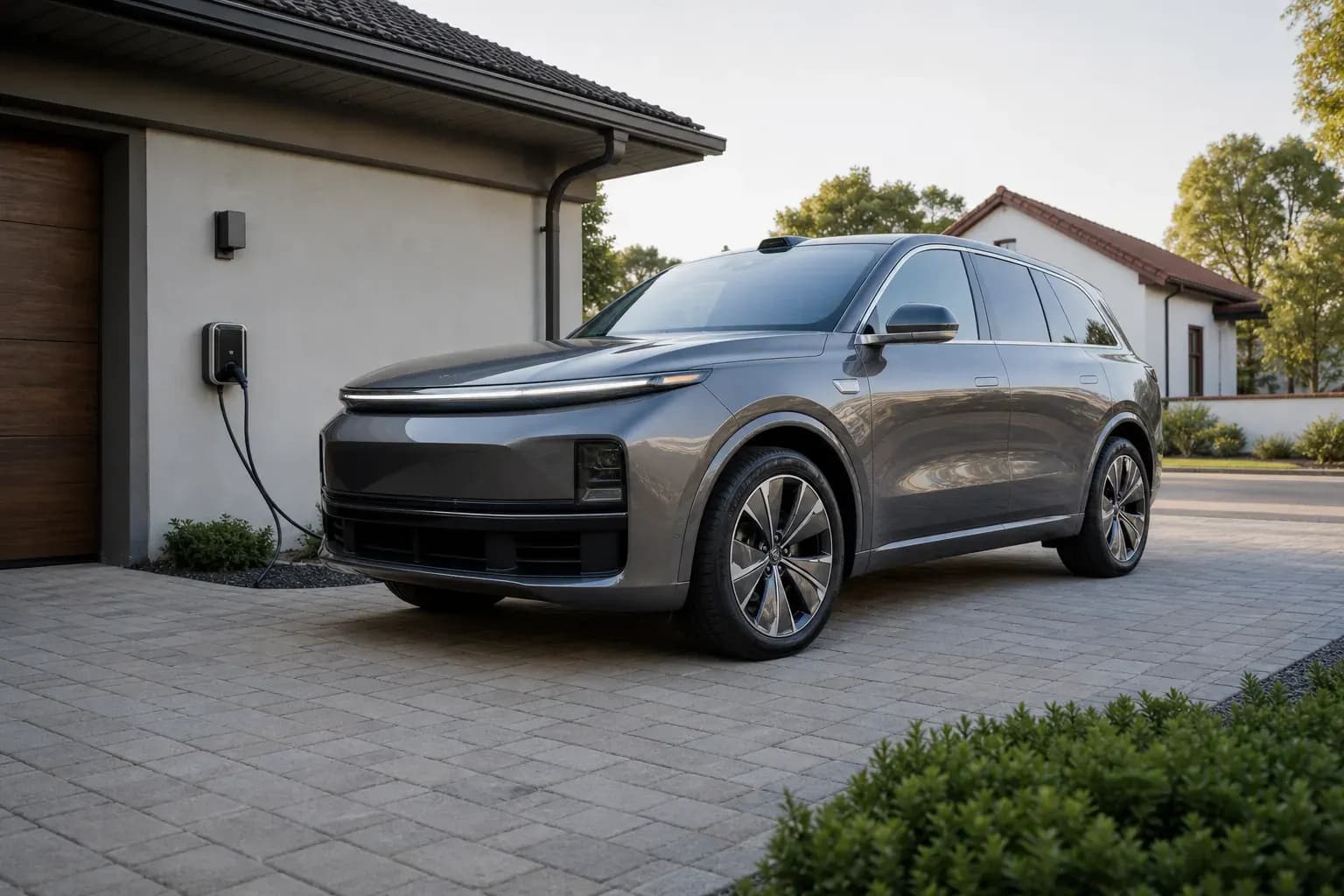
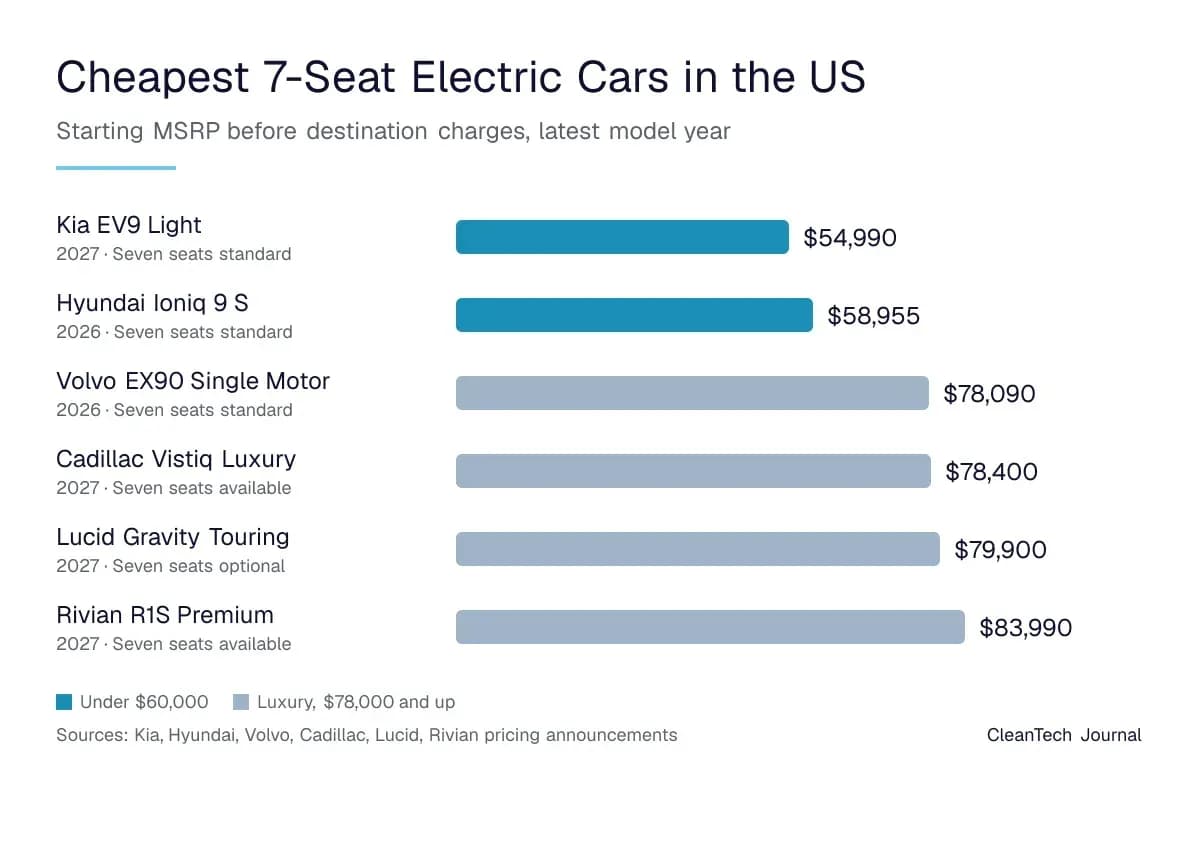
The cheapest 7 seater electric car in the US is the Kia EV9, which starts at $54,990 before destination. The Hyundai Ioniq 9 is close behind at $58,955. After those two, prices jump by about $20,000 into luxury territory.
Families looking for an electric car with three rows and seven seats still have only a short list to choose from. We ranked every new seven-seat EV on sale in the US by its starting price, using figures announced by each carmaker for the latest model year.
Cheapest 7 Seater Electric Cars in the US Ranked
Rank | Model | Starting MSRP | Seven seats | Model year |
|---|---|---|---|---|
1 | Kia EV9 Light | $54,990 | Standard | 2027 |
2 | Hyundai Ioniq 9 S | $58,955 | Standard | 2026 |
3 | Volvo EX90 Single Motor | $78,090 | Standard | 2026 |
4 | Cadillac Vistiq Luxury | $78,400 | Available | 2027 |
5 | Lucid Gravity Touring | $79,900 | Optional | 2027 |
6 | Rivian R1S Premium | $83,990 | Available | 2027 |
Prices are manufacturers' starting MSRPs before destination charges, taxes and dealer fees, and before any discounts. "Optional" means the third row costs extra or must be chosen when ordering. Prices change often, so check the carmaker's website before buying.
The Two Affordable Picks
1. Kia EV9: from $54,990
The Kia EV9 is the cheapest way into a seven-seat EV. The 2027 Light trim with the standard battery costs $54,990, or $56,635 with Kia's $1,645 destination charge. It seats seven and has an EPA-rated range of 230 miles.
For longer trips, the Light Long Range trim costs $3,000 more and stretches range to as much as 305 miles. Seven seats are standard on the Light, Light Long Range and Wind trims. The Land and GT-Line come with six seats as standard, using second-row captain's chairs.
2. Hyundai Ioniq 9: from $58,955
The 2026 Hyundai Ioniq 9 S costs $3,965 more than the cheapest EV9 but offers a much longer EPA-rated range of 335 miles. The base rear-wheel-drive S trim seats seven. Hyundai has announced trim changes for the 2027 Ioniq 9 but not prices yet.
Luxury Seven-Seat EVs
3. Volvo EX90: from $78,090
Volvo added a cheaper Single Motor version of the EX90 for 2026, starting at $78,090. It is $23,100 more than the cheapest Kia EV9 and is the least expensive of the luxury seven-seat EVs.
4. Cadillac Vistiq: from $78,400
Cadillac's three-row electric SUV starts at $78,400 for the 2027 Luxury trim, with all-wheel drive as standard. Seat layouts vary by trim, so check that the version you want comes with seven seats.
5. Lucid Gravity: from $79,900
The Lucid Gravity Touring starts at $79,900, according to Lucid's 2027 lineup announcement. Buyers can choose five or seven seats, so the third row must be specified when ordering.
6. Rivian R1S: from $83,990
The 2027 Rivian R1S Premium starts at $83,990. It is offered with seven seats, and for 2027 Rivian also added second-row captain's chairs that cut capacity to six.
Close but Not Quite Seven Seats
Two other three-row EVs come up often when shopping for the cheapest 7 seater electric car, but neither fits a family of seven at a low price:
- Tesla Model Y L launched in the US in July 2026 at $61,990, but it has six seats, not seven, according to The Next Web.
- Volkswagen ID. Buzz was offered with seven seats, but Volkswagen cancelled the 2026 US model, and remaining cars are being sold off from dealer stock.
Larger luxury models such as the Tesla Model X, Mercedes-Benz EQS SUV and Cadillac Escalade IQ also offer seven seats, but they cost more than the six cars above.
What to Check Before You Buy
- Seat count by trim. Several models drop to six seats on higher trims with captain's chairs.
- Range with a full car. Real-world range falls with heavy loads, highway speeds and cold weather, so leave a margin for family road trips.
- Third-row space. Third rows in EVs vary widely. If adults will sit there, try it before you buy.
- Charging at home. A Level 2 home charger makes daily use of a large EV far easier and cheaper.
- Incentives. The federal EV tax credit has ended, but some states and utilities still offer rebates, and many dealers discount EVs.
Frequently Asked Questions
What is the cheapest 7 seater electric car in the US?
The Kia EV9 Light, starting at $54,990 before destination for the 2027 model year, or $56,635 with destination.
Is there a seven-seat electric car under $50,000?
Not new, at starting MSRP. The cheapest 7 seater electric car, the Kia EV9, starts just under $55,000. Used EVs and dealer discounts can bring prices lower.
Which seven-seat EV has the longest range?
Among the cheapest models, the Hyundai Ioniq 9 S leads with an EPA-rated 335 miles, compared with up to 305 miles for the Kia EV9 Light Long Range.
Does the Tesla Model Y come with seven seats?
Not currently in the US. The new Model Y L has three rows but six seats.
Is the Kia EV9 or Hyundai Ioniq 9 better for families?
Both seat seven and share much of their technology. The EV9 costs less to buy, while the Ioniq 9 offers more range in its base form. Compare third-row space and features on a test drive.
SOURCES
- Cars.com: How much is the 2027 Kia EV9?
- Motor1: 2027 Kia EV9 pricing
- Cars.com: 2026 Hyundai Ioniq 9 specs
- Edmunds: 2026 Hyundai Ioniq 9 pricing announced
- Electrek: Hyundai shaking up 2027 EV lineup
- 2026 Volvo EX90 starts at $78K
- Cars.com: 2027 Cadillac Vistiq specs
- Manufacturing.net: Lucid reveals 2027 Gravity lineup
- Motor1: 2027 Rivian R1S trims and pricing
- The Next Web: Tesla Model Y L six-seat US launch
Written by
Suraj Kadam
Suraj Kadam is a journalist and Chief Editor of CleanTech Journal, a knowledge and media platform covering clean technology, solar energy, and renewable energy. He reports on emerging technologies, industry developments, policy trends, and innovations shaping the global clean energy transition. Through his editorial work, Suraj aims to make complex clean technology topics accessible to industry professionals, researchers, policymakers, and readers interested in sustainable energy. His work focuses on delivering insightful, informative, and engaging coverage of the evolving renewable energy landscape.