Clean, Fast, and Affordable: How Community Opposition Change the Math on AI Power
Data center opposition is costing AI developers billions. CREO's David Siap explains why clean power and bigger community benefits are the fastest path.

Published •14 min read
There is a prevailing thought in energy that you can build capacity cleanly, quickly, or cheaply, but in this moment of intense community opposition, the clean path is now all three at once. Data centers are so profitable that developers have intense economic incentives to build as fast as they can to capture high-margin revenue and monetize rapidly depreciating chips. This triggered a massive build out, much of it focused on getting powered land as cheaply and quickly as possible. In the build up to the 2026 midterms, that build out became the subject of national debate and accelerated a wave of moratoriums that is already costing the industry billions. There is no one silver bullet to making data centers work for the communities they’re in, but selecting clean resources for power and providing meaningful local incentives gets close.
Consider Project Hazelnut, a proposed data center campus in Hazle Township, Pennsylvania. After the township rejected the application, the developer offered a $165M community benefits package, including $10,000 for each eligible household. Residents largely rejected it. Their stated concerns included noise, environmental impact and distrust of the process. A cleaner power design and earlier community engagement would have addressed several of these concerns directly, and delays of this kind directly impact profitability.
Community opposition is expensive. A paper from Occam Edge quantified this as $150M/GW-month in developer rent, which excludes chips that tenants own, or $800M/GW-month in total revenue, which is inclusive of the chips. So, a 12-month delay for a 2 GW project costs $3.6B in unearned developer rents and $19.2B in market revenue. While unearned revenue is not a true ‘cost,’ GPUs depreciate rapidly, typically over 4-6 years due to rapid technological progress. So as a whole, widespread moratoriums leading to so-called ‘dark GPUs’ do have real economic consequences. Currently, analysts estimate ~15 GW of compute stranded in partially completed facilities, equivalent to $300-500B in chips and racks. Going clean largely avoids these issues, but what does that cost?
At CREO, we have published 2 papers on this in 2026: the first covers what expanding the grid costs, and the second examines whether AI can pay for it. Overall, the answer is a resounding yes. AI data centers’ ability to pay for power is often 10x+ what new power costs to build. Clean power and hybrid power arrangements have similar costs to gas, and even if they do cost more, they are still affordable for these projects. There are several reasons these were not the first choice: increased complexity, a perception of lower reliability especially, and a perceived mismatch with the typical 24/7 power profile of a data center. However, time to power trumps these issues as additional operational complexity is an obvious tradeoff when put against the current reality of 12+ months of delays.
That raises the next question, which is what might a clean data center build out look like and how might it benefit the energy transition? Understanding this could inform policy, procurement, and investor decisions. This led to 6 themes where the AI build out could benefit clean energy, listed below, with an assessment of momentum since the most recent paper in July and a vision for its long-term contribution to the energy transition.
Theme | Why it wins communities | Momentum (July-November 2026) | Vision |
Demand flexibility | Pays locals to shift power use; fastest time to power | Google upsized its 100 MW procurement from Voltus to 1 GW | 40 GW+ by 2030 reprices flexibility structurally integrated as a core grid resource |
Behind the meter and BYOC | Developers fund their own generation, not ratepayers | Developers securing their own clean and distributed capacity nationwide, especially in PJM and Texas | Every campus brings its own clean capacity, lowering system costs |
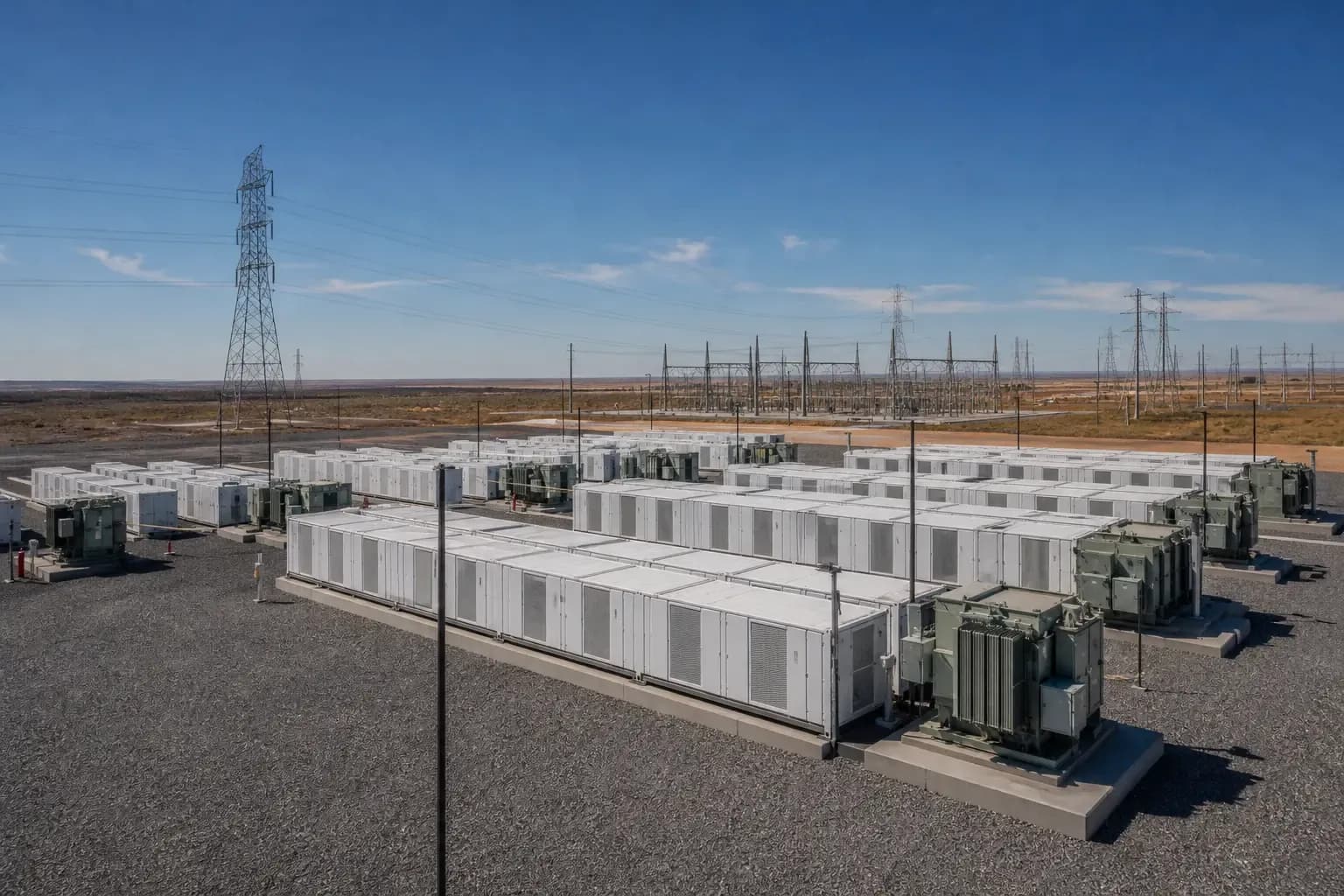
Storage | Firms clean power, avoids overbuilding generation | Multiple GW-scale deals spanning BESS, LDES, and second-life batteries | Data center batteries firm the whole grid and protect host towns, provide lacking financial incentives for things like seasonal shifting |
Grid infrastructure and GETs | Grid upgrades drive rate increases; AI can pay instead | Hyperscalers funding upgrades directly in Indiana and North Carolina, elsewhere | No “forever charges” for ratepayers; GETs scale beyond data centers |
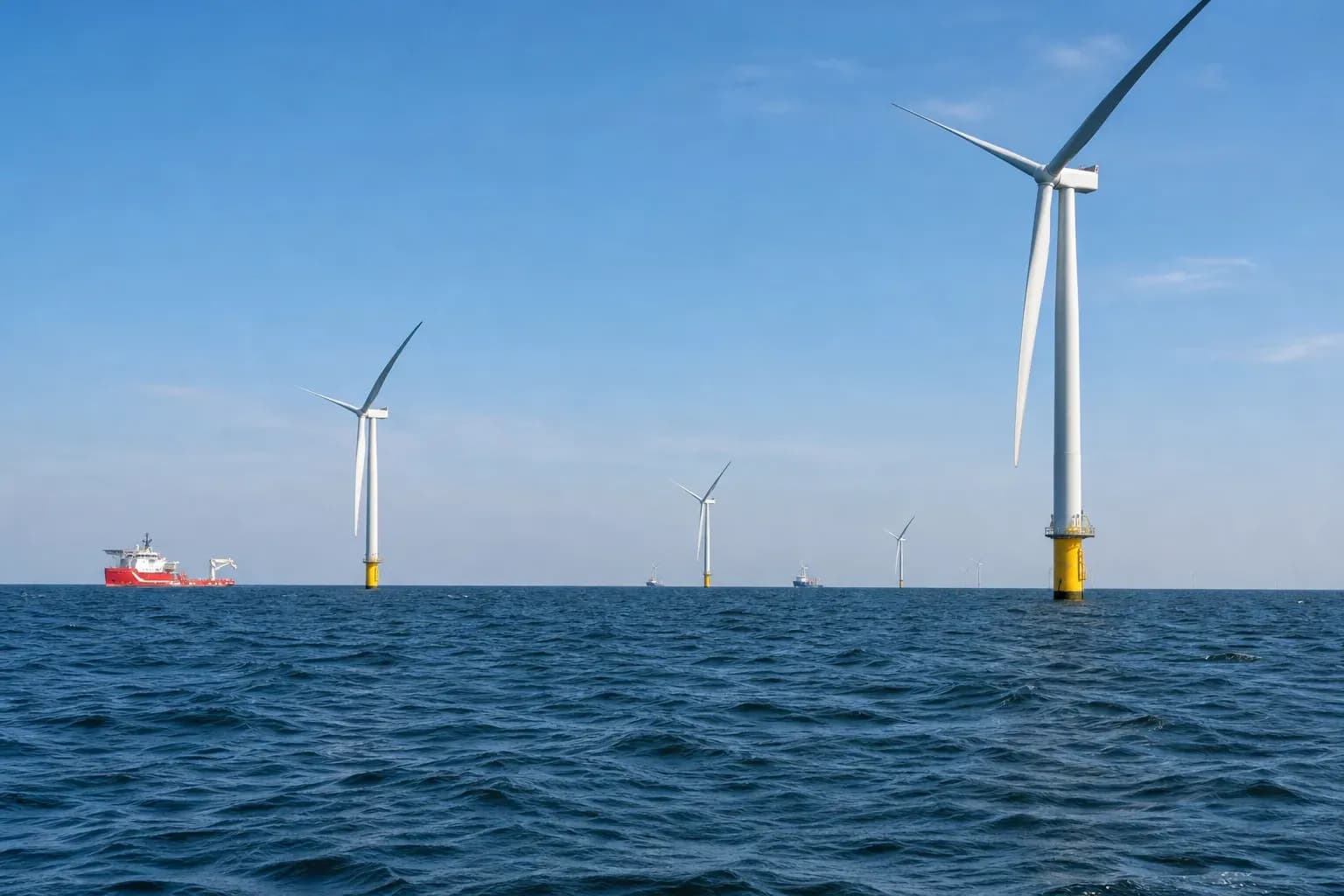
Clean FTM generation | Adds capacity without local harms | 4 GW+ renewables and 1 GW nuclear procured in four months | Data centers anchor clean projects that lower regional prices |
Advanced generation | Accelerates next-generation clean firm power | Google’s 396 MW geothermal offtake; funding for CFS and Proxima Fusion | Hyperscalers pull geothermal, SMRs, and fusion down the cost curve |
A final piece of the puzzle is making communities whole. Using clean energy remedies most of the harms, but not all of them. Hyperscalers have been doing this through community benefit agreements, which include one-time funding in exchange for local buy-in. At Project Hazelnut, this amounted to approximately $0.08/W of data center capacity or based on the previous $150M/GW-month figure, about 3 weeks of lost data center rent, which does not include the value of the chips. Given the current environment of data center backlash, the industry should increase this to $1/W, equivalent to 1-7 months in delays depending on the metric. Framed another way, data centers currently cost $30-50/W. $1 more for community buy in is ~2-3%, a rounding error that avoids the delays and opposition they currently experience.
AI may be the best offtaker clean energy has had. And for hyperscalers, funding clean infrastructure directly enables their own development and simultaneously builds community goodwill, another key enabler for deployment. These are the most profitable companies on the planet competing for a new multi trillion-dollar market. They can afford to build that market the right way and make communities whole in the process.
SOURCES
- Occam Edge: Confronting the Datacenter Delay Dilemma
- CREO Syndicate: 2026 Energy Affordability
- CREO Syndicate: Clean Energy and the AI Moment
The views, analysis and data in this article are those of the author and do not necessarily reflect the editorial position of CleanTech Journal. Figures and claims are the author’s own and have been attributed to their sources where available.
About the Expert
David Siap
Energy Research Lead · CREO Syndicate
Leads energy research at CREO Syndicate, a network of family offices investing in climate solutions. Former McKinsey consultant; earlier an engineer at Berkeley Lab, Olivine and Google X, focused on demand flexibility. MBA, UC Berkeley Haas; MS, Aeronautical Engineering.
Connect on LinkedIn →