How Many Solar Panels Do I Need to Power My Home in the US?
How many solar panels do I need? Most US homes need 15 to 24 panels of 400 watts. See the count for 10 cities, a simple formula and a worked example.

Suraj Kadam
Published •26 min read
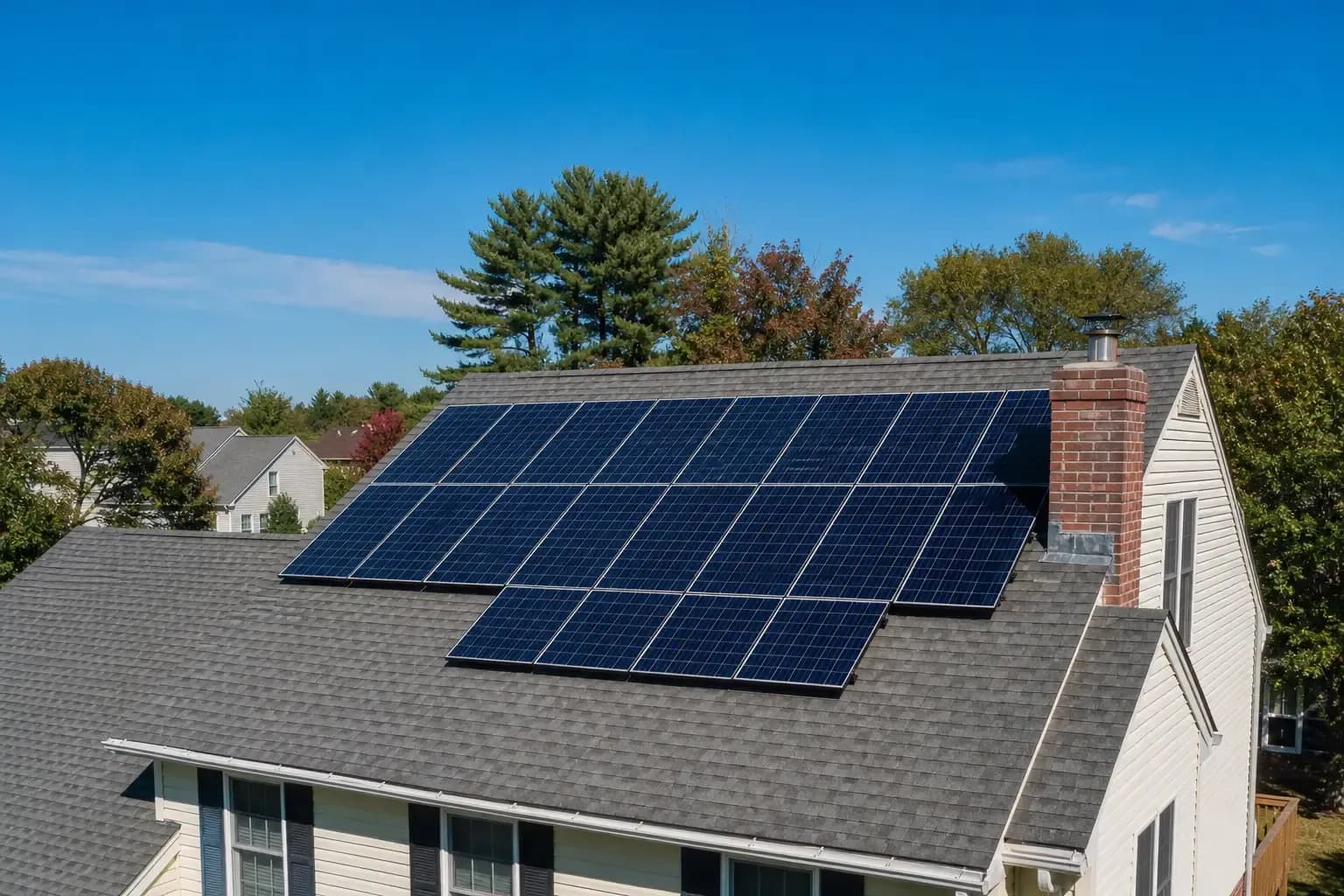
How many solar panels do I need? For an average US home, the answer is about 15 to 24 panels rated at 400 watts each, and the biggest factor is not the size of your house but how sunny your city is.
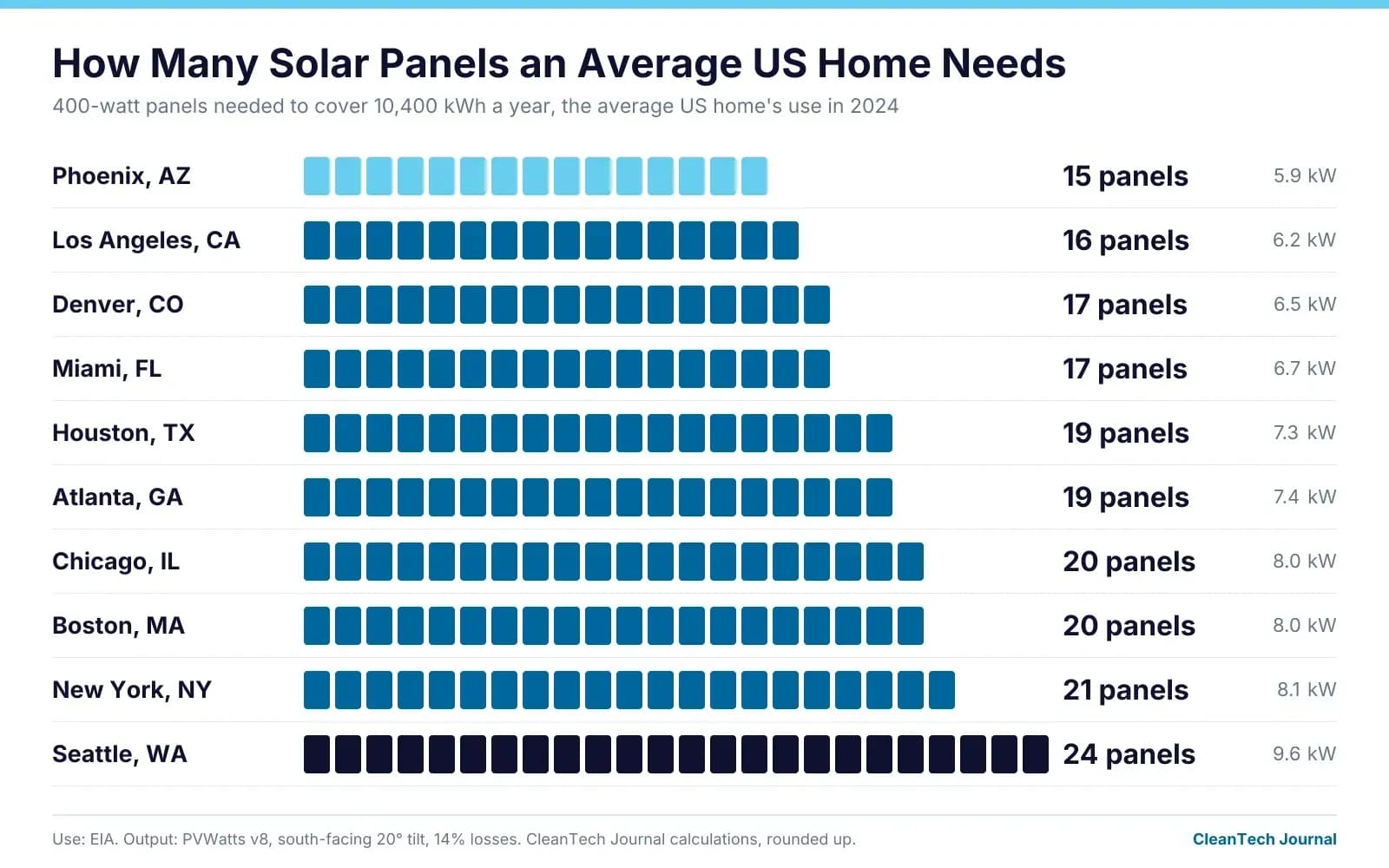
A home in Phoenix can cover a typical year of electricity with about 15 panels. The same home in Seattle would need about 24, because each panel produces far less power under cloudier skies.
How Many Solar Panels Do I Need for an Average Home?
The average US home used about 865 kWh of electricity a month in 2024, or roughly 10,400 kWh a year, according to the US Energy Information Administration. That works out to about 28.5 kWh a day.
To estimate how much solar it takes to produce that, we used PVWatts, the free calculator from the National Laboratory of the Rockies, formerly the National Renewable Energy Laboratory. It shows how many kilowatt-hours a 1 kW rooftop system produces each year in each city.
City | Yearly output per 1 kW of panels | System size for 10,400 kWh | Number of 400 W panels |
|---|---|---|---|
Phoenix, AZ | 1,755 kWh | 5.9 kW | 15 |
Los Angeles, CA | 1,677 kWh | 6.2 kW | 16 |
Denver, CO | 1,595 kWh | 6.5 kW | 17 |
Miami, FL | 1,552 kWh | 6.7 kW | 17 |
Houston, TX | 1,421 kWh | 7.3 kW | 19 |
Atlanta, GA | 1,402 kWh | 7.4 kW | 19 |
Chicago, IL | 1,308 kWh | 8.0 kW | 20 |
Boston, MA | 1,302 kWh | 8.0 kW | 20 |
New York, NY | 1,291 kWh | 8.1 kW | 21 |
Seattle, WA | 1,088 kWh | 9.6 kW | 24 |
These are CleanTech Journal calculations, rounded up to whole panels. Output figures come from PVWatts version 8 for a south-facing, fixed rooftop system with a 20-degree tilt and the calculator's standard 14% system losses.
The Three-Step Formula
You can work out your own number with three figures: your yearly electricity use, your local solar output and the wattage of the panels you plan to buy.
- Find your yearly use. Add up the kWh on 12 months of electricity bills, or multiply one month by 12.
- Divide by your local output per kW. Use PVWatts for your address, or the closest city in the table above. The result is the system size you need in kW.
- Convert kW into panels. Multiply the system size by 1,000 to get watts, then divide by your panel's wattage and round up.
Worked example (Atlanta): 10,400 kWh ÷ 1,402 kWh per kW = 7.4 kW. That is 7,418 watts ÷ 400 watts = 18.5, so you would need 19 panels.
How Your Electricity Use Changes the Answer
Homes that use more electricity, for example because they have an EV or electric heating, need more panels. Here is how the count changes in a sunny city, a mid-range city and a cloudy one.
Yearly electricity use | Phoenix | Atlanta | Seattle |
|---|---|---|---|
6,000 kWh | 9 panels | 11 panels | 14 panels |
10,400 kWh | 15 panels | 19 panels | 24 panels |
12,000 kWh | 18 panels | 22 panels | 28 panels |
15,000 kWh | 22 panels | 27 panels | 35 panels |
All figures assume 400-watt panels. Charging an EV at home can add several thousand kWh a year, so it is worth planning for it before you install solar.
How Panel Wattage Changes the Count
Higher-wattage panels mean fewer panels for the same output, which matters if roof space is tight. For an average home in Atlanta, you would need about 22 panels at 350 watts, 19 at 400 watts or 17 at 450 watts.
The total system size, about 7.4 kW, stays the same. Only the number of panels changes, so compare quotes by system size and expected yearly output, not just by panel count.
What Else Affects How Many Panels You Need
- Roof direction and tilt: south-facing roofs produce the most in the US. East- or west-facing roofs produce less, so they may need more panels.
- Shade: trees, chimneys or nearby buildings can cut output sharply. Installers use shading analysis to adjust the design.
- How much you want to offset: some homeowners size systems to cover only part of their use, especially where net metering has been replaced by less generous net billing.
- Future needs: an EV, a heat pump or a home battery can all change how much solar makes sense.
For what a system of this size costs, see our guide to how much home solar panels cost in the US.
Frequently Asked Questions
How much roof space do I need for solar panels?
It depends on the size of the panels you choose and how they fit around vents, chimneys and roof edges, where local fire codes often require setbacks. Check the dimensions on each panel's datasheet, and ask an installer for a site survey, which gives the most accurate answer.
Can I install more panels than I need?
Yes, but whether it pays off depends on how your utility credits extra power sent to the grid. Where exports are credited at the full retail rate, oversizing can make sense. Where they are credited at a lower rate, it often does not.
How many solar panels does it take to run an air conditioner?
That depends on the air conditioner's size and how long it runs. Use the same method: estimate the extra kWh it uses in a year, divide by your local output per kW, and convert to panels.
Do solar panels produce power in winter?
Yes. Panels work in cold weather and can even run slightly more efficiently in the cold, but shorter days and snow cover reduce total output. Yearly estimates from PVWatts already include seasonal changes.
Is it better to have more lower-wattage panels or fewer higher-wattage ones?
If roof space is limited, higher-wattage panels are usually the better choice. If space is not an issue, compare the total price per watt and the warranty rather than the wattage of each panel.
SOURCES
- US Energy Information Administration – Residential electricity use and bills (Today in Energy)
- National Laboratory of the Rockies – PVWatts Calculator (version 8)
Written by
Suraj Kadam
Suraj Kadam is a journalist and Chief Editor of CleanTech Journal, a knowledge and media platform covering clean technology, solar energy, and renewable energy. He reports on emerging technologies, industry developments, policy trends, and innovations shaping the global clean energy transition. Through his editorial work, Suraj aims to make complex clean technology topics accessible to industry professionals, researchers, policymakers, and readers interested in sustainable energy. His work focuses on delivering insightful, informative, and engaging coverage of the evolving renewable energy landscape.