Top 10 Renewable Energy Sources: Types, Examples and Data
Explore the top 10 renewable energy sources, from solar and wind to geothermal and tidal power, with the latest IRENA, IEA and Ember capacity data.

Suraj Kadam
Published •22 min read
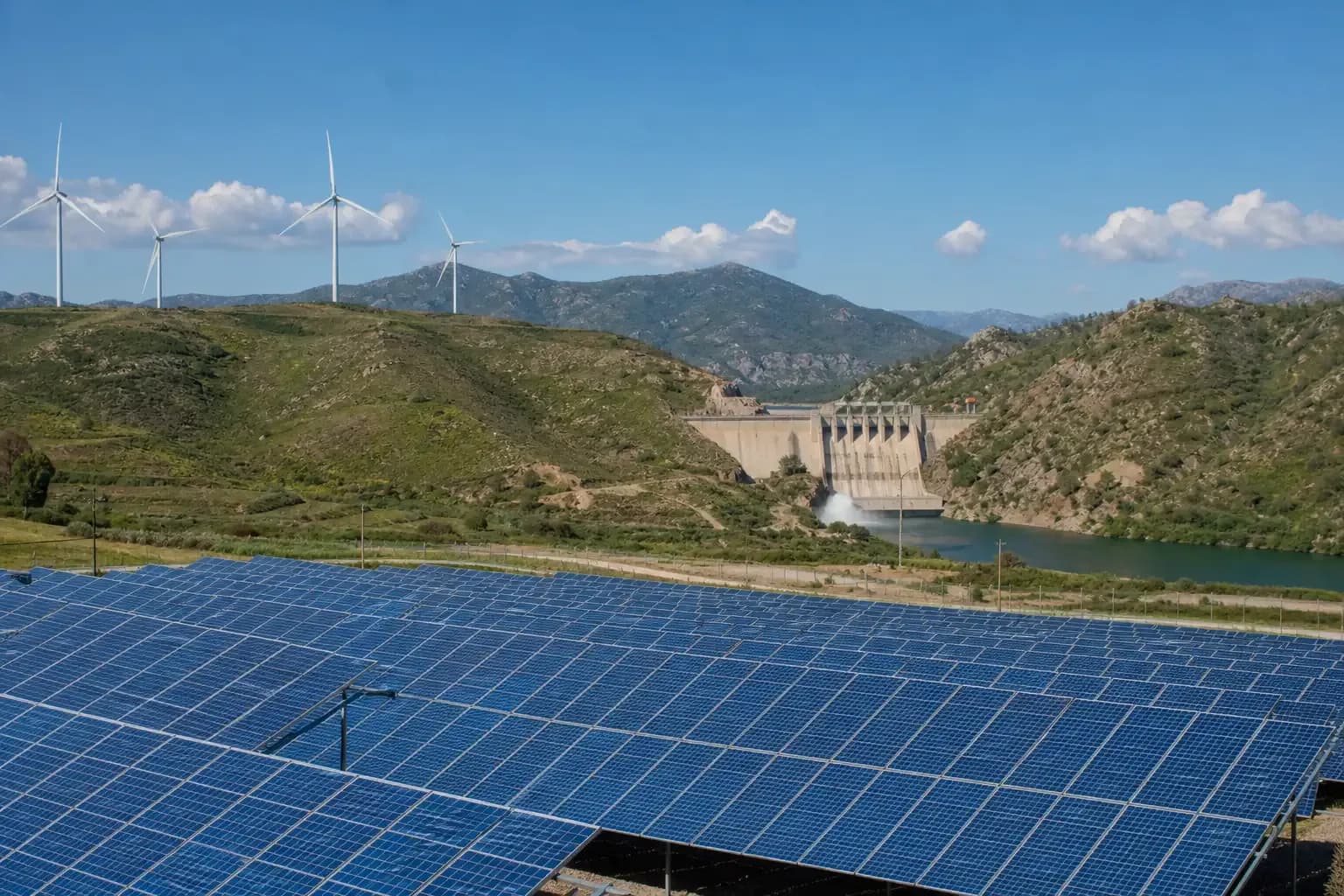
Renewable energy sources produced 33.8% of the world's electricity in 2025, overtaking coal for the first time, according to Ember's Global Electricity Review 2026. Behind that milestone sits a mix of very different technologies: some run on sunlight, others on moving air, falling water, plant matter, the Earth's heat or the tides.
This guide ranks the top 10 renewable energy sources by how much they contribute today, using official statistics from the International Renewable Energy Agency (IRENA), the International Energy Agency (IEA) and Ember. For each source, you will find how it works, where it is used and the latest capacity or output figures.
Renewable Energy Sources at a Glance
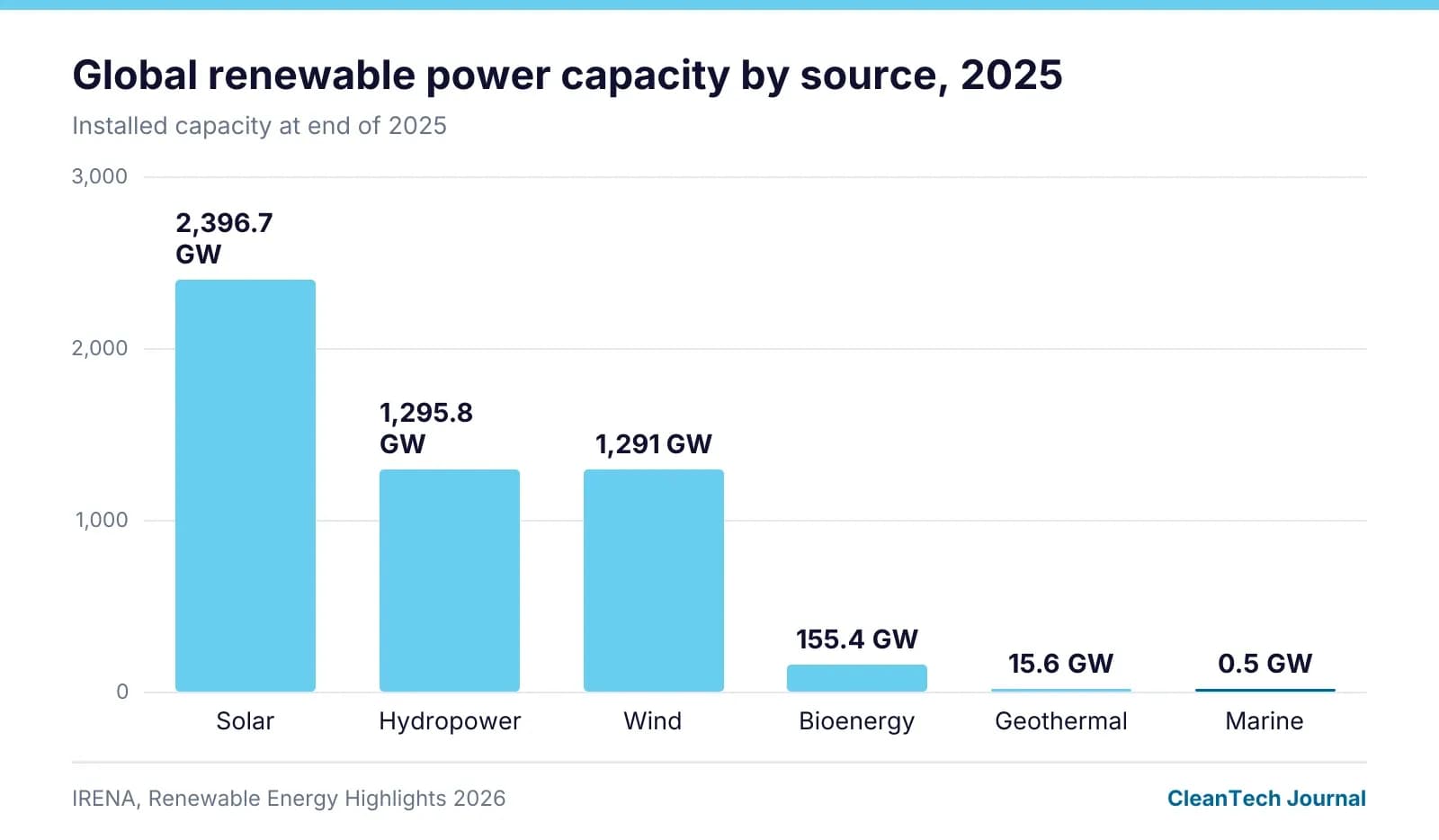
By the end of 2025, the world had 5,155 GW of renewable power capacity, according to IRENA's Renewable Energy Highlights 2026. Solar held 46.5% of that total, hydropower 25.1% and wind 25.0%. Bioenergy, geothermal and marine energy made up the rest.
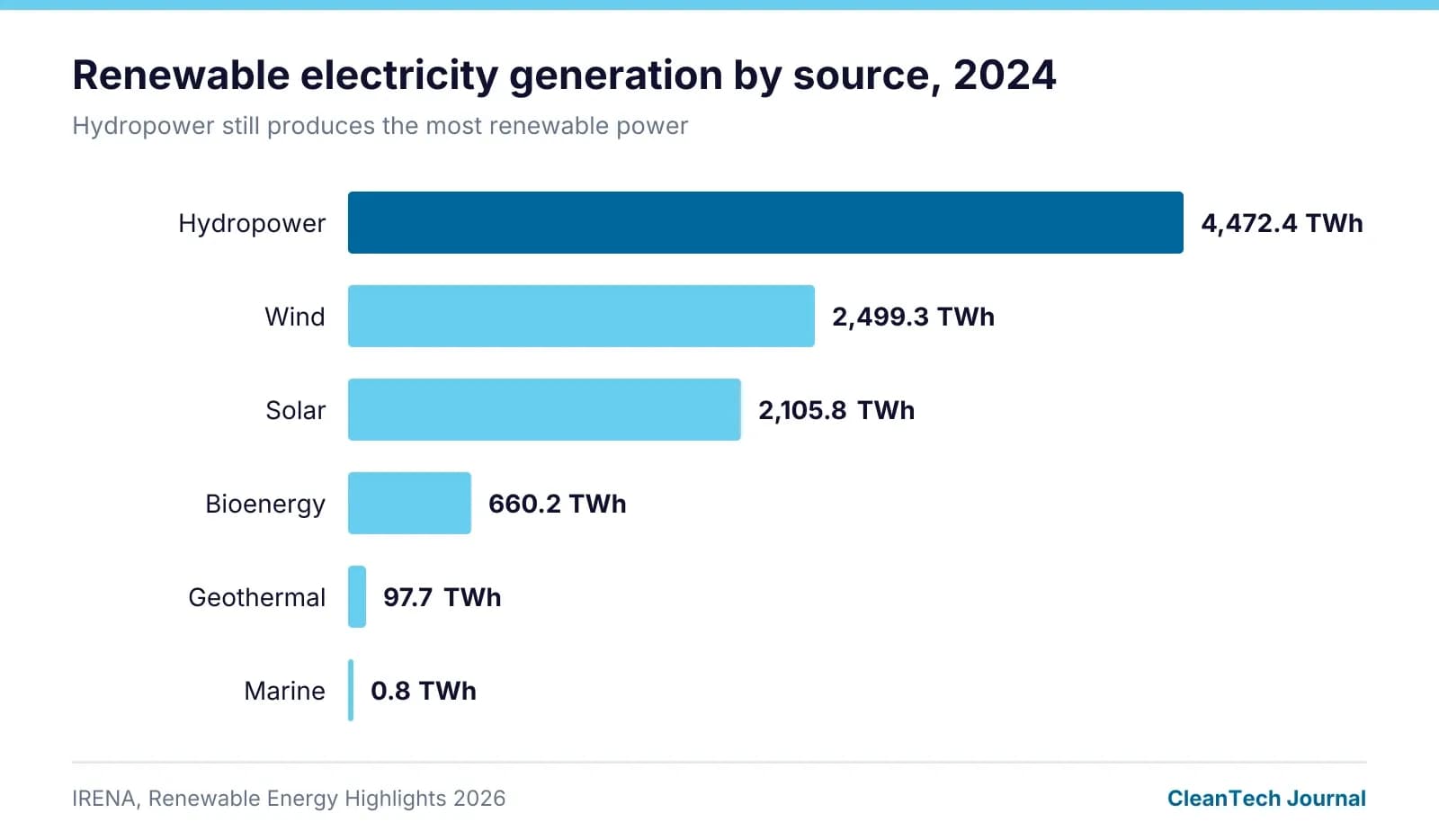
Capacity and output tell different stories. Hydropower still produced the most renewable electricity in 2024 (45.5% of renewable generation), because dams run for more hours of the year than solar panels. Solar has the most installed capacity, but it only generates when the sun is up.
The world added a record 692 GW of renewable capacity in 2025. Solar accounted for 511 GW of that, or about 74%, and wind for 159 GW.
1. Solar Photovoltaic (PV) Power
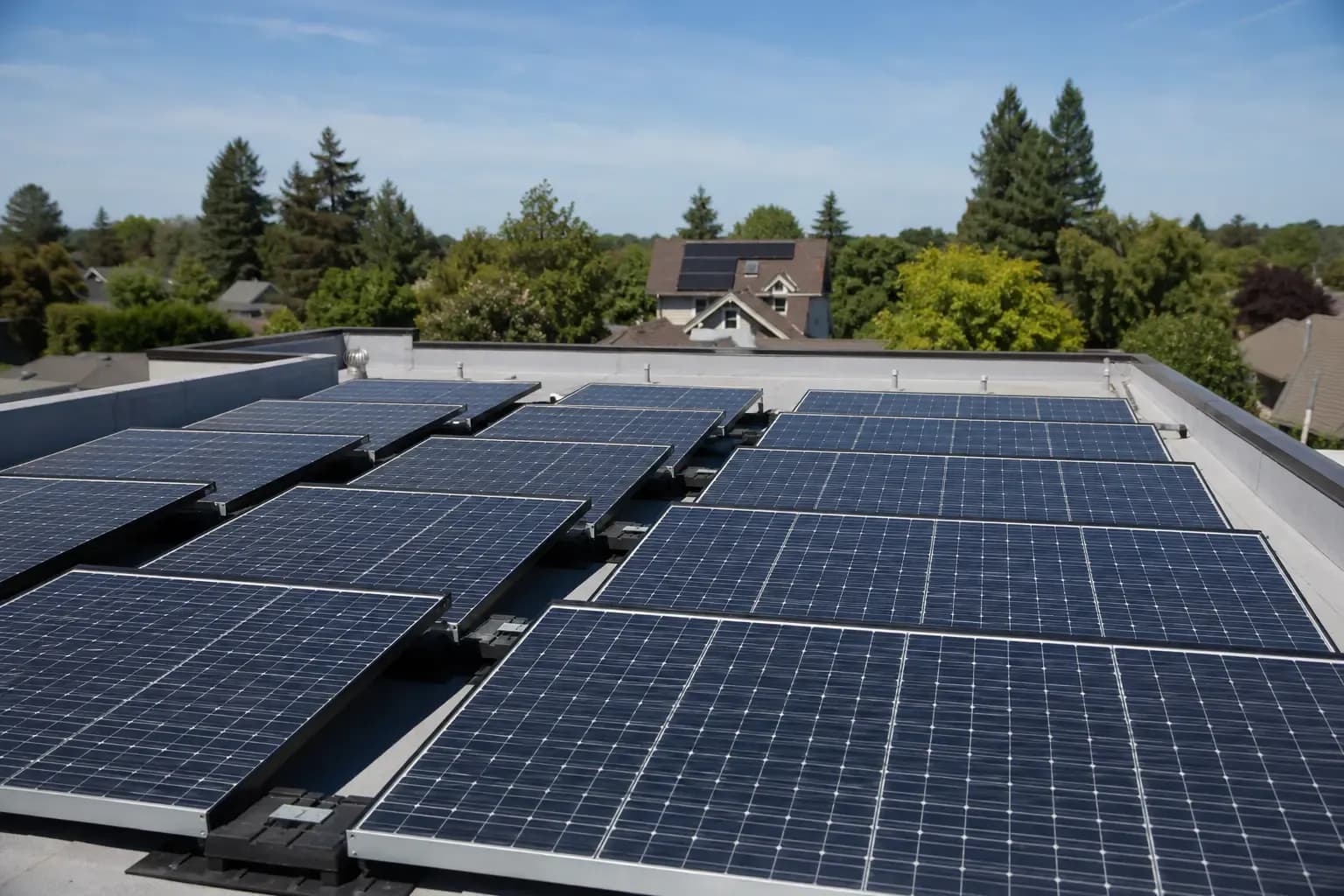
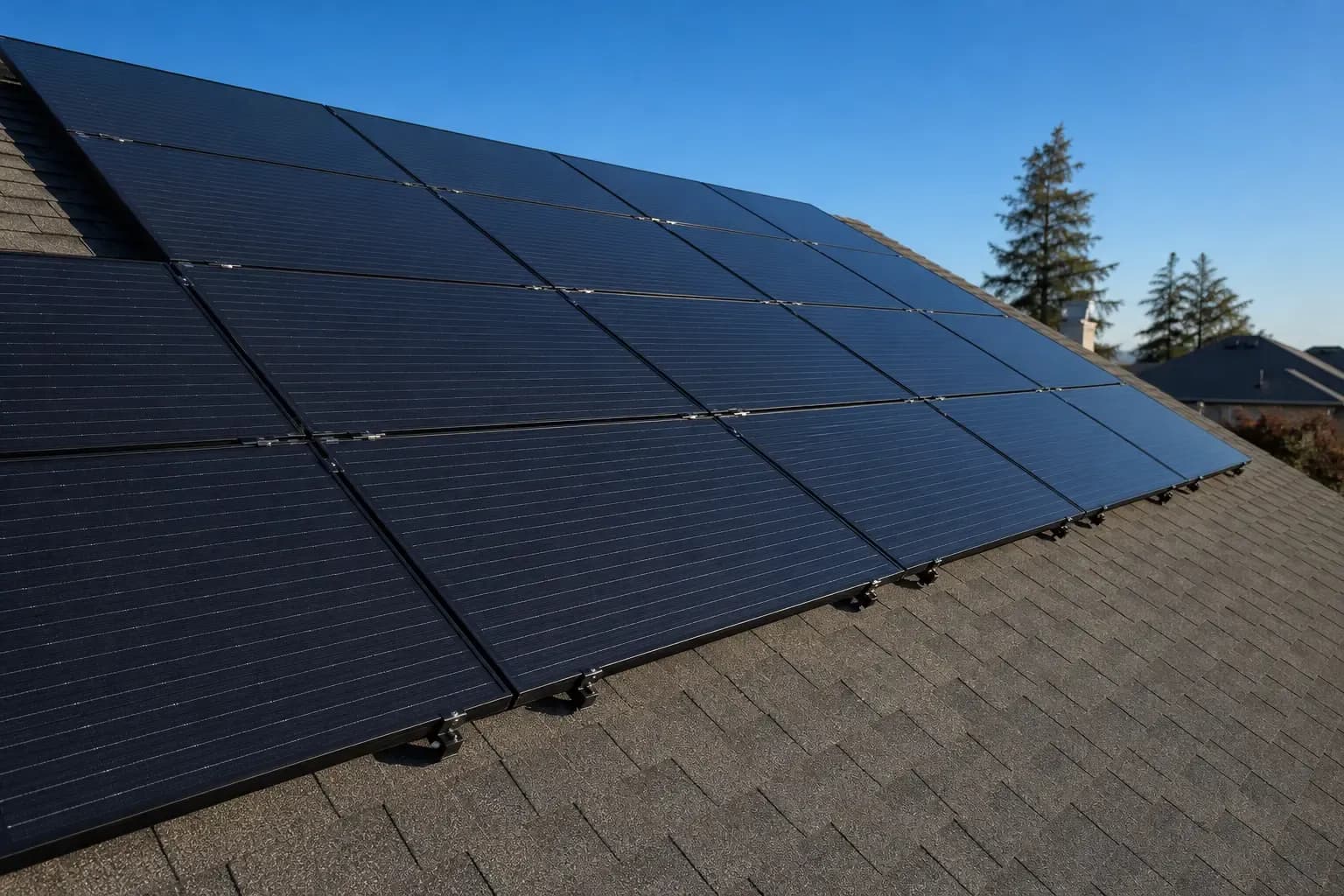
Solar PV panels turn sunlight directly into electricity using semiconductor cells, usually made of silicon. They range from a few panels on a home roof to utility-scale parks covering thousands of acres.
Solar PV is now the largest and fastest-growing renewable source by capacity. Global solar capacity reached 2,396.7 GW at the end of 2025, and solar PV made up 510.3 GW of the 511 GW of solar added that year. According to Ember, solar generated 2,778 TWh in 2025, or 8.7% of global electricity.
Common examples: rooftop panels on homes and businesses, solar farms, floating solar on reservoirs and solar carports.
Strengths and limits: PV is modular, quick to build and has no fuel cost. Its output follows daylight and weather, so it is often paired with batteries.
2. Onshore Wind Power
Onshore wind turbines use the wind to spin large blades connected to a generator. Wind farms on land are usually built on open plains, ridges and farmland, where the land between turbines can still be farmed or grazed.
Total wind capacity reached 1,291 GW at the end of 2025, and offshore projects made up 7.1% of it. That leaves about 1,199 GW on land, making onshore wind the second-largest renewable energy source by installed capacity. Wind power as a whole produced 2,499.3 TWh in 2024, according to IRENA.
Common examples: utility-scale wind farms, community wind projects and small turbines on farms.
Strengths and limits: onshore wind is one of the cheapest sources of new electricity in many countries. Output varies with wind speed, and good sites can be far from cities.
3. Hydropower
Hydropower uses the energy of flowing or falling water to spin turbines. Most large plants use a dam to store water in a reservoir, while run-of-river plants use the natural flow of a river.
Hydropower is the largest renewable source of electricity. Global capacity reached 1,295.8 GW in 2025, and hydropower generated 4,472.4 TWh in 2024, more than wind and solar combined. Ember puts hydropower's share of global electricity at 14% in 2025.
Common examples: large dams, run-of-river plants and pumped-storage plants, which pump water uphill to store energy for later.
Strengths and limits: hydropower can raise or lower output quickly, which helps balance solar and wind. Droughts reduce output, and new dams can displace communities and change river ecosystems.
4. Offshore Wind Power
Offshore wind turbines are installed at sea, either fixed to the seabed or mounted on floating platforms. Winds at sea are stronger and steadier than on land, so offshore turbines tend to produce more power per unit of capacity.
Offshore wind made up 7.1% of global wind capacity at the end of 2025, or about 91.7 GW.
Common examples: fixed-bottom wind farms in the North Sea and off the coast of China, and floating wind pilots in deeper waters.
Strengths and limits: offshore wind delivers large amounts of power close to coastal cities. It costs more to build and maintain than onshore wind and depends on ports, ships and subsea cables.
5. Solid Biomass and Bioenergy Power
Bioenergy comes from organic material such as wood, crop residues, forestry waste and municipal waste. In power plants, this material is burned to make steam that drives a turbine, often in combined heat and power (CHP) plants.
Global bioenergy power capacity reached 155.4 GW in 2025, and bioenergy generated 660.2 TWh of electricity in 2024, according to IRENA. That makes it the fourth-largest renewable source of electricity, ahead of geothermal.
Common examples: wood pellet power plants, sugarcane bagasse plants at sugar mills, and waste-to-energy plants.
Strengths and limits: bioenergy can run on demand, unlike solar and wind. Its climate benefit depends on sustainable sourcing, since harvesting forests faster than they regrow cancels out the gains.
6. Biogas and Biomethane
Biogas forms when bacteria break down organic waste, such as manure, food scraps and sewage, in an oxygen-free tank called a digester. Biomethane is biogas that has been cleaned up to the same quality as natural gas, so it can be injected into gas grids.
Global production of biogas and biomethane reached 1,785 petajoules (PJ) in 2025, and 78% of that was biogas, according to the IEA's Renewables 2026 report. The European Union produced nearly 38% of the world's total. The IEA expects production to grow 18% by 2031.
Common examples: farm digesters, landfill gas capture, wastewater treatment plants and biomethane fueling stations for trucks and buses.
Strengths and limits: biogas turns waste into fuel and cuts methane emissions from manure and landfills. Supply is limited by how much waste is available nearby.
7. Geothermal Energy
Geothermal energy uses heat from inside the Earth. Power plants tap underground reservoirs of hot water or steam, while geothermal heat pumps use the stable temperature a few feet underground to heat and cool buildings.
Global geothermal power capacity stood at 15.6 GW in 2025, and geothermal plants generated 97.7 TWh in 2024. Although its capacity is small, geothermal runs around the clock, so it produces a lot of electricity for each megawatt installed.
Common examples: geothermal power plants in Iceland, Kenya, Indonesia and the western United States, and ground-source heat pumps in homes.
Strengths and limits: geothermal supplies steady, weather-independent power. Good resources are concentrated in volcanic and tectonically active regions, and drilling is costly.
8. Solar Thermal Heating
Solar thermal collectors absorb sunlight to heat water or air directly, rather than making electricity. They are widely used for hot water in homes, hotels and hospitals, and increasingly for district heating and industrial processes.
By the end of 2024, 544 GW of thermal (GWth) solar heating capacity was in operation worldwide, producing 443 TWh of heat, according to the IEA Solar Heating and Cooling Programme. Another 17.8 GWth of new capacity was installed in 2024.
Common examples: rooftop solar water heaters, large solar fields feeding district heating networks, and solar heat for food processing and textiles.
Strengths and limits: solar thermal is simple and efficient for heat. New installations have been falling: the global market for solar water collectors shrank 14.2% in 2024, according to REN21.
9. Concentrated Solar Power (CSP)
Concentrated solar power uses mirrors to focus sunlight onto a receiver, heating a fluid that drives a steam turbine. Many CSP plants store heat in molten salt, so they can keep producing electricity after sunset.
CSP is a much smaller market than solar PV. Of the 511 GW of solar capacity added worldwide in 2025, about 1 GW came from CSP, according to IRENA. IRENA's cost data show the average cost of electricity from new CSP plants rose to $115 per MWh in 2025.
Common examples: parabolic trough plants, solar power towers and linear Fresnel plants, mostly in sunny, dry regions such as Spain, Morocco, China and the Middle East.
Strengths and limits: built-in thermal storage makes CSP dispatchable. It costs more than PV and only works well with strong, direct sunlight.
10. Ocean Energy (Tidal and Wave Power)
Ocean energy captures power from tides, waves, currents and temperature differences in seawater. Tidal barrages work like dams across estuaries, while tidal stream turbines sit underwater like wind turbines.
Ocean energy is the smallest source on this list. Global marine capacity was just 0.5 GW in 2025, and it produced 0.8 TWh in 2024. Most of it comes from two plants: South Korea's 254 MW Sihwa Lake tidal station and France's 240 MW La Rance plant, according to the U.S. Energy Information Administration.
Common examples: tidal barrages, tidal stream turbines in Scotland and wave energy test sites.
Strengths and limits: tides are highly predictable, years in advance. Harsh sea conditions make equipment expensive to build and maintain.
Which Renewable Energy Source Is Best?
There is no single best renewable energy source. The right choice depends on local resources and what the energy is needed for:
- Low-cost new electricity: solar PV and onshore wind
- Steady, round-the-clock power: hydropower, geothermal and bioenergy
- Storing energy for evening use: pumped hydro and CSP with molten salt
- Heat for buildings and industry: solar thermal, geothermal and biomass
- Cutting waste emissions: biogas from manure, food waste and landfills
Most power grids use a mix. Solar and wind supply the bulk of new energy, while hydro, geothermal, bioenergy and storage fill the gaps when the sun is down or the wind is calm.
Conclusion
Renewable energy sources are no longer a niche part of the energy system. Renewables supplied more global electricity than coal in 2025, and solar, wind and hydropower together make up 96.6% of all renewable power capacity. Smaller sources such as geothermal, biogas, solar thermal and ocean energy play important roles where local conditions suit them.
As capacity keeps growing, the bigger challenge is building the grids, storage and flexible supply needed to use all of this clean energy.
Frequently Asked Questions
What are the main renewable energy sources?
The main renewable energy sources are solar, wind, hydropower, bioenergy, geothermal and ocean energy. Solar, wind and hydropower together make up 96.6% of global renewable power capacity, according to IRENA.
Which renewable energy source produces the most electricity?
Hydropower. It generated 4,472.4 TWh in 2024, or 45.5% of all renewable electricity, according to IRENA. Wind was second with 2,499.3 TWh and solar third with 2,105.8 TWh.
Which renewable energy source is growing the fastest?
Solar power. The world added 511 GW of solar capacity in 2025, about 74% of all new renewable capacity, bringing the global total to 2,396.7 GW.
What share of the world's electricity comes from renewables?
Renewables supplied 33.8% of global electricity in 2025, slightly more than coal at 33.0%, according to Ember. Including nuclear, clean sources produced 43% of the world's power.
Is nuclear power a renewable energy source?
No. Nuclear power is low-carbon, but it runs on uranium, a mined fuel that does not naturally replenish. It is usually grouped with renewables as "clean" energy rather than counted as renewable.
SOURCES
- IRENA: Renewable energy highlights 2026
- Ember: Global Electricity Review 2026
- IEA: Renewables 2026, Biogases
- IEA SHC: Solar Heat Worldwide 2025
- REN21: Renewables 2025 Global Status Report, Solar thermal
- IRENA: Renewable power generation costs in 2025
- U.S. EIA: Tidal power explained
Written by
Suraj Kadam
Suraj Kadam is a journalist and Chief Editor of CleanTech Journal, a knowledge and media platform covering clean technology, solar energy, and renewable energy. He reports on emerging technologies, industry developments, policy trends, and innovations shaping the global clean energy transition. Through his editorial work, Suraj aims to make complex clean technology topics accessible to industry professionals, researchers, policymakers, and readers interested in sustainable energy. His work focuses on delivering insightful, informative, and engaging coverage of the evolving renewable energy landscape.