World's Cheapest Electric Cars Compared: Wuling, BYD, Ami, Olinia
The world's cheapest electric cars compared: Wuling Mini EV, BYD Seagull, Citroën Ami and Mexico's Olinia on price, range, seats and top speed.

Suraj Kadam
Published •21 min read
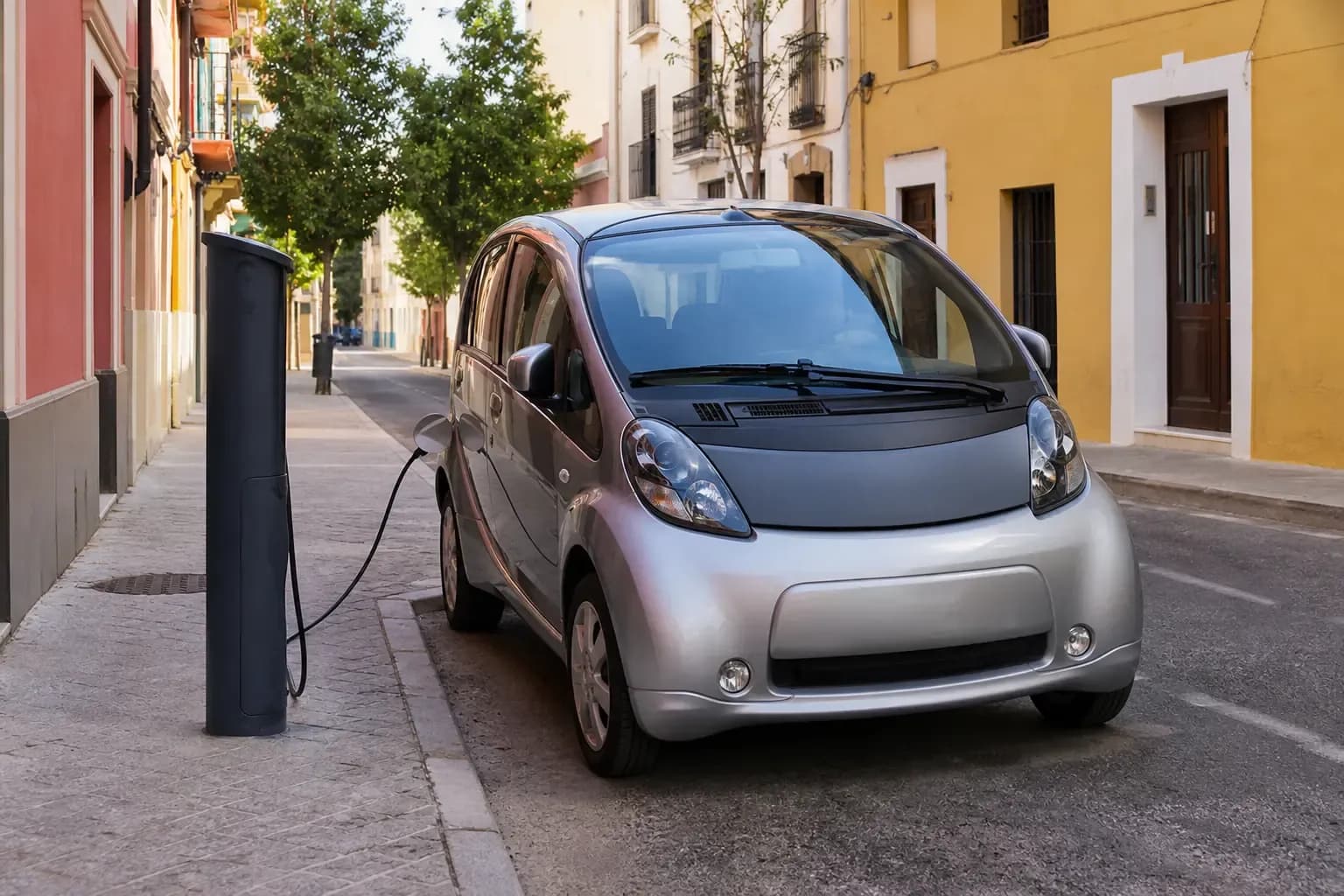
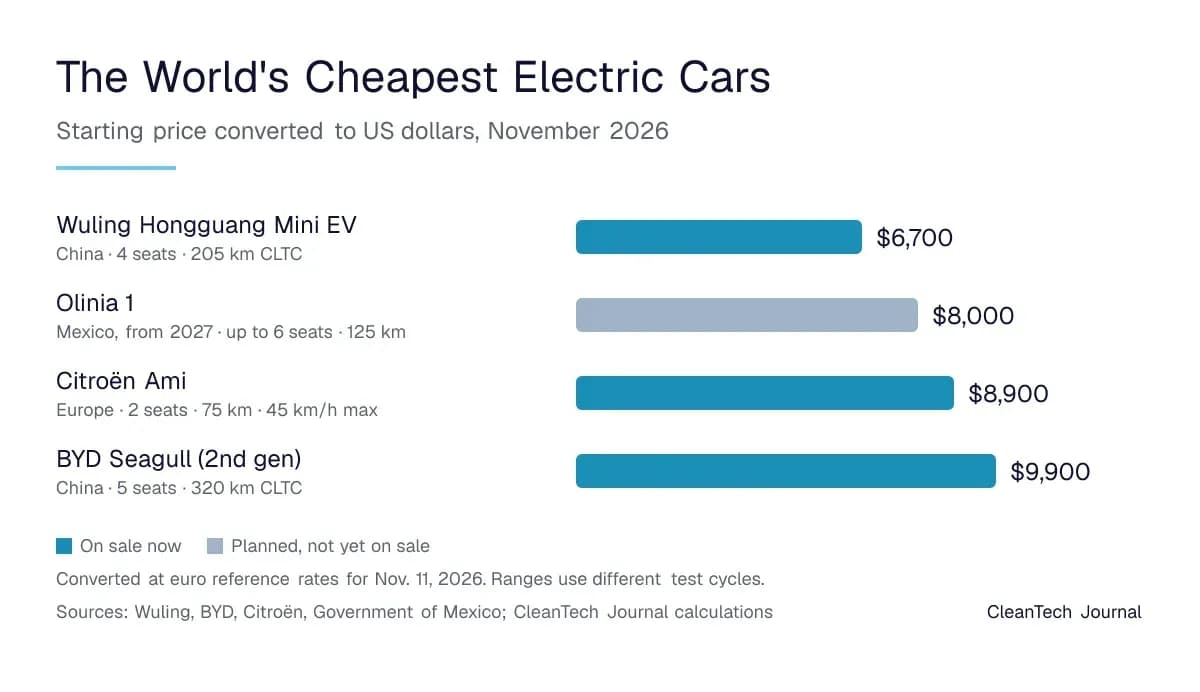
The world's cheapest electric cars now start well under $10,000. China's Wuling Hongguang Mini EV starts at about $6,700, BYD's Seagull at about $9,900, Europe's Citroën Ami at about $8,900, and Mexico's new government-backed Olinia 1 is set to sell for about $8,000.
But these four budget EVs are very different vehicles. One is a two-seat quadricycle limited to 45 km/h, one is a full five-seat hatchback, and one will not be on sale until 2027. Here is how the cheapest electric cars compare on price, range, seats and speed, using figures from the carmakers and the Mexican government.
World's Cheapest Electric Cars Compared
Wuling Hongguang Mini EV | Olinia 1 | Citroën Ami | BYD Seagull (2nd gen) | |
|---|---|---|---|---|
Where sold | China | Mexico (from 2027) | Europe | China |
Starting price (local) | 44,800 yuan | 150,000 pesos | €7,990 (Germany) | 65,900 yuan |
Starting price (approx. US$) | $6,700 | $8,000 | $8,900 | $9,900 |
Seats | 4 | Up to 6 | 2 | 5 |
Range | 205–301 km (CLTC) | 125 km+ (stated) | 75 km (WMTC) | 320–420 km (CLTC) |
Battery | LFP, not stated | 14.7 kWh | 5.4 kWh | 30.1–39.2 kWh |
Top speed | Not stated | 50 km/h | 45 km/h | Not stated |
Fast charging | Yes, 30–80% in 35 min | Household outlet | No, 4 h on 2.3 kW | Not stated |
Dollar prices are CleanTech Journal conversions at euro reference rates for Nov. 11, 2026, and are rounded to the nearest $100. Local prices are official starting prices before subsidies and trade-in deals. Ranges use different test cycles and are not directly comparable: China's CLTC cycle gives higher figures than real-world driving.
Wuling Hongguang Mini EV: The Cheapest Real Car
The Wuling Hongguang Mini EV is the cheapest of the four. The 2026 version launched in China in March 2026 at 44,800 yuan, about $6,700, for the 205 km model, according to CarNewsChina. A 301 km version starts at 49,800 yuan, about $7,500.
The latest model now has four doors and four seats, and supports DC fast charging from 30% to 80% in 35 minutes. It is one of the world's best-selling electric cars, with more than 430,000 sold in 2025.
Olinia 1: Mexico's People's Car
The Olinia 1 is a government project rather than a commercial car. President Claudia Sheinbaum presented it in June 2026 with a target price of 150,000 pesos, about $8,000.
It has a 14.7 kWh battery, a range of more than 125 km, a top speed of 50 km/h and room for up to six people, and it charges from a standard household outlet. Production is planned for 2027, so it cannot be bought yet, and its final specifications may change.
Citroën Ami: Cheapest in Europe, but Not a Full Car
The Citroën Ami starts at €7,990 in Germany, about $8,900, according to Citroën's January 2026 price list. Strictly, it is a light quadricycle rather than a car, which is why it is so cheap and so limited.
It seats two, tops out at 45 km/h and has a 5.4 kWh battery with a range of 75 km. It charges from a household socket in about four hours. That makes it a city runabout, not a replacement for a family car.
BYD Seagull: Most Car for the Money
The second-generation BYD Seagull, launched in China in October 2026, is the priciest of the four at 65,900 yuan, about $9,900, but also the most capable. It now seats five, and its batteries of 30.1 or 39.2 kWh give a CLTC range of 320 or 420 km.
That range is more than three times the Olinia's and more than five times the Ami's. Outside China, the Seagull is sold in Europe as the Dolphin Surf.
Which of the Cheapest Electric Cars Is Best?
It depends on what you need:
- Lowest price: the Wuling Hongguang Mini EV, at about $6,700.
- Most range and space: the BYD Seagull, with up to 420 km of CLTC range and five seats.
- Short city trips in Europe: the Citroën Ami, which some countries let teenagers drive without a full licence.
- Mexico from 2027: the Olinia 1, if it reaches production at its target price.
Measured by price per kilometer of rated range, the BYD Seagull and Wuling offer the best value, at about $31 and $33 per km. The Olinia works out at about $64 per km and the Citroën Ami at about $119 per km.
Can You Buy These Cheap EVs in the US?
No. None of the four is sold in the United States, where the cheapest new electric cars cost several times as much.
Frequently Asked Questions
What is the cheapest electric car in the world?
Among cars on sale, the Wuling Hongguang Mini EV in China, from 44,800 yuan, about $6,700.
Is the Citroën Ami a real car?
Not legally. It is a light quadricycle with two seats and a top speed of 45 km/h, which keeps its price low but limits it to city use.
When will the Olinia go on sale?
Mexico's government plans to start production in 2027, at a target price of 150,000 pesos.
How far can the cheapest electric cars go on a charge?
From 75 km for the Citroën Ami to up to 420 km on China's CLTC test for the BYD Seagull. Real-world range is usually lower than CLTC figures.
Why are cheap electric cars so much cheaper in China?
China has the world's largest EV market and battery supply chain, which lets carmakers build small EVs at very low cost. Smaller batteries and simpler features also keep prices down.
SOURCES
- CarNewsChina: 2026 Wuling Hongguang Mini EV launch
- CnEVPost: BYD launches second-gen Seagull
- Citroën Germany: Ami price list, January 2026
- Xataka México: Olinia presented, to cost 150,000 pesos
- CleanTechnica: Mexico unveils Olinia Uno
- Banca d'Italia: Euro reference rates, 11 Nov 2026
- Autovista24: The world's best-selling new BEVs and PHEVs of 2025
Written by
Suraj Kadam
Suraj Kadam is a journalist and Chief Editor of CleanTech Journal, a knowledge and media platform covering clean technology, solar energy, and renewable energy. He reports on emerging technologies, industry developments, policy trends, and innovations shaping the global clean energy transition. Through his editorial work, Suraj aims to make complex clean technology topics accessible to industry professionals, researchers, policymakers, and readers interested in sustainable energy. His work focuses on delivering insightful, informative, and engaging coverage of the evolving renewable energy landscape.